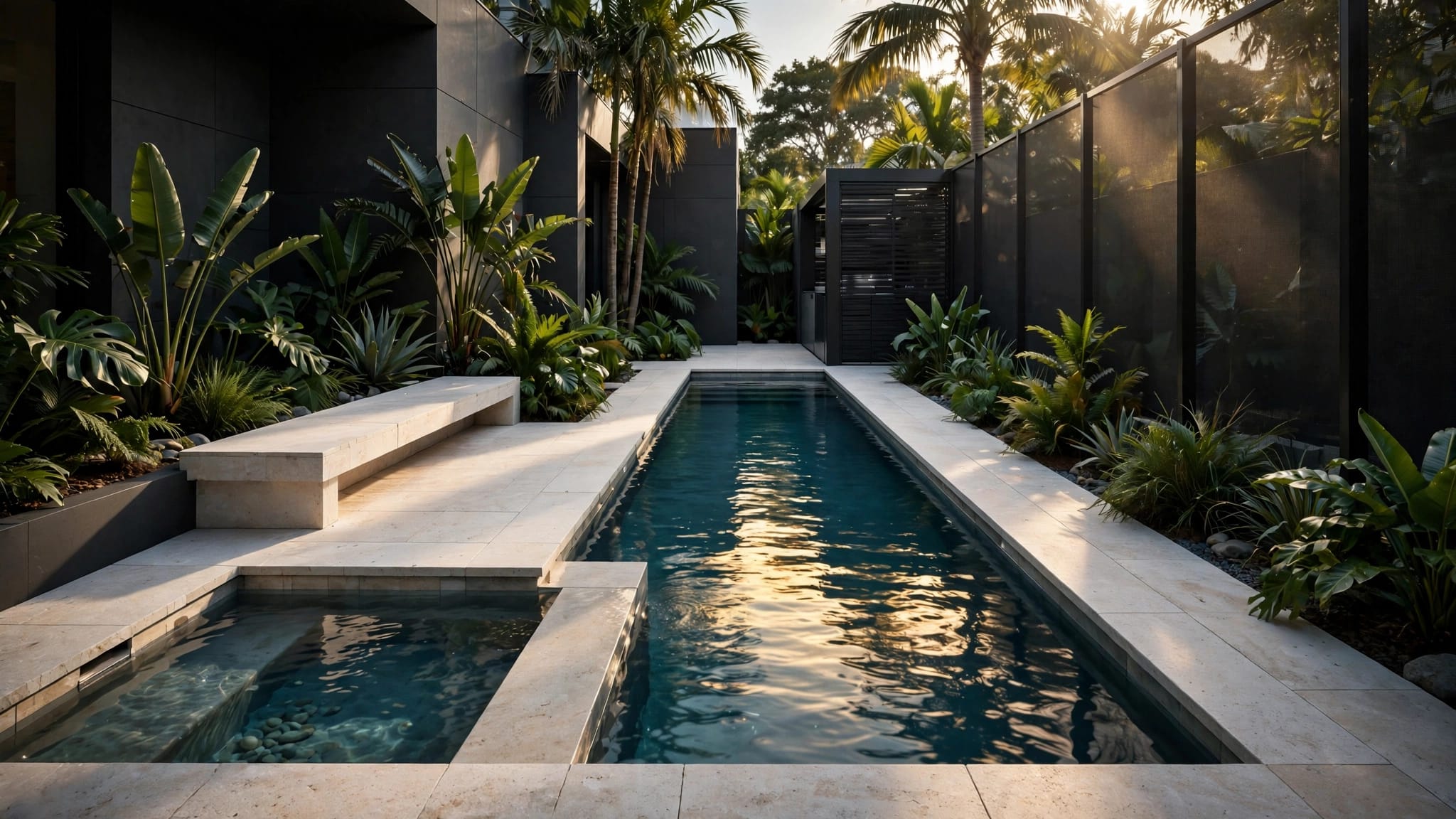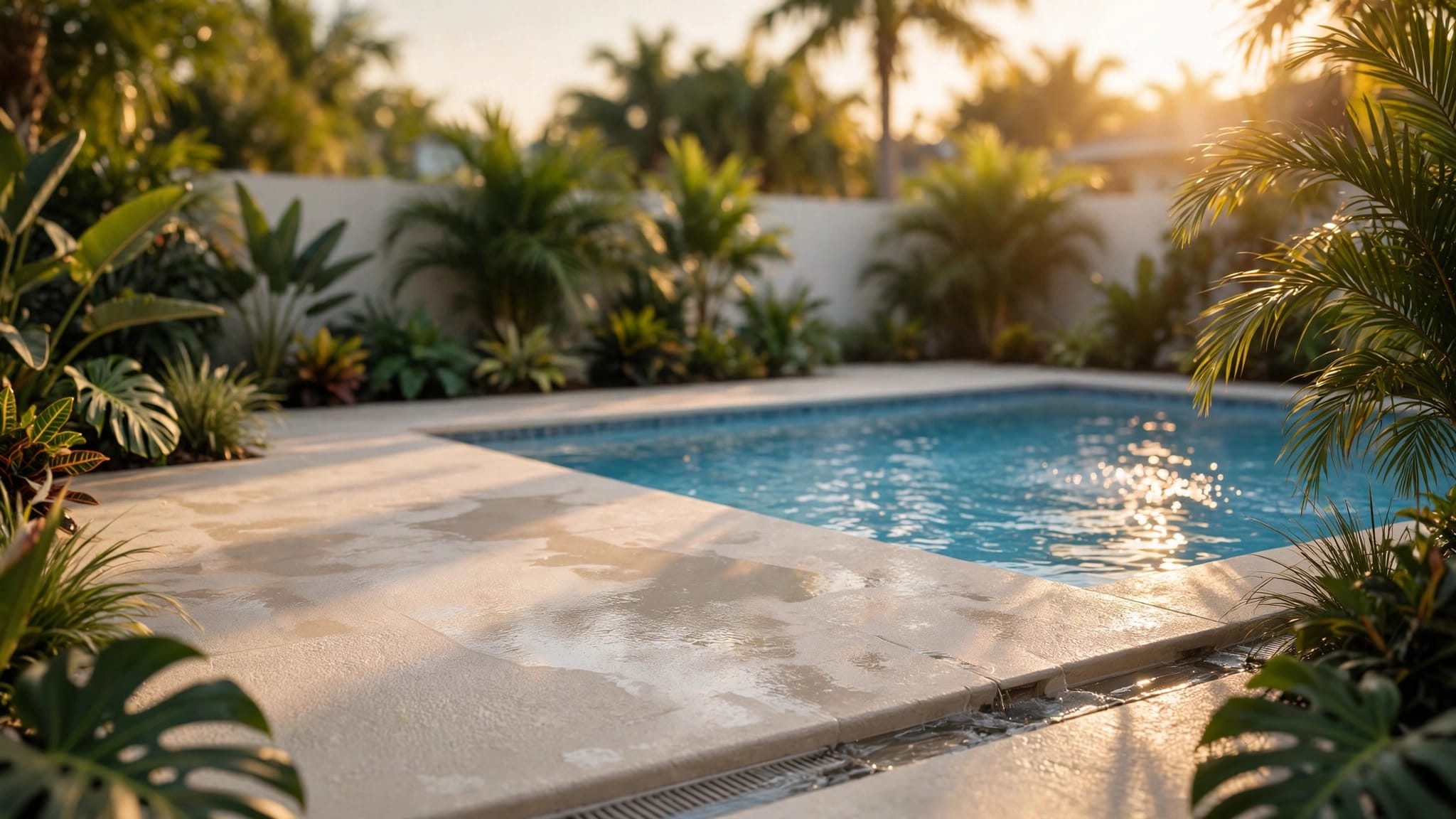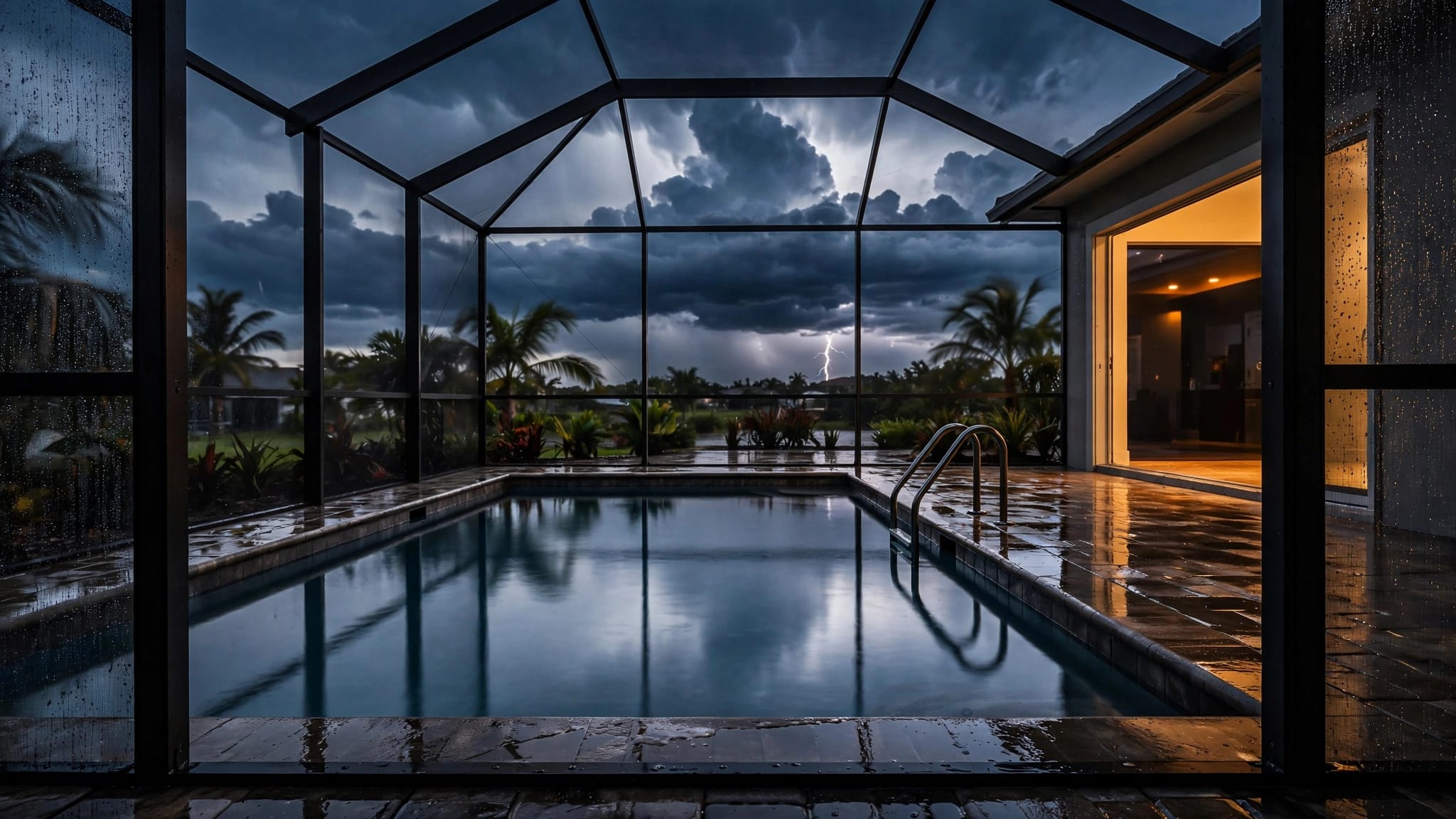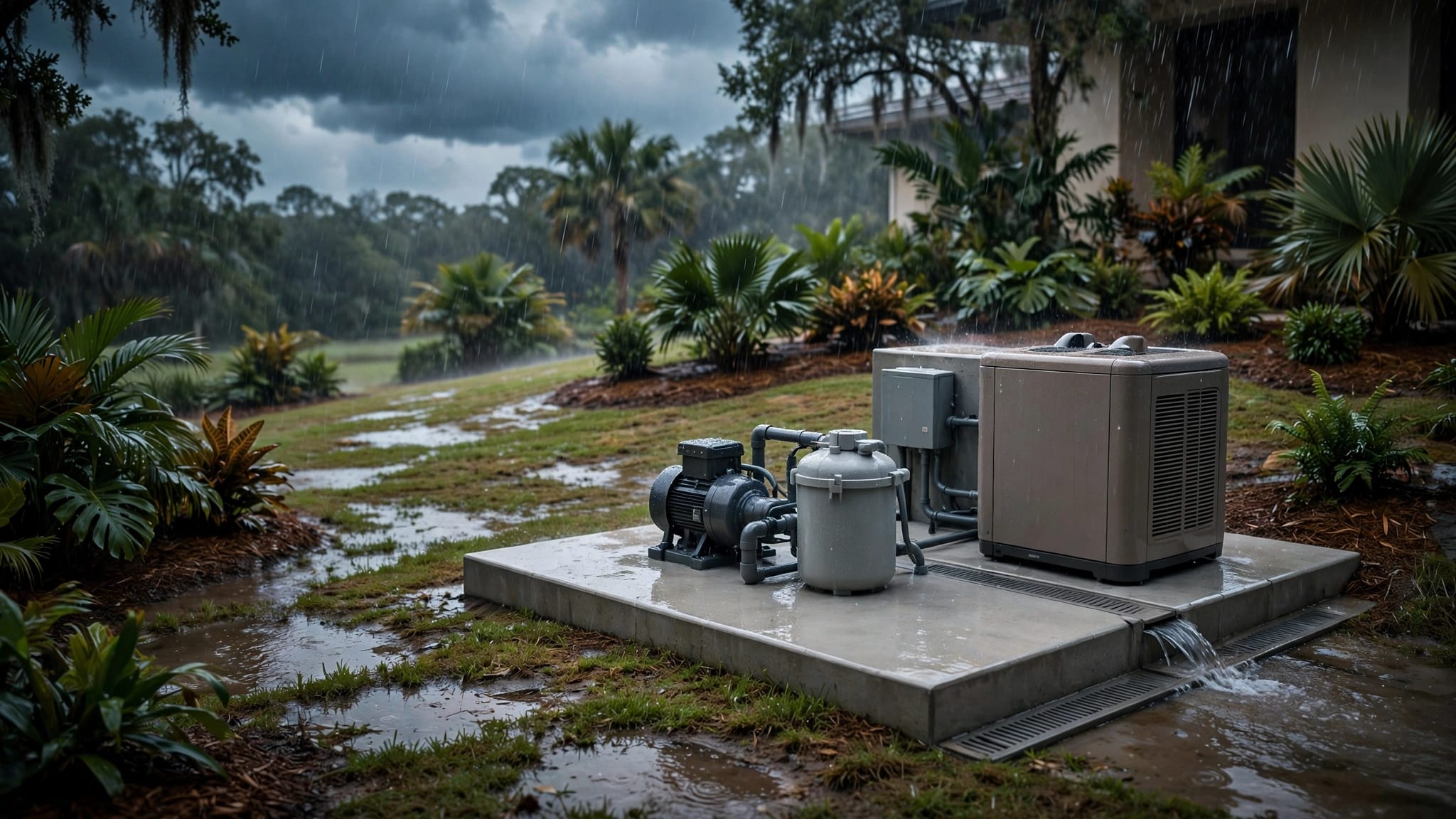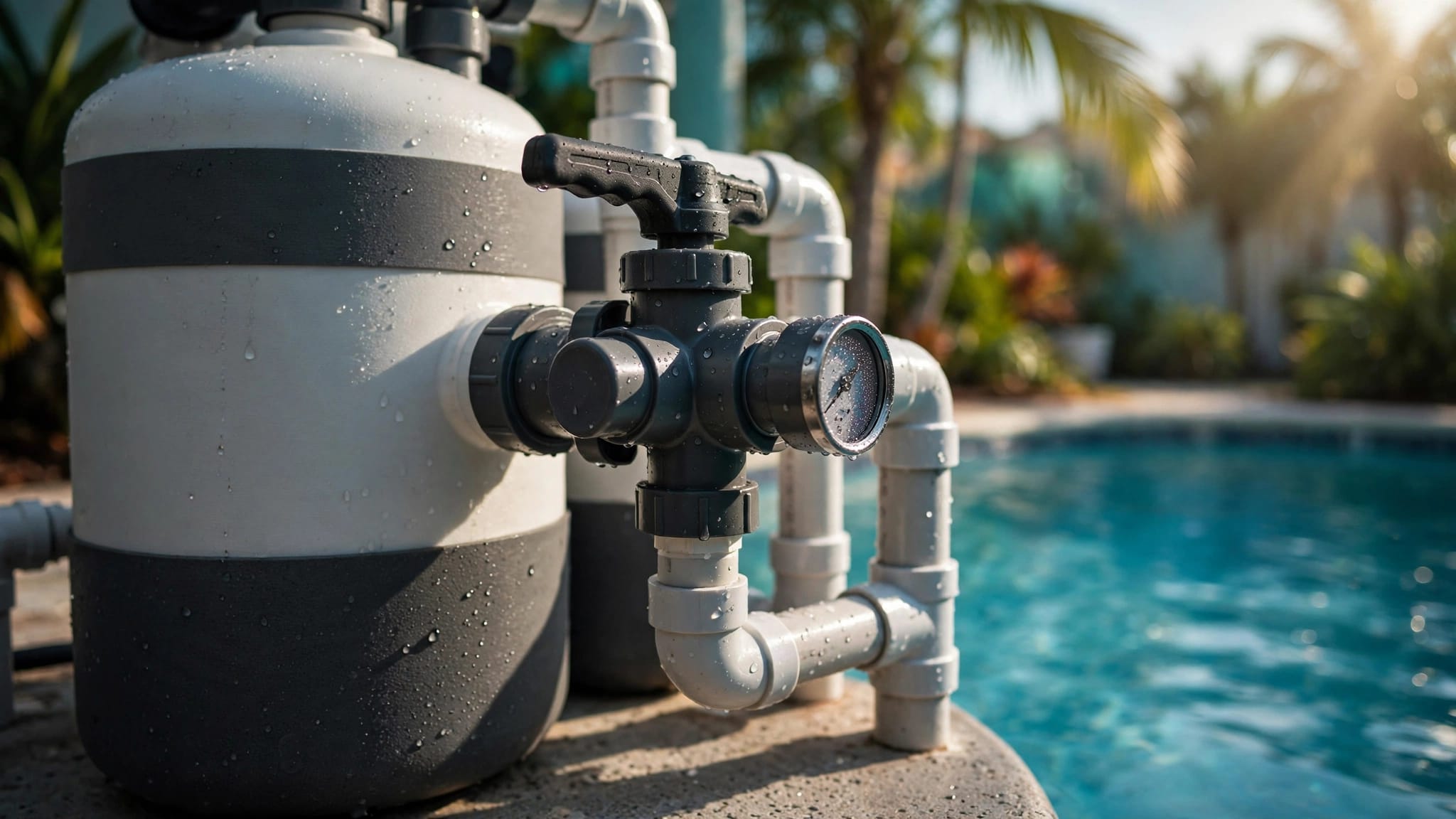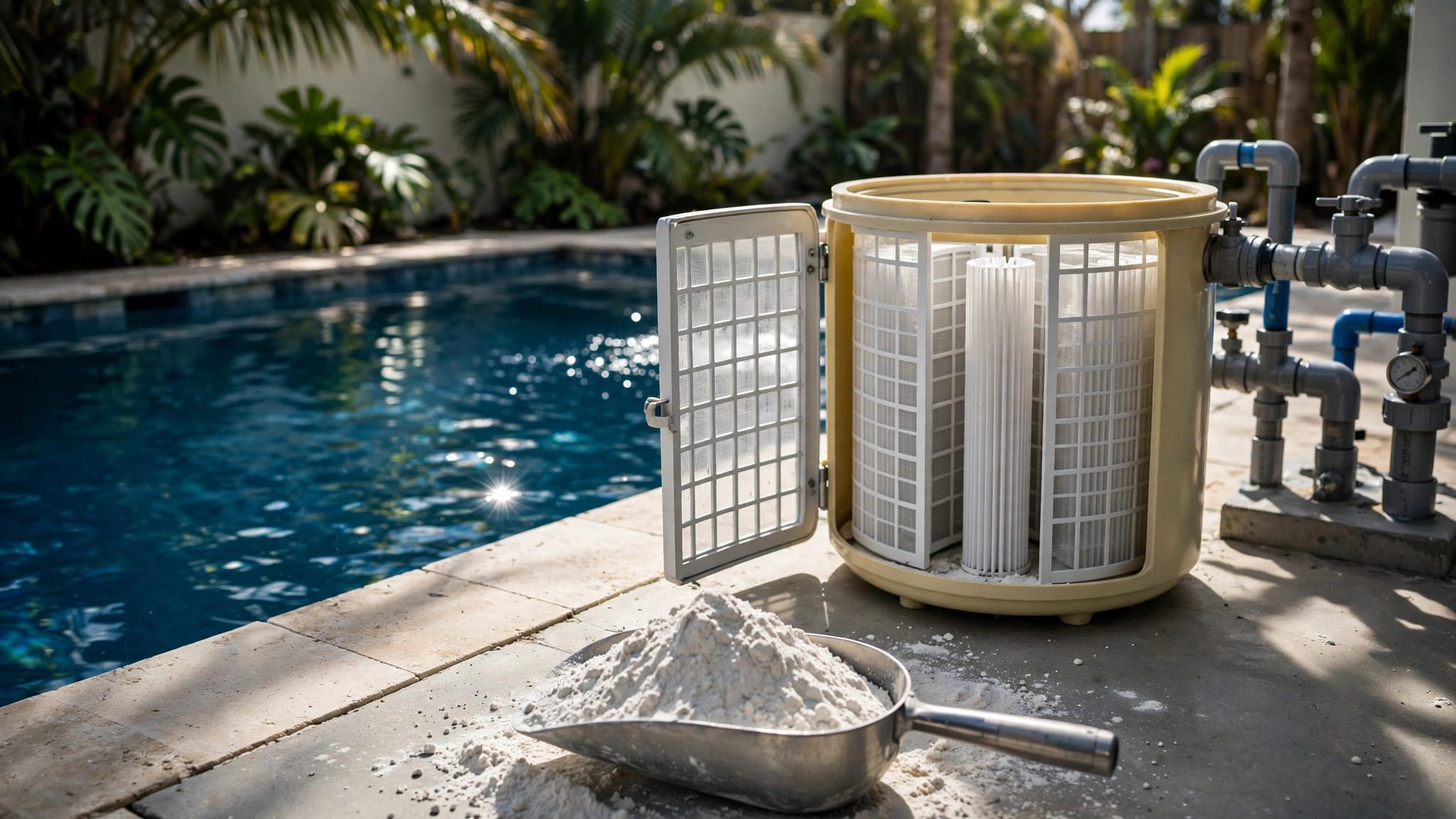
In Cape Coral, a pool can fill fast after a summer storm. That makes water control a bigger question than many homeowners expect. A Cape Coral pool overflow drain is not needed on every project, but it can be a smart choice when the site holds water or the deck gets heavy rain.
The right answer depends on the lot, the pool shape, the patio slope, and how the equipment is set up. If you're planning a new build or a remodel, it helps to look at drainage before the design is finalized.
What an overflow drain actually does
An overflow drain gives extra pool water a place to go when the level rises above normal. That can happen after heavy rain, an overfilled autofill system, or lots of splash from swimmers and water features. It is a separate design detail, not a cure-all.
A good pool still needs proper deck slope, gutters where needed, and yard drainage that moves water away from the house and the shell. If those pieces work together, the pool stays easier to manage.
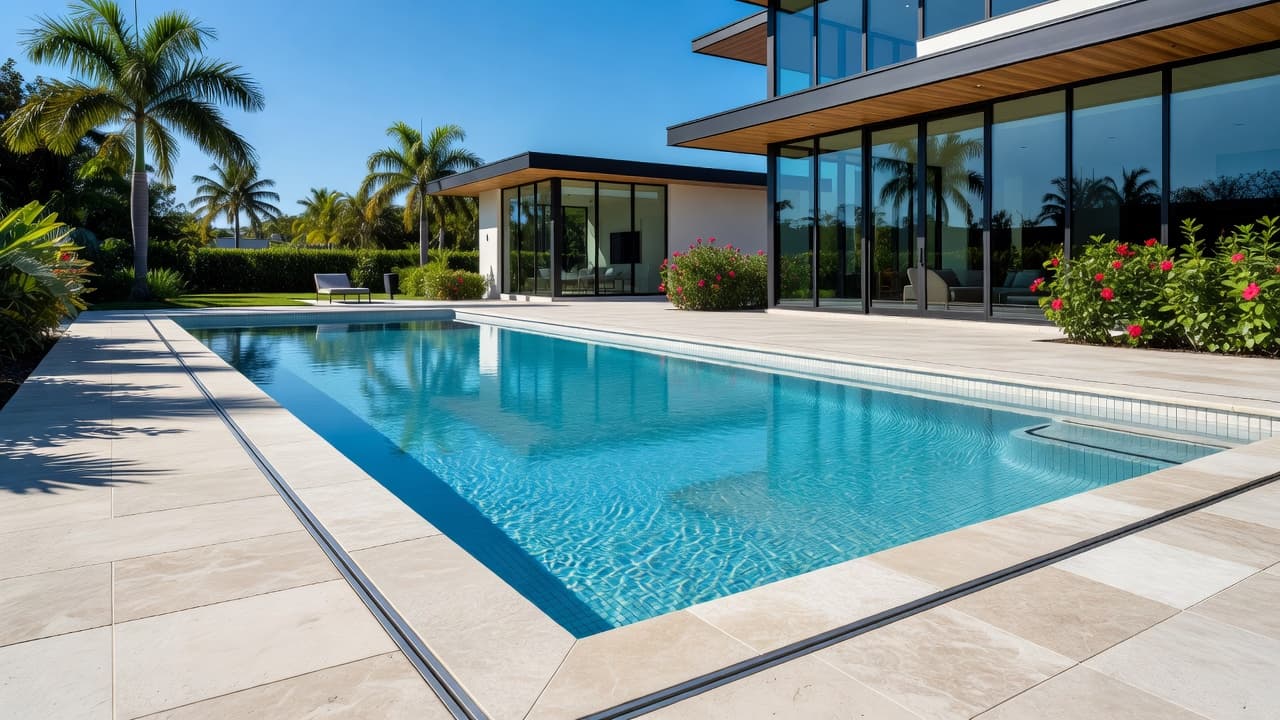
Without a safe outlet, high water can hide the tile line, reduce skimming, and leave the pool looking out of balance. In a screened pool, the issue can be easier to miss because the enclosure keeps debris out but does not change how rain reaches the deck.
When Cape Coral conditions make it more useful
Some properties call for an overflow drain more than others. The layout of the lot matters as much as the pool itself.
| Situation | Why it matters | Overflow drain may help? |
|---|---|---|
| Low-lying lot | Rain can sit near the pool and deck | Often yes |
| Poor yard grading | Water may move toward the shell instead of away from it | Often yes |
| Screened enclosure | Rain still reaches the deck, but runoff paths can be limited | Often yes |
| Raised spa or water feature | Extra splash can push the water level up | Sometimes |
| Strong roof runoff nearby | Downspouts can add water fast during storms | Sometimes |
| Remodel with new deck slopes | Resurfacing can change how water moves | Often worth reviewing |
The pattern is clear. If the property collects water, an overflow drain deserves a close look. If the deck already drains well and the yard slopes away, the need may be lower.
The pool, deck, and yard have to work together. If one part traps water, the others feel it fast.
A flat lot with little slope is one of the most common reasons to ask about drainage early. So is a remodel that changes deck height, coping, or patio grade. If you're comparing pool services in Cape Coral, drainage should be part of the first design talk, not an afterthought.
The trade-offs homeowners should weigh
An overflow drain solves a real problem, but it also adds another part to the system. That trade-off matters most when you're choosing between a simple layout and a project with more water features or tighter site conditions. A remodel that includes pool renovations and resurfacing is a good time to recheck slope, coping, and waterline height.
Here are the main points to think about:
- It can reduce the chance of a pool sitting too high after heavy rain.
- It can help when runoff from the roof or yard reaches the deck.
- It can make a new build feel more complete when the lot has drainage issues.
- It adds another component that should stay clear and accessible.
- It will not fix a badly graded yard on its own.
- It should be sized and placed as part of the full drainage plan.
The upside is peace of mind during storm season. The downside is simple, every added part needs a reason. If the pool already has good slope and the yard drains well, you may not need the extra feature.
What to discuss with your builder before you decide
Before you choose a drainage setup, ask how water moves across the whole property. If the answer only covers the pool shell, keep asking. A builder should look at the deck, the yard, the enclosure, nearby roof runoff, and the equipment area together.
These questions help a lot:
- Where does rain leave the deck during a heavy storm?
- Does the lot sit higher or lower than the neighboring yard?
- Will a screen enclosure change how water reaches the pool area?
- Do gutters, downspouts, or patio roofs send water near the shell?
- Does the equipment pad need its own drainage plan?
- Are there local permit or drainage requirements that should be checked?
A clear answer to those questions is more useful than guessing. If you want a site-specific plan, Get a Free Estimate and walk the property with the builder before you lock in the design.
Conclusion
A Cape Coral pool overflow drain can be a smart addition, but only when the site calls for it. If the lot drains well and the deck slopes correctly, it may not add much value.
If the property holds water, gets heavy runoff, or is part of a remodel that changes grade, it deserves a close look. The best decision comes from the full layout, not from the pool shell alone.
That small drainage choice can make a big difference after the first heavy rain.