A pool's interior surface can make the same Florida water look turquoise, blue, gray, or nearly navy. The right pool finish color helps set the mood of your backyard, but it doesn't work alone. Sun angle, water depth, sky reflection, finish material, and screen enclosure all change what your eyes see. Understanding those influences helps you choose a finish that still looks right after installation or resurfacing.
A sample in a showroom rarely looks identical across an entire pool. The best choice comes from looking at the finish in real Florida light, then matching it to your pool's shape, surroundings, and maintenance plan.
How Pool Finish Color Shapes Water in Florida
Pool water is mostly transparent, so you see a combination of reflected light and the surface beneath it. A light interior reflects more light back through the water. A dark interior absorbs more light and makes the water appear deeper.
The pool's depth also changes the result. A shallow tanning ledge may look pale aqua, while the deep end appears richer blue with the same finish. Curved walls, steps, benches, and sun shelves create additional shifts because each area receives light at a different angle.
Finish color also affects visual clarity. Clear water over a pale surface looks bright and lively. Clear water over a dark surface often appears more dramatic, with stronger contrast around steps and tile. However, a dark finish doesn't make cloudy water clear. Proper circulation, filtration, and water chemistry still control water quality.
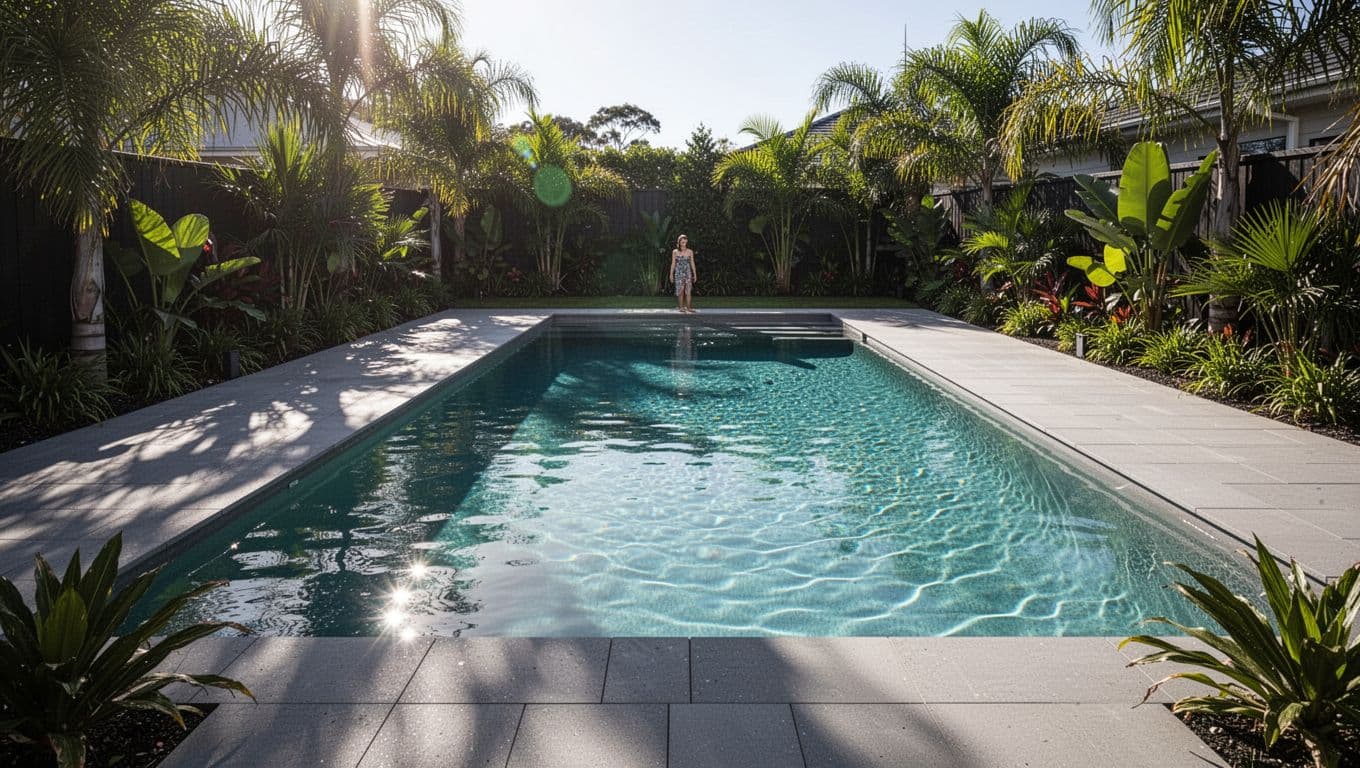
Light finishes create bright, tropical water
White plaster and very light blue finishes usually produce bright aqua or turquoise water. This look works well in shallow pools, beach-entry areas, and backyards with light pavers. It also makes the pool feel open and sunny.
Light surfaces show stains, leaves, and mineral deposits more easily. That visibility can help you notice changes early, but it also means the finish may require more frequent cleaning to keep its original appearance.
Medium blue and gray finishes offer balance
Medium blue finishes create a classic swimming pool appearance. They usually look blue in deeper areas and aqua near the steps or tanning ledge. Gray finishes can soften the color, producing a blue-gray or natural water appearance.
These mid-range options pair well with many Florida materials, including gray pavers, white coping, natural stone, and wood-look porcelain tile. They also offer a practical middle ground when you want color without an especially bright or dramatic result.
Dark finishes add depth and contrast
Navy, charcoal, dark gray, and dark pebble finishes can make water look deep sapphire blue. They suit contemporary pools, large freeform designs, and backyards with strong landscape contrast.
Dark interiors can make a pool appear deeper than a light one. They may also make the bottom harder to read in shade or evening light, so good pool lighting and clear water matter. Light calcium deposits or surface mottling can stand out against a dark finish, too.
A dark finish creates visual depth, but it doesn't replace good lighting, circulation, or water care.
Florida Sunlight, Depth, and Screen Enclosures Change the Shade
Southwest Florida receives strong sunlight for much of the year. Direct midday sun can make a blue finish look brighter and more turquoise. Morning and late-afternoon light often create softer, deeper tones. Cloud cover reduces glare and may make the same water appear more gray.
The pool's orientation matters as well. A pool that receives full southern exposure may look different from one shaded by a home, lanai, palm trees, or a neighboring structure. Water depth amplifies these differences, especially in pools with a shallow shelf beside a deep swimming area.
A screen enclosure changes the light without blocking the sky completely. Mesh can soften direct sun and cast a cooler shade across the water. Screen frames also create shadows that move throughout the day. If you're building a new enclosure or planning a rescreen, view finish samples beneath the existing screen when possible.
Your pool finish color should also work with the deck and surroundings. Bright white coping can make dark water look even richer. Tan pavers may push a light blue finish toward a warmer aqua. Green landscaping can add a slight visual cast, particularly when reflected across still water.
Plaster, Quartz, or Pebble: Material Changes the Look
Color is only one part of the finish. The material and aggregate affect how light scatters across the pool surface. Two finishes with similar color names can look different because one contains fine quartz and the other contains larger pebble.
White plaster provides a smooth, clean background and often creates bright blue or aqua water. It is a common choice for homeowners who want a lighter appearance and a lower initial finish cost. Quartz finishes add colored aggregate to the surface, which can create more sparkle and variation than plain plaster.
Pebble finishes have a more textured appearance. Their natural stones can create layered shades across the pool, especially in deeper water. Depending on the blend, pebble may look blue, gray, tan, or greenish. Texture can also change how shadows appear on steps and benches.
| Finish material | Typical visual effect | Common consideration |
|---|---|---|
| White plaster | Bright aqua or light blue water | Smooth appearance, more visible staining |
| Quartz | Brighter color with subtle sparkle | More variation than basic plaster |
| Pebble | Richer depth and natural texture | Textured feel and stronger color variation |
For a closer material comparison, review this guide to pebble versus quartz pool finishes compared. The right selection depends on the look you want, how the surface feels underfoot, and the conditions around your pool.
Material also affects replacement timing. Plaster often lasts about 7 to 10 years, quartz about 10 to 15 years, and pebble about 15 to 20 years when the pool receives suitable care. This guide to how long pool finishes typically last provides more detail on lifespan and surface wear.
How to Choose a Pool Finish Color for Your Backyard
Start with the pool itself, not a catalog photo. A narrow pool, a deep freeform pool, and a design with a large tanning ledge will display the same finish in different ways.
Use these steps before choosing a surface:
- Look at the pool's depth profile. Light colors work well when much of the pool is shallow. Darker colors create more depth in larger or deeper designs.
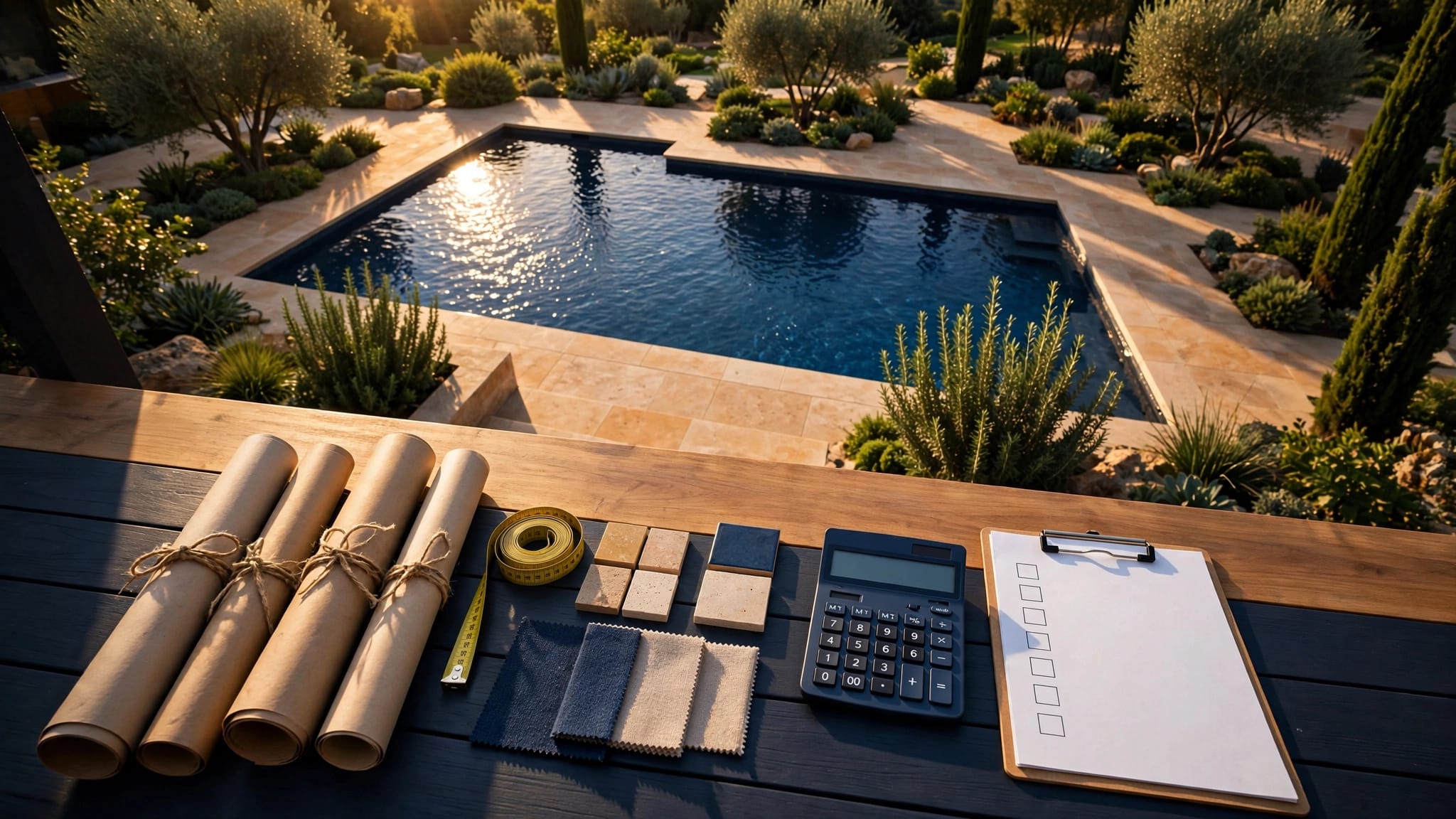
- View samples in natural light. Place sample boards outdoors near the proposed pool area. Check them in direct sun, partial shade, and under your screen enclosure.
- Wet the samples. A dry finish sample doesn't show the same color or texture as a submerged surface. Wetting the sample gives you a closer visual reference.
- Match the surrounding materials. Compare the finish with coping, pavers, waterline tile, landscaping, and the color of the lanai or enclosure frame.
- Consider visibility and maintenance. Dark finishes may hide some debris but can show pale mineral deposits. Light finishes make dirt and stains easier to spot. Both require balanced water chemistry and regular cleaning.
Ask for a larger sample when possible. Small chips can hide variation in aggregate, while a full pool may show several shades across the floor, walls, steps, and benches. A qualified pool contractor can also show completed projects with similar dimensions and lighting.
The best pool finish color is the one that fits your actual backyard conditions. A shade that looks perfect beside a bright showroom window may feel too pale under a shaded lanai.
New Construction and Resurfacing Considerations
New pool construction gives you the most control. You can coordinate the interior finish with the pool shape, sun exposure, waterline tile, deck, lighting, and screen enclosure before work begins.
Resurfacing offers a different opportunity. The pool's shape usually stays the same, but a new surface can change the water's entire appearance. If the existing finish is rough, stained, discolored, or flaking, compare pool remodeling versus resurfacing differences before choosing the scope of work.
A resurfacing project should account for more than color. The shell, tile, waterline, fittings, and startup process all affect the finished result. If you also need a rescreen or enclosure update, coordinate the work so you can judge the final light and shade conditions together.
For help comparing finish samples with your pool's design and Florida exposure, you can Get a Free Estimate for an onsite consultation.
Conclusion
A pool finish changes the way water reflects light, but Florida sun, depth, surroundings, and screen enclosures complete the picture. Light finishes usually create bright aqua water, medium shades offer a balanced blue, and dark finishes add a deeper sapphire appearance.
Choose samples in real outdoor conditions, compare them while wet, and consider the surface material as carefully as the color. The right pool finish color is the one that looks natural in your backyard and remains practical for years of swimming.