Pool permits can move fast when the paperwork is clean, or they can sit for days on a missing detail. In Cape Coral, a standard residential pool permit often takes about 10 to 20 business days , which is roughly 2 to 4 weeks , once the city has a complete application.
That range is a solid starting point, not a promise. A simple in-ground pool may stay near the low end, while a project that needs extra review can take longer.
If you're planning a backyard build, it helps to know where the time goes before the first shovel hits the dirt.
The permit timeline most homeowners should expect
For most new residential pools, the city reviews the plans after the application is complete. That means the permit clock really starts when the file is ready, not when the first form gets sent.
Cape Coral pool permits for straightforward projects often fit inside that 2 to 4 week window. However, the review can stretch if the project needs checks from zoning, floodplain, utilities, or other departments. A pool with added features, such as a spa or enclosure, can also take longer than a simple dig-and-build project.
If you're comparing options for custom pool construction, it helps to think about permitting as part of the design stage. Clean plans usually move faster than plans that need back-and-forth corrections.
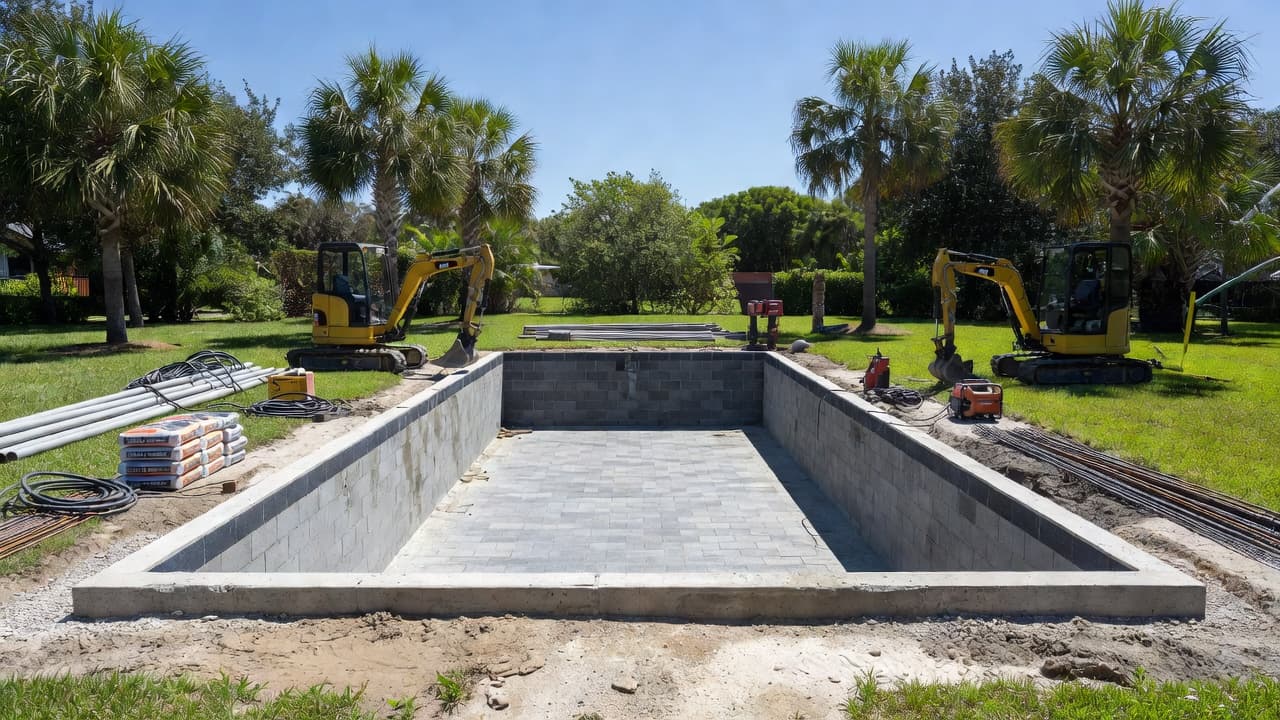
The permit clock starts when the city has a complete package, not when the first form is sent.
That detail matters. Two homeowners can submit around the same time and still get very different results.
What helps Cape Coral pool permits move faster
A permit file moves best when every piece is ready before submittal. Missing documents force the city to stop, ask questions, and wait for updates.
A few things usually help:
- A complete site plan with lot lines, setbacks, and the pool location clearly marked.
- Accurate survey information that matches the property and the proposed work.
- Engineering details for structural items, drainage, electrical, and barrier requirements.
- Fast contractor responses when the city sends comments or correction requests.
When those items are in place, the file has fewer chances to bounce back. That saves time, and it also lowers the chance of a surprise delay after review starts.
Another simple win is making sure the project scope is clear from the beginning. If the pool plan includes a screen enclosure, future renovation work, or other additions, the city may need more information up front. Homeowners who are comparing broader project options can review our pool services before final plans go in.
What usually causes delays
Delays usually start with small mistakes. A missing survey, incomplete form, wrong lot detail, or drawing that doesn't match the property can trigger a correction notice. Once that happens, the review pauses until the updated documents come back in.
Contractor responsiveness matters too. If the city asks for revisions and the builder takes days to respond, the whole timeline stretches. Even a simple fix can turn into another round of review if the resubmitted plan still needs changes.
Seasonal demand plays a part as well. Busy periods can slow permit review, especially when many homeowners are starting projects at once. The schedule can also grow longer for more complex builds, such as a pool with a spa, retaining wall, or enclosure.
The same goes for larger backyard projects that involve renovations or rescreening. More scope usually means more paperwork, and more paperwork usually means more review time.
How to plan your schedule around the permit window
The safest move is to build the permit wait into your project calendar. If you want the pool ready for summer, a holiday, or a move-in date, start earlier than you think you need to.
That buffer helps in a few ways. It gives the contractor time to prepare clean plans, it leaves room for corrections, and it lowers the pressure if the city needs extra review. Material orders and construction scheduling also move more smoothly when approval is already in hand.
Because timelines can change, confirm current review times with the city or your pool contractor before you lock in a date. If you're ready to talk through your project, Get a Free Estimate is a simple way to start the conversation and map out the permit path.
A clear permit plan is worth more than a fast guess. It gives you a better shot at staying on schedule and avoids the stress of waiting on a file you can't control.
Conclusion
Most Cape Coral pool permits land in the 2 to 4 week range once the application is complete. After that, the real timeline depends on how clean the plans are, how many departments review the file, and how quickly corrections get handled.
If you're planning a new pool, start with complete documents and a builder who knows the local process. Then confirm current timing with the city or your contractor before you set the construction calendar.
A little planning up front saves a lot of waiting later, and that matters when you're turning a backyard into a pool site.