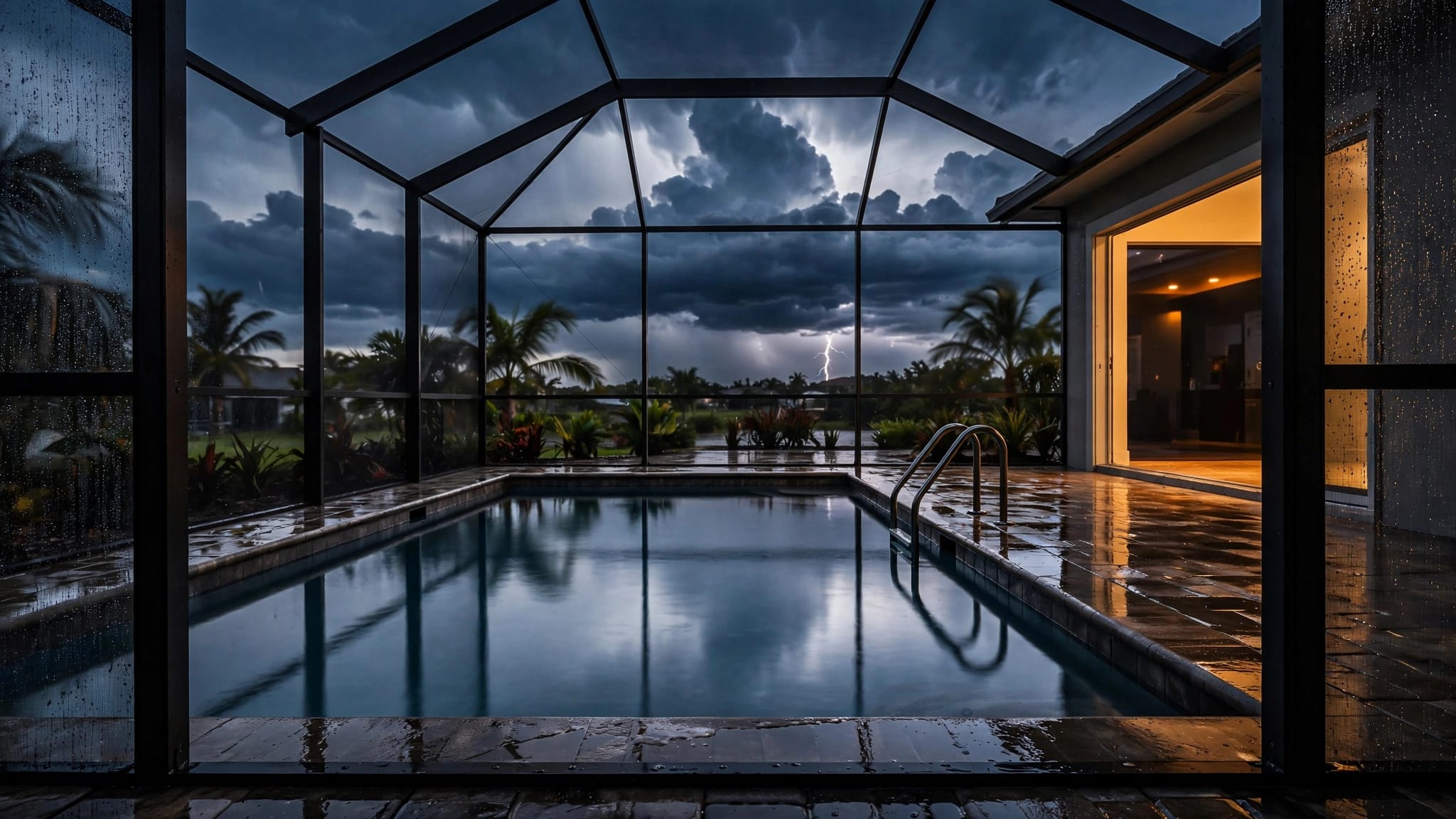
Pool screens in Cape Coral take a beating. Strong UV, salt air, afternoon wind, and storm debris all wear on mesh and hardware faster than many homeowners expect.
Most mesh panels last about 5 to 10 years here, and a well-built cage frame can last 20 years or more. The real pool screen lifespan depends on the material, the install, and the care it gets between storms.
If your enclosure is starting to sag, tear, or let bugs through, the age of the screen matters as much as the damage you can see. The sections below show what usually lasts, what shortens that timeline, and when a repair stops making sense.
Typical pool screen lifespan in Cape Coral
The mesh is usually the first part to wear out. Standard fiberglass screen often lasts 5 to 8 years in Southwest Florida, while heavier or premium mesh can reach 8 to 12 years, and sometimes longer with careful upkeep.
The aluminum frame lasts much longer than the mesh. Many cages stay in decent shape for 20 to 30 years, and some last beyond that if the coating holds up and the fasteners stay sound. Doors, hinges, latches, and screws often need attention sooner.
A simple comparison helps.
| Part of enclosure | Common lifespan in Cape Coral | What usually limits it |
|---|---|---|
| Standard fiberglass mesh | 5 to 8 years | UV, wind, and daily wear |
| Heavy-duty or premium mesh | 8 to 12 years | Sun, debris, and storm stretch |
| Pool cage frame | 20 to 30+ years | Corrosion, anchors, and impact damage |
| Hardware and door parts | 5 to 15 years | Rust, loosened screws, and use |
Quality installation matters too. Tight panels, correct tension, and solid fasteners give the screen a better start. Homes near canals or open water often see faster wear because salt and breeze reach the cage more often.
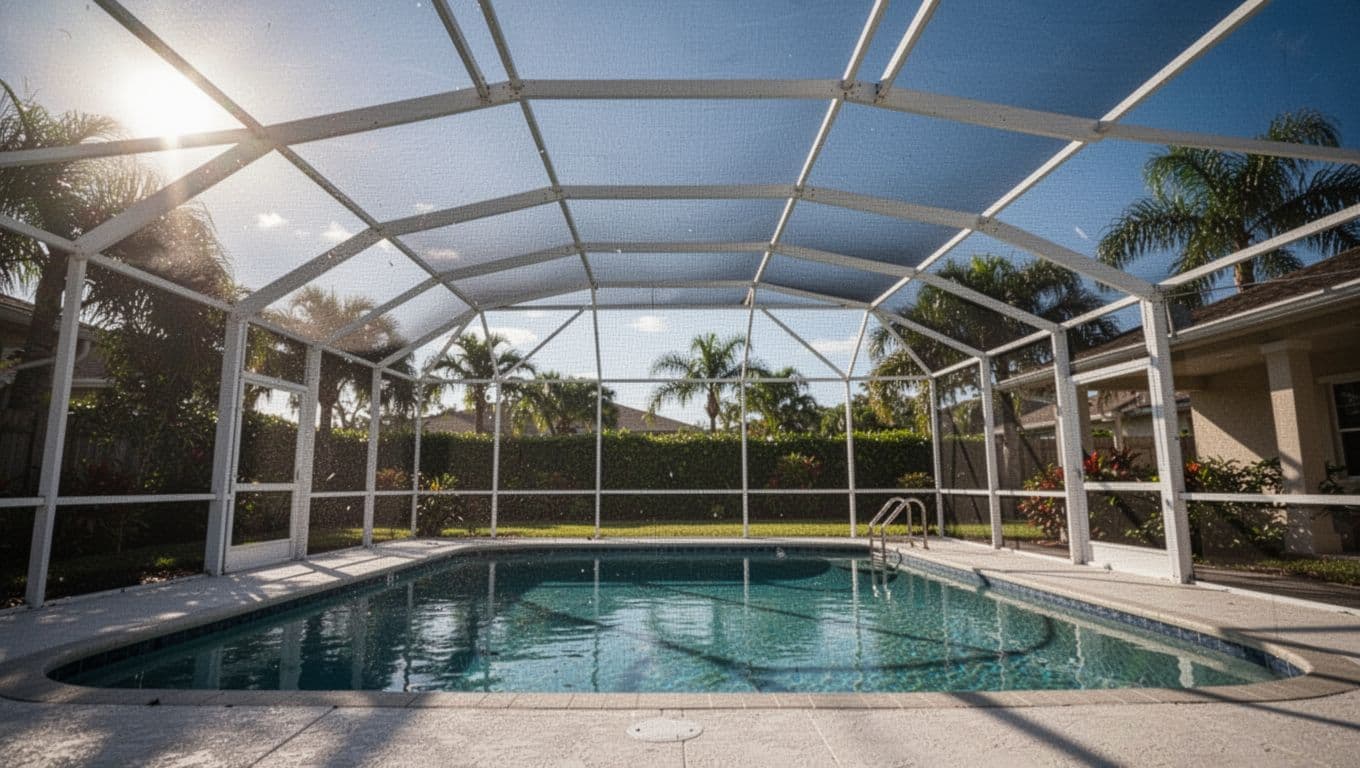
The mesh usually sets the replacement clock, while the frame keeps the structure alive longer.
Why Cape Coral weather shortens screen life
Cape Coral weather does not give screen enclosures much of a break. The same cage faces bright sun, salt in the air, high humidity, and sudden storms.
- UV exposure dries out fiberglass mesh. It fades, then gets brittle, and small tears start easier.
- Salt air and humidity speed up rust and corrosion on screws, anchors, hinges, and door hardware.
- Wind and storms flex the panels. Repeated strain loosens edges and can pull screen from the track.
- Debris and tree limbs create direct tears, bent rails, and scratched frame coating.
- Lack of maintenance lets small problems spread. A tiny tear can turn into a whole panel failure after the next storm.
Once the mesh loses tension, it does not hold shape well. Weather then works on weak spots instead of a tight surface. If you want to spot those changes early, spotting worn-out pool mesh helps you judge whether the problem is local or widespread.
Signs your pool screen is wearing out
Some problems are easy to miss until they get worse. A screen can look fine from far away and still be near the end of its useful life.
Watch for these signs:
- Torn mesh that keeps reopening after a patch
- Sagging panels that no longer stay tight
- Loose fasteners, popped spline, or screen pulling away from the frame
- Rust streaks, white corrosion, or flaking coating on the cage
- Doors that drag, stick, or won't latch cleanly
- Bugs, leaves, and sand getting inside more often than before
When several panels fail in different spots, the enclosure is usually aging as a whole, not just showing one bad patch.
If you notice more than one of these issues, a closer look is smart. A full inspection can tell you whether you need a small repair, a larger rescreen, or a frame fix.
Maintenance habits that add years
A little care goes a long way when the salt air and sun keep working on the cage. Good habits won't stop age, but they can slow it down.
Start with a gentle rinse a few times a year, especially after dry spells or windy weeks. Clean salt, pollen, and dust before they settle into the mesh and hardware. Trim trees and palms so fronds do not scrape the roof panels or walls.
A few more habits make a real difference:
- Check the enclosure after strong storms for loose edges, bent rails, or fresh tears.
- Keep gutters and roof runoff under control so water and debris don't beat up the screen.
- Look for rust around screws, hinges, and door closers, then handle it early.
- Avoid blasting the mesh with a pressure washer, because too much force can stretch or tear it.
- Ask for an annual inspection if the cage is older or if storms have already left their mark.
If you are comparing mesh types for a repair or new build, screen enclosure options can help you see what holds up better in coastal conditions.
Repair, rescreen, or replace?
A single tear or a loose corner often needs a simple repair. However, if the mesh is brittle across several panels, a full rescreen usually makes more sense.
A quick comparison can help you think through the next step.
| Situation | Common fix |
|---|---|
| One torn panel, frame in good shape | Panel repair |
| Several brittle or faded panels | Full rescreen |
| Rusted screws, loose doors, minor hardware issues | Hardware repair plus screen work |
| Bent frame, loose anchors, storm damage | Structural repair or replacement |
The numbers matter here, too. If you're comparing a small fix with a full replacement, pool rescreen pricing guide gives you a better sense of where the money goes. In many cases, a full rescreen costs less than repeated patch work over a few seasons.
If you're unsure which path fits your enclosure, Get a Free Estimate can give you a clear answer after an onsite look. A good inspection checks the mesh, frame, fasteners, and door hardware before anyone recommends the next step.
Conclusion
In Cape Coral, the mesh usually gives out before the cage frame does. Standard screen may last only a handful of years, while a sound aluminum structure can stay useful for decades.
The best way to protect your pool screen lifespan is simple care, quick repairs, and a close eye after storms. Once tears, sagging, rust, and loose hardware show up together, the enclosure is telling you it's time for a closer look.
A screen should keep out bugs, leaves, and wind-blown debris without becoming a headache. When it stops doing that, the next move should be clear.