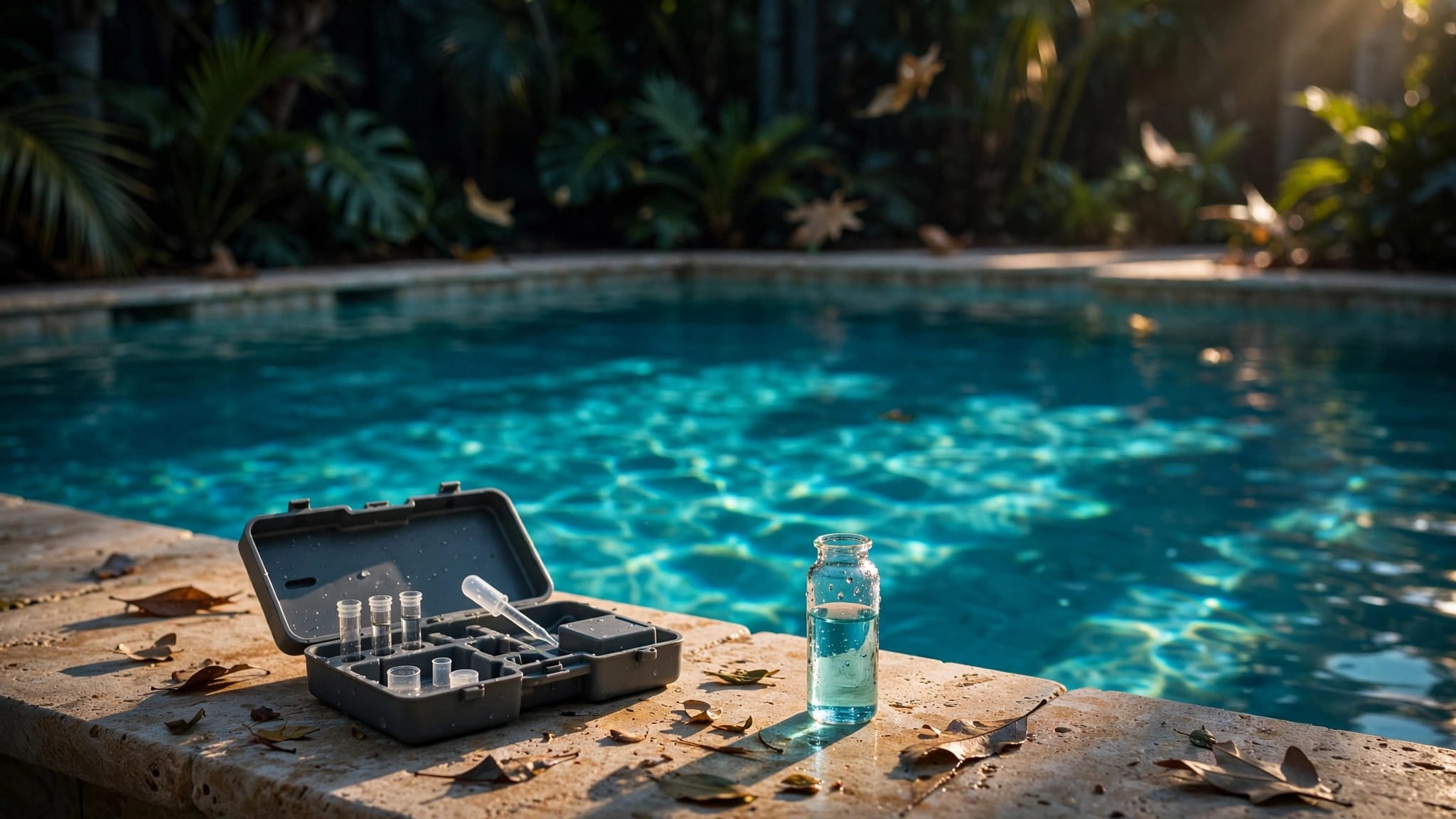
Good pool chemical storage protects your family, your pets, your pool equipment, and the surrounding Florida environment. The safest setup keeps every product in its original labeled container, dry and secure, with chlorine and acid stored separately.
Cape Coral's heat, humidity, salt air, heavy rain, and flood risk create extra challenges. A hot shed, a damp garage corner, or an unlocked cabinet beside the pool can turn routine maintenance into a serious hazard.
The right location matters as much as the right products. Start with the rules that apply, then build a storage setup that fits your yard and your pool project.
Pool chemical storage rules for Cape Coral homes
Homeowners often ask whether Cape Coral requires a particular cabinet, separation distance, or storage temperature for residential pool chemicals. Those details shouldn't be assumed. Requirements can vary based on the structure, the property, the pool work being completed, and the product label.
Separate local requirements from safety guidance
Don't treat a general safety recommendation as a city ordinance. A specific cabinet size, vent design, or distance from the house should only be called a local requirement after confirmation with Cape Coral, Lee County, or the current Florida Fire Prevention Code.
The basic safety rules are much clearer. Keep chemicals in their original containers, protect them from moisture and heat, separate incompatible products, and secure them from children and animals. Product labels also provide handling, temperature, ventilation, and disposal instructions for that specific chemical.
If the label gives stricter directions than general advice, follow the label. Never remove a label or rely on memory after transferring a product between storage locations.
Check requirements before changing the property
Adding a detached shed, enclosed cabinet, utility room, or new structure can raise separate building or fire-safety questions. Pool renovations can also involve permit review when they change the equipment pad, deck, screen enclosure, access points, or electrical work.
Before construction begins, ask your contractor or the appropriate local office what applies to your project. The answer for a freestanding cabinet may not be the same as the answer for a new accessory structure.
Where to store pool chemicals safely
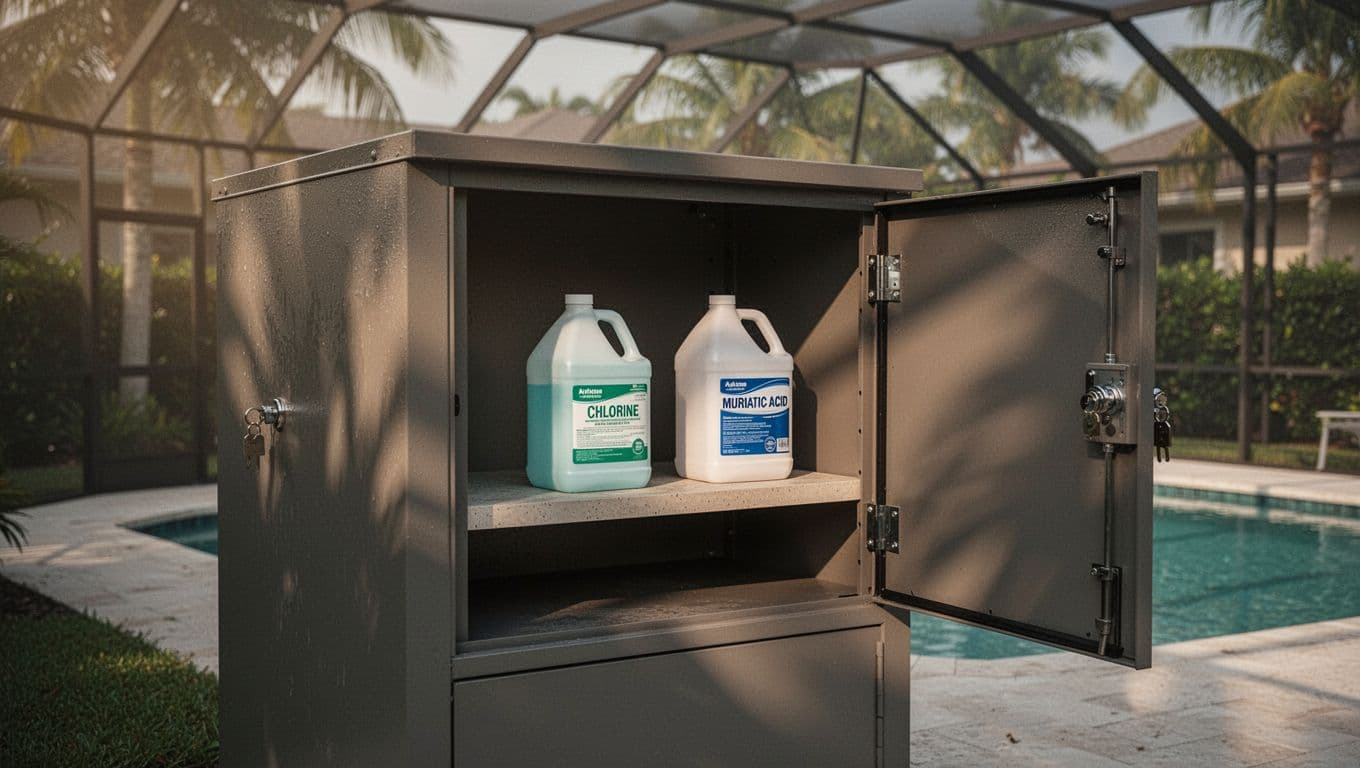
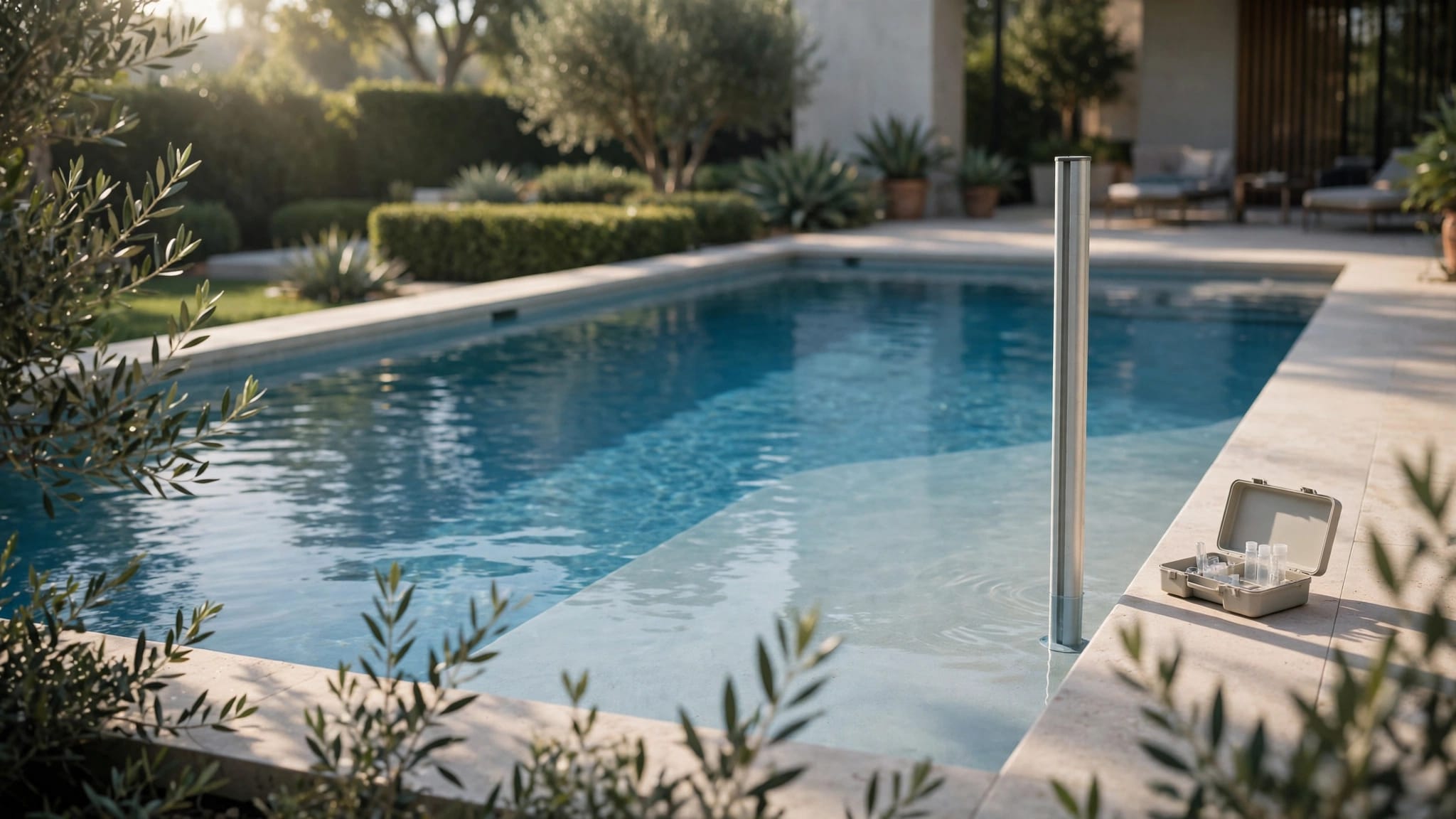
A suitable storage area is shaded, dry, ventilated, secure, and separate from normal household activity. A locked outdoor utility cabinet can work well when it stays above flood-prone areas and has enough airflow.
Keep every product in its original container
Chlorine tablets, calcium hypochlorite shock, liquid chlorine, and muriatic acid should stay in the containers supplied by the manufacturer. Those containers are designed for the product, and their labels provide important information during an emergency.
Never pour pool chemicals into a drink bottle, food container, glass jar, unlabeled bucket, or decorative storage bin. A familiar-looking container can lead to accidental ingestion or incorrect use. It also removes the instructions that emergency responders may need.
Keep lids closed and inspect containers for swelling, cracks, corrosion, stains, or damaged caps. If a container looks compromised, don't place it in another container or mix its contents with a fresh product. Follow the label's instructions and seek professional guidance.
Separate acids, chlorine, and different chlorine types
Muriatic acid must stay physically separate from chlorine products. Different shelves in one cabinet may not provide enough protection if a container leaks or fumes escape. Use separate, clearly isolated storage locations.
Trichlor tablets or pucks should also remain separate from calcium hypochlorite shock. These are different chlorine products, and contact between them can create heat, fire, or dangerous fumes. Liquid chlorine belongs away from dry chlorine products and acids as well.
Keep liquid products below dry chemicals, never above them. Use compatible secondary containment for liquid chlorine or muriatic acid, but don't place acid and chlorine in a shared tray or bin.
Managing Cape Coral heat, humidity, and salt air
Southwest Florida weather affects chemical storage throughout the year. High temperatures can degrade products, moisture can damage dry chemicals, and salt air can corrode cabinet hardware and tools.
Choose a cool, shaded, ventilated location
Avoid direct sunlight, hot metal cabinets, sealed sheds, and spaces that trap afternoon heat. A screen enclosure protects a pool area from insects and some rain, but it doesn't automatically provide safe chemical storage.
The cabinet should allow appropriate ventilation without exposing containers to rain. Don't put chemicals beside a grill, propane cylinder, gasoline can, heater, electrical motor, or other ignition source. Keep fertilizer, paint, solvents, motor oil, and other incompatible household products in separate areas.
Labels may list temperature limits or additional ventilation instructions. Use those instructions rather than relying on a generic temperature number. If the storage area regularly becomes hotter than the product label allows, choose another location.
Keep moisture away from the containers
Humidity and condensation can cause dry chlorine products to clump or deteriorate. Rainwater can also damage labels, weaken packaging, and carry residue across a pool deck or yard.
Use a stable shelf that keeps containers off wet concrete and away from roof runoff. The shelf must support the full weight without tipping. Store lids upright and tightly closed, and keep the floor of the cabinet clear of standing water.
A compatible leak tray can help contain a small liquid leak, but it doesn't replace separation or inspection. Check the cabinet after heavy rain, irrigation, and cleaning. Salt air can corrode hinges and latches, so replace damaged hardware before the lock stops working.
Protecting children and pets from pool chemicals
A pool cage, fence, or screen door helps control access to the pool, but it doesn't make chemical containers safe by itself. Children and pets may enter the enclosure, and a loose cap or spilled granules can attract attention.
Lock the storage area every time
Store chemicals in a locked cabinet or another secure area that children and pets can't access. A high shelf alone isn't enough, especially in a backyard where a child may climb or a dog may knock over a container.
Keep keys, codes, and cabinet access devices away from children. Don't leave an open container beside the pool while testing water or adding a product. Measure the chemical, close the container, and return it to storage before moving to the next task.
Avoid storing chemicals in kitchens, pantries, bedrooms, or other living areas. An exterior location is usually easier to separate from daily household activity, provided it stays dry, shaded, ventilated, and protected from flooding.
Keep labels and tools in good condition
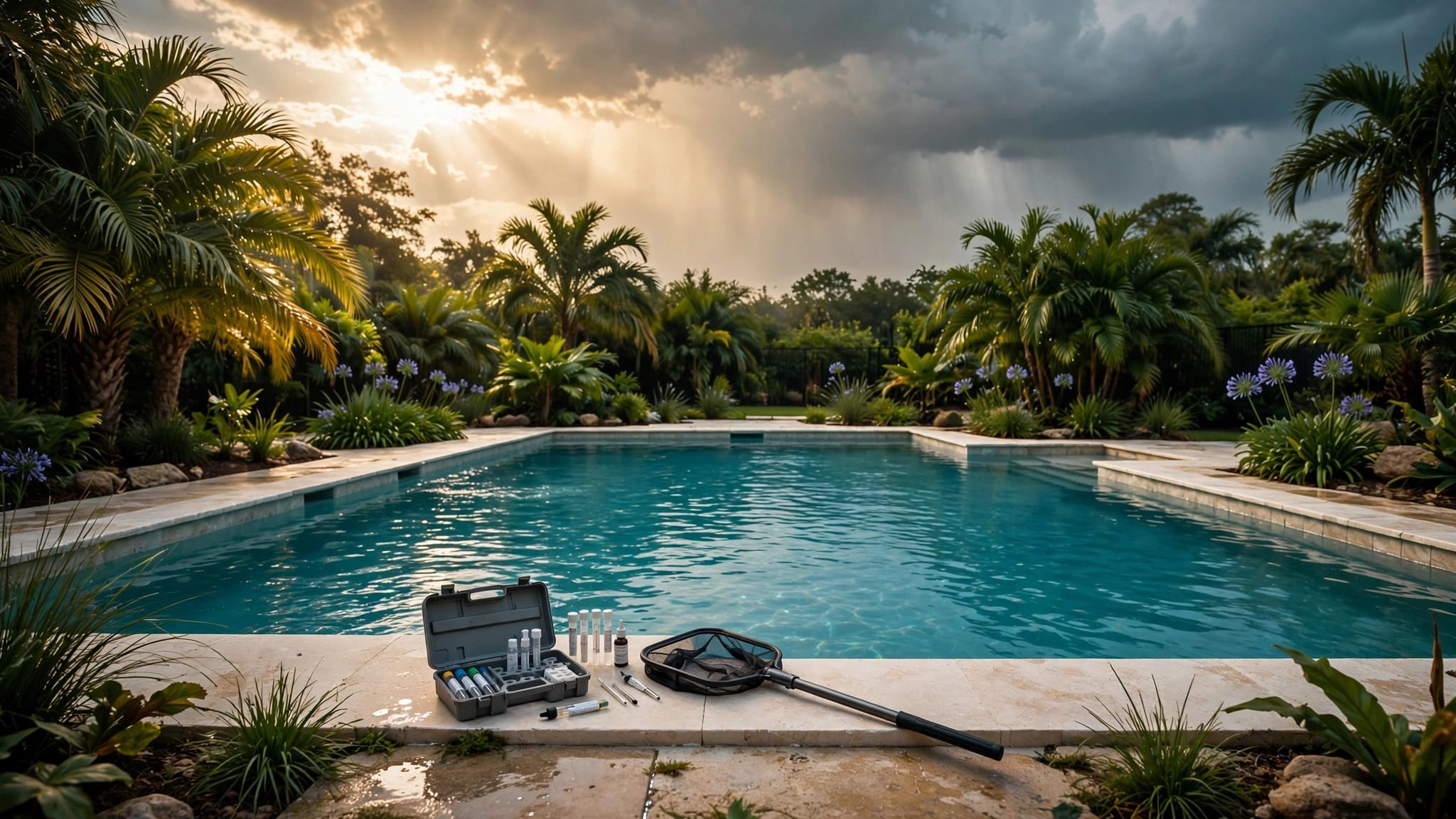
Use a dedicated, dry scoop or measuring tool for each product when the label calls for one. Never use a wet scoop in dry chlorine. Moisture inside a container can trigger a reaction or ruin the remaining product.
Don't share tools between acid, chlorine, shock, and other chemicals unless the label specifically permits it and the tool has been cleaned and dried correctly. Store tools where children can't reach them, and keep labels facing outward so an adult can identify the contents quickly.
Common mistakes include leaving open bags on the pool deck, combining leftover products to save space, storing containers near a metal equipment pad, and placing a cabinet where pets can scratch or tip it. Each mistake makes a leak or accidental contact harder to control.
Common pool chemical storage mistakes to avoid
Most storage problems begin with convenience. A homeowner runs out of shelf space, moves a product into a smaller container, or leaves supplies beside the pump for quick access. That shortcut can create a chemical reaction or make an emergency harder to manage.
Don't store incompatible products together
Acid and chlorine should never share a cabinet, tray, shelf system, or enclosed storage box unless the setup provides true physical separation that prevents contact and follows the product instructions. Keep chlorine tablets away from calcium hypochlorite shock, too.
Don't stack containers so one can fall onto another. Avoid storing chemicals under a leaking pipe, beside a water heater, or near a drain that could carry spilled material into a canal or stormwater system.
Don't make a leak harder to identify
Keep containers in good condition and avoid piling old supplies behind new ones. Read the label before using a product, especially after a long period without pool maintenance. Never combine old and new chemicals in one container.
If you see crystals, unusual odors, a damaged lid, swelling, smoke, heat, or bubbling, move people and pets away. Don't touch an unknown mixture, add another chemical, or try to correct the problem with a household cleaner.
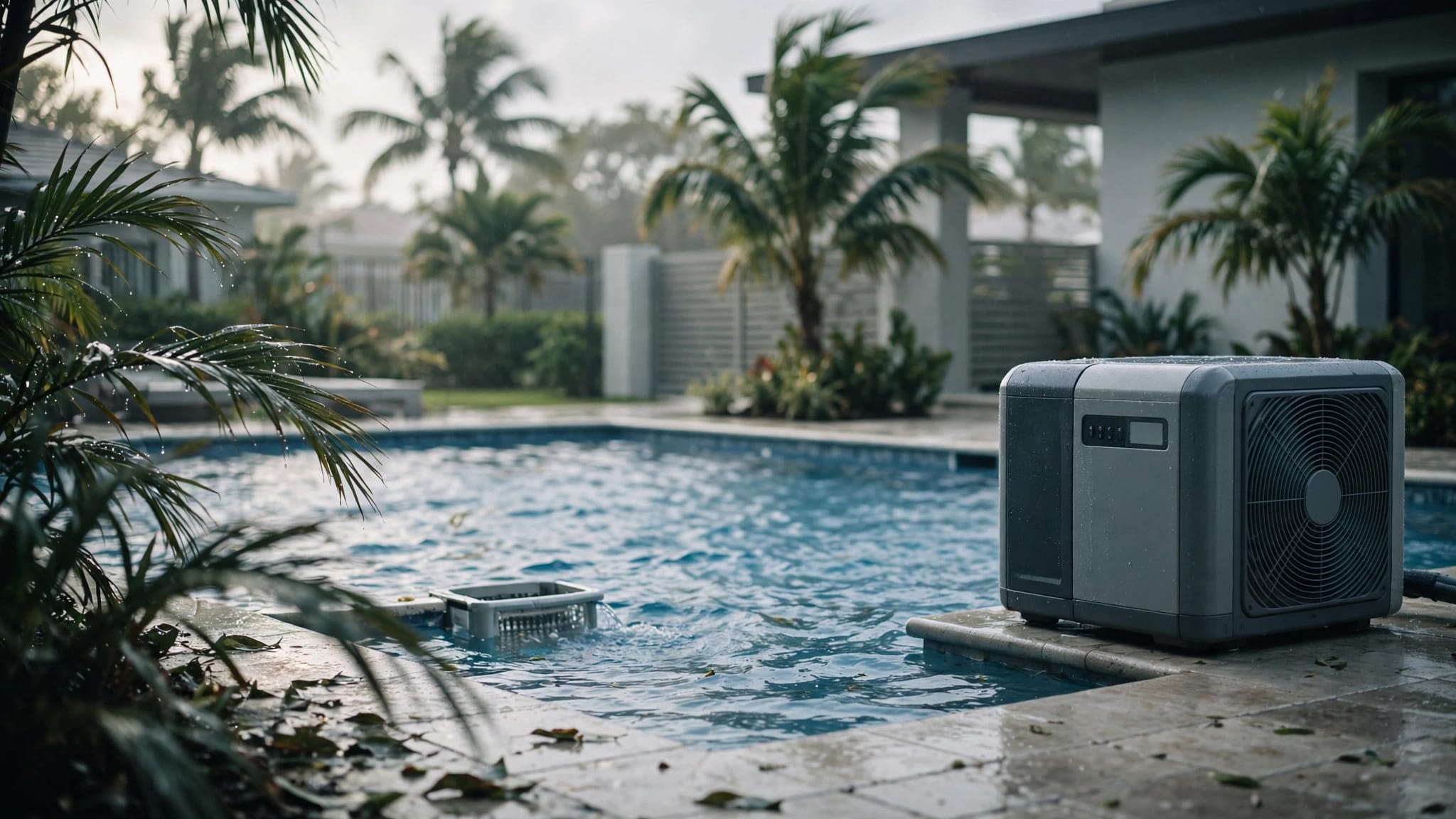
Preparing pool chemical storage for storms and flooding
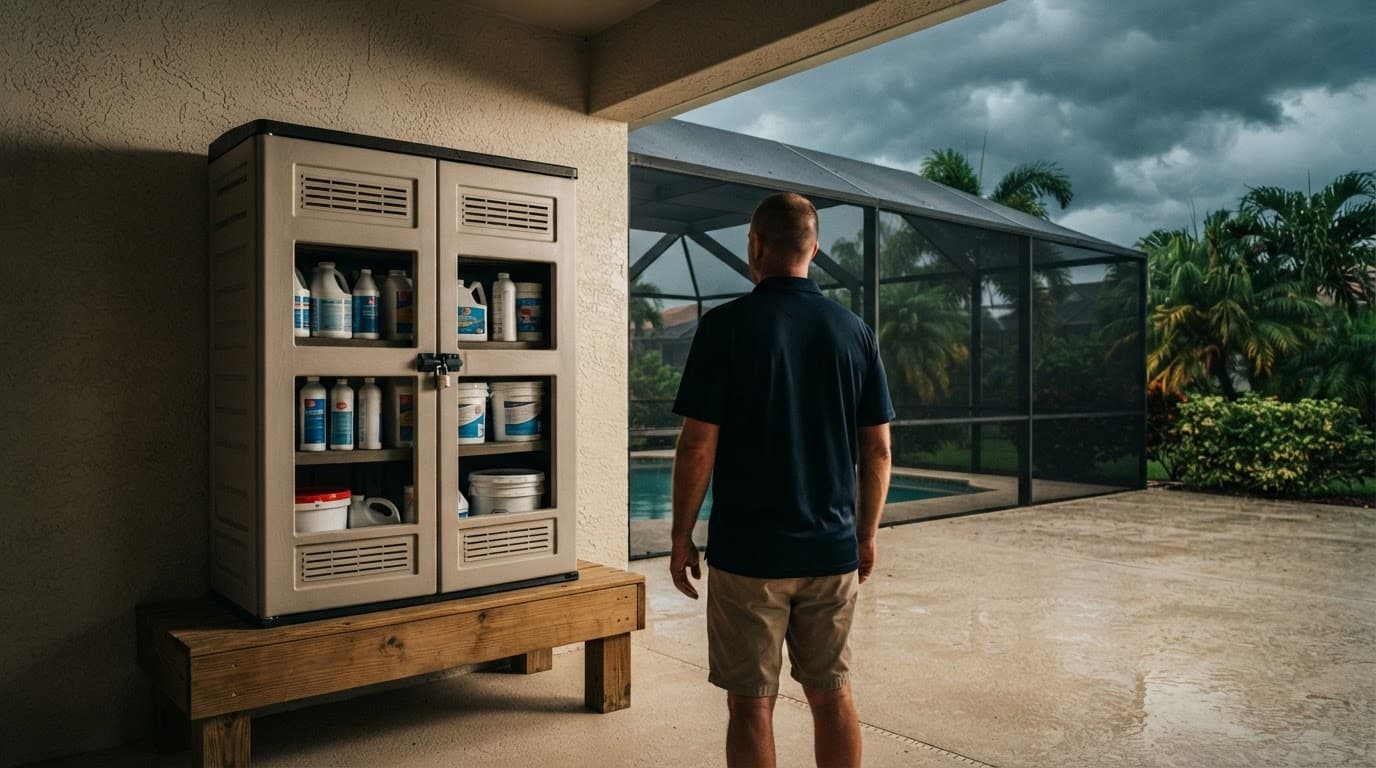
Cape Coral homeowners should review their storage before tropical weather, heavy rainfall, or a flood warning. Stormwater can damage containers and spread chemicals across the yard, pool deck, street, or nearby waterways.
Secure the cabinet before severe weather
Check that the cabinet is anchored, the doors close fully, and the lock works. Keep containers upright on a raised shelf above areas that could take on water. Don't stack products high enough to fall during strong wind or when the cabinet moves.
Move chemicals ahead of the storm to a higher, dry, secure location that remains ventilated and separated. Don't place them in a living area, airtight box, vehicle, or another space that creates heat or poor airflow. Follow the product label and local emergency instructions if flooding is possible.
A screened enclosure can reduce exposure to rain, but it isn't a flood barrier. Look for low spots, roof leaks, open cage sections, and drainage paths near the cabinet.
Respond carefully after a storm or spill
Don't use stormwater, a garden hose, or a pressure washer to move spilled chemicals into a drain, canal, pool, or yard. Never mix cleanup products or attempt to neutralize a spill unless the product label or qualified emergency guidance directs you to do so.
If a container is leaking heavily, producing fumes, heating up, smoking, or damaged by floodwater, leave the area and keep people and pets away. Call 911 or the fire department from a safe location. For a minor problem without fumes or heat, follow the label and local household hazardous-waste instructions.
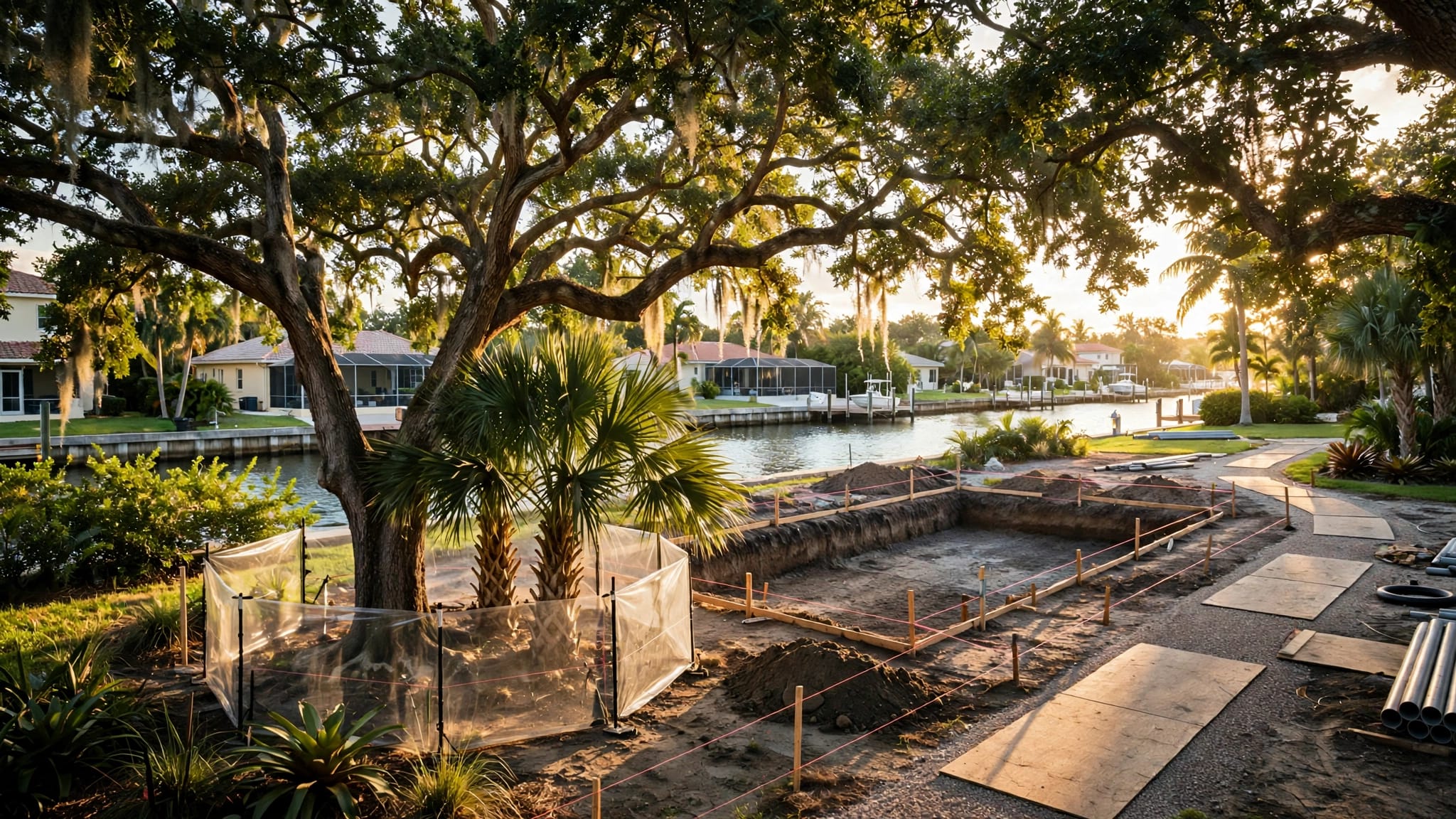
Plan storage when building or renovating a pool
Chemical storage is easier when the location is chosen before construction, resurfacing, or enclosure work begins. Keep the cabinet separate from pumps, heaters, electrical equipment, grills, and fuel storage. It should remain accessible to an adult without becoming a convenient spot for children.
A new pool and screen enclosure can change the available wall space, drainage, doors, and access routes. A rescreening project may affect only the mesh, while a frame, gate, or enclosure replacement can involve a larger scope. The chemical cabinet still needs a lock, ventilation, dry footing, and protection from rain.
When a renovation changes the deck, equipment location, enclosure, or accessory structure, don't assume the existing approval covers every part of the work. Review pool permits for Cape Coral homeowners before construction starts.
If you're planning a new pool, resurfacing project, screen enclosure, or equipment upgrade, include chemical storage in the site discussion. Get a Free Estimate to review the pool area and possible storage locations with a local contractor.
Safe storage keeps pool care manageable
A safe setup doesn't need to be complicated. Keep products in original labeled containers , store them in a cool and dry ventilated area, lock them away, and separate acid from chlorine and different chlorine types.
Cape Coral weather adds another layer of planning. Raise containers above likely floodwater, inspect the cabinet after storms, and keep all chemicals away from heat, sunlight, ignition sources, living areas, children, and pets.
The right cabinet protects more than the products inside it. It gives your family a controlled place to maintain the pool without turning routine water care into an avoidable hazard.