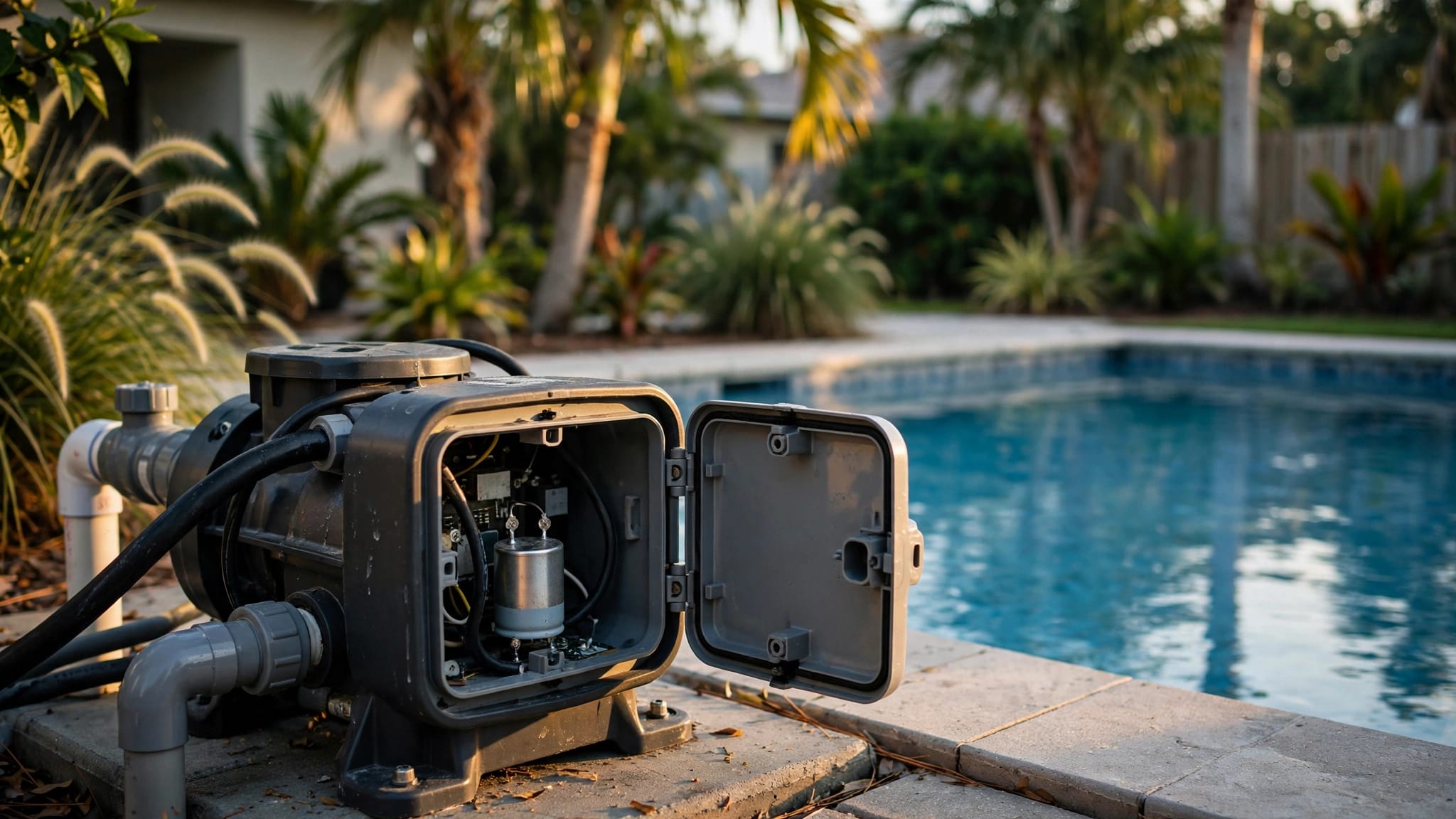
A pool alarm can add an important warning layer, but it can't watch the water for you. Florida pool safety alarms work best when they support controlled access, working gates, and active adult supervision.
For Cape Coral homeowners planning a new pool, updating an older finish, or replacing a screen enclosure, safety choices should be part of the design early. The right setup depends on how people enter the pool area, who uses the yard, and which safety feature meets your local permit requirements.
How Florida Pool Safety Alarms Fit the Law
As of August 2026, Florida's Residential Swimming Pool Safety Act, Chapter 515, requires new residential pools to have at least one approved safety feature before final inspection or a certificate of completion.
Florida pool safety alarms are one approved option, but they are not required statewide for every pool . A compliant isolation barrier, approved safety cover, house-access alarm system, self-closing and self-latching doors, or a qualifying pool alarm may meet the statewide requirement.
Florida's five listed safety-feature choices
Chapter 515 lists five separate safety features. Some pool guides group two house-access choices together and describe four broad categories, which can cause confusion.
The statute's listed options are:
- A barrier that isolates the pool from the home and meets Florida barrier rules.
- An approved safety pool cover.
- Exit alarms on doors and windows that give direct access from the home to the pool.
- Self-closing, self-latching doors with the release mechanism at least 54 inches above the floor.
- A pool alarm placed in the water that sounds when someone enters unexpectedly and is independently certified to ASTM F2208.
A pool owner only needs one approved feature under the statewide rule. Still, multiple layers make practical sense for most family homes.
A new rule for property transfers
A Florida change scheduled for October 1, 2026, extends the requirement to residential pools when a property transfers or sells, regardless of the pool's age. If you're listing a home with an older pool, review the safety setup before closing.
Local rules, permit details, and inspection practices can add requirements. Confirm the current standard with the City of Cape Coral or the local authority having jurisdiction before selecting a product or relying on an exception.
Surface and Subsurface Pool Alarms
Water-entry alarms detect disturbance in the pool. They can be useful for homes with children, visiting grandchildren, or frequent backyard guests. However, their performance depends on placement, water conditions, and regular testing.
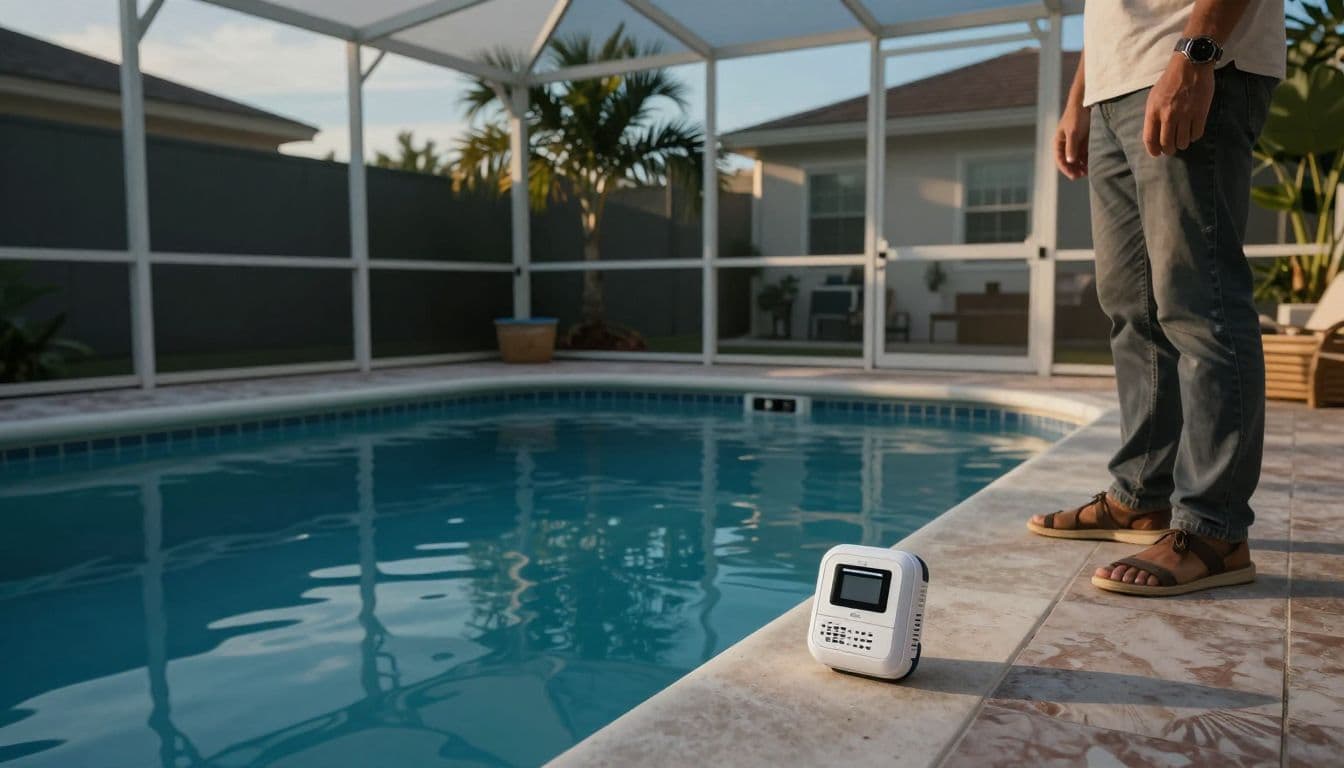
Surface-wave alarms detect movement on top
A surface alarm floats on the water or mounts along the pool edge. It detects waves caused by an object or person entering the water, then sends an audible alert to an outdoor unit or indoor receiver.
These alarms are usually easy to add to an existing pool. They also work without changing plumbing or cutting into the deck. However, wind, heavy rain, pool toys, water features, and active swimmers can trigger false alarms.
A screened enclosure can reduce wind-blown debris and gusts, but it doesn't remove every source of nuisance alerts. Set the device according to the manufacturer's instructions and test it in the same conditions your pool sees each day.
Subsurface alarms sense underwater disturbance
Subsurface alarms mount below the waterline and monitor movement under the surface. Since they don't react to every ripple, many homeowners prefer them for pools with breezy decks, raised spas, or nearby fountains.
Still, a subsurface model needs proper placement and sensitivity adjustment. Strong return jets, spillways, and a connected spa can affect performance. An alarm that stays quiet during a real entry event offers no protection, while one that sounds constantly may get ignored.
A pool alarm gives notice after an entry event. It does not prevent access to the water.
Wristband, Gate, Door, and Smart Alarms
Different alarm types protect different moments. Comparing them by the problem they address is more useful than choosing the device with the loudest marketing claim.
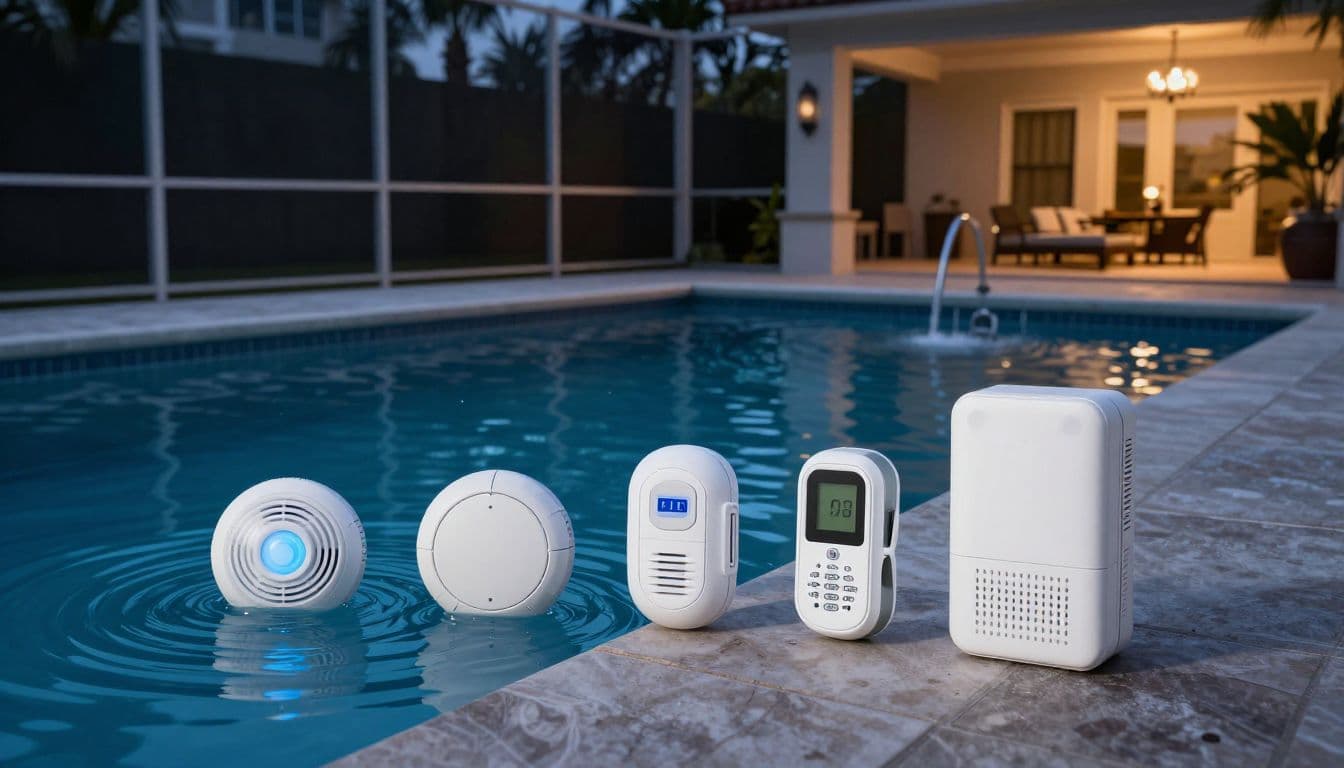
Wristband alarms travel with the wearer
A wristband alarm sounds or signals a receiver when the band gets wet. It can provide an added warning for a young child or a visitor who can't swim.
Its main limitation is obvious: it only works when it is worn, charged or powered, and properly fitted. A child can remove a band, and an adult may forget to put it on before stepping outside.
Treat a wristband unit as an extra layer. Don't assume it satisfies Florida's statutory pool-alarm option, which calls for an alarm placed in the pool and certified to ASTM F2208.
Gate and door alarms track access points
A gate alarm uses a contact sensor to alert you when a pool fence gate or screen enclosure door opens. It supports a physical barrier by telling you when that barrier has been breached.
Door alarms do the same for a door leading from the home to the pool area. Florida's exit-alarm option applies to all doors and windows with direct access from the house to the pool. Those alarms must produce at least 85 dBA at 10 feet.
A gate alarm is helpful, but it isn't automatically the same as a compliant house exit alarm. Likewise, a single alarm on one slider doesn't meet the house-access option if other doors or windows provide direct pool access.
Smart systems add alerts, not supervision
Smart pool alarms may connect water sensors, gate contacts, cameras, and indoor receivers to a phone app. They can send alerts when a gate opens or the pool detects movement.
That convenience has limits. Wi-Fi can drop during storms. Phones may be muted, out of range, or charging in another room. Use a dedicated, audible indoor receiver when available, especially if bedrooms are far from the pool area.
Legal Compliance and Recommended Safety Layers
Meeting the minimum law is an important milestone. It isn't a full safety plan for every household.
Florida pool safety alarms can help a homeowner choose one approved feature, provided the product and installation meet the applicable standard. Yet the best setup usually includes more than the one item required for final inspection.
What legal compliance means
Legal compliance is about meeting the current state and local requirement for your property. For a water-entry alarm selected under Chapter 515, look for independent ASTM F2208 certification.
A qualifying barrier must stand at least 4 feet high on the outside. It must also resist crawling under, squeezing through, and climbing over. The barrier belongs around the pool perimeter, not merely around the larger yard.
Some local inspection forms also reference product standards such as UL 2017. Jacksonville's current pool-safety affirmation materials do so, but that doesn't make UL 2017 a universal statewide rule. Ask Cape Coral's building department what it requires for your permit.
What good safety practice adds
A strong backyard safety plan considers daily habits. Lockable, self-closing gates, door alarms, an audible water-entry alarm, and clear pool rules can work together.
Keep rescue equipment visible and easy to reach. Adults should also know who is supervising during gatherings, because a crowded patio makes it easy to assume someone else is watching the water.
Choosing the Right Alarm for Your Pool
Pool shape, water features, access points, and household routines should guide the decision. A simple comparison can narrow the options.
| Alarm type | Best fit | Main limitation |
|---|---|---|
| Surface alarm | Existing pools needing a quick water-entry alert | Wind, rain, and toys may cause alerts |
| Subsurface alarm | Pools with a calm water zone and fewer surface disturbances | Placement and sensitivity matter |
| Wristband alarm | Added protection for a particular child or guest | It fails if it isn't worn |
| Gate or door alarm | Homes with clear access points to monitor | It doesn't detect someone already inside the pool area |
| Smart alarm system | Owners who want connected alerts and several sensors | Phone alerts depend on power and connectivity |
For a pool with wide sliding doors, a compliant exit-alarm system plus self-closing enclosure gates may fit the home's routine. For a detached pool area with a true isolation fence, a water alarm can provide useful backup.
Before buying, check whether the alarm's receiver can be heard from bedrooms, the garage, and commonly used indoor rooms. Test range through concrete block walls, hurricane-rated glass, and a screened lanai.
Barriers and Alarms Work Better Together
An alarm reports an event. A barrier slows or prevents access before that event happens. That difference matters when selecting safety features during construction or renovation.
Screen enclosures need safe gate hardware
A pool cage keeps out insects and debris, but a screen enclosure isn't automatically a compliant pool barrier. Its height, mesh condition, doors, latches, and layout all affect whether it meets the applicable rules.
Gate doors should close and latch every time without a hard push or a second attempt. Torn screen, bent aluminum, loose fasteners, and sagging doors can create access problems that an alarm won't correct.
Homeowners considering a replacement can compare pool enclosure and rescreen services before choosing a layout that works with the pool's barrier plan.
Isolation fences add a second boundary
An isolation fence separates the pool from the home and the rest of the yard. This arrangement can reduce the chance that someone reaches the water after leaving the house unnoticed.
A fence that meets Florida's minimum height still needs thoughtful placement. Avoid nearby furniture, planters, equipment boxes, or structures that create an easy climb path. For more local planning details, review these Cape Coral pool barrier requirements.
Plan Safety Features During a Build or Renovation
Retrofitting an alarm is often simple. Retrofitting a barrier, gate, electrical outlet, or door system after the deck is finished can cost more and limit your choices.
New pools allow the cleanest setup
During new construction, decide where the pool barrier will sit before finalizing the deck, outdoor kitchen, screen enclosure, and landscaping. That gives the contractor room for compliant gates, alarm receivers, and practical walking paths.
A clear proposal should state who supplies and installs safety features, who handles electrical work, and what is included in the inspection scope. Use this guide to review a pool contractor proposal before comparing prices.
Renovations can reveal safety upgrades
Resurfacing, adding a spa, rebuilding a deck, or replacing a screen enclosure can change how people enter the pool area. Those projects are a good time to inspect gates, latches, door access, and existing alarms.
An older alarm may have corroded contacts, a weak receiver, or unavailable replacement parts. Replace worn equipment rather than treating it as a box to check for inspection day.
For a new pool or renovation plan that includes barrier and alarm details, Get a Free Estimate for an on-site discussion of the yard, pool access, and project scope.
Install, Test, and Maintain Pool Alarms
A well-chosen alarm still needs routine attention. Southwest Florida's heat, humidity, storms, and salt air can shorten the life of batteries, sensors, contacts, and outdoor receivers.
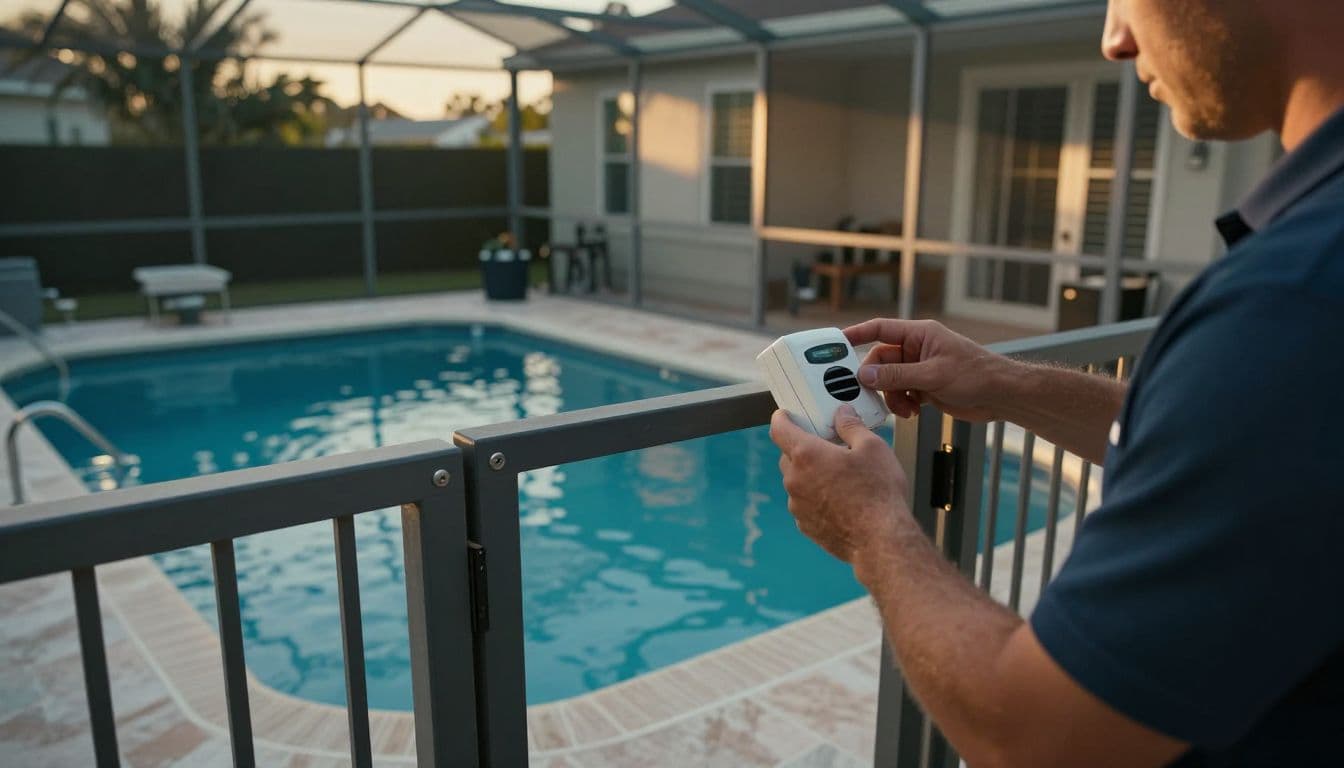
Test before guests arrive
Test water-entry alarms according to the manufacturer schedule and after battery replacement. Check gate contacts by opening the gate, then listen for the receiver from inside the home.
Also test door alarms after changing door hardware, adding weatherstripping, or replacing windows. Small adjustments can stop a magnetic contact from lining up correctly.
Keep the device manual, warranty information, test instructions, and battery type in a labeled file. That saves time when a low-battery chirp starts during a weekend gathering.
Watch for conditions that change performance
Heavy rain can affect surface alarms. Landscaping growth can block signal paths. A new fountain, robot cleaner, or changed return direction can alter water movement around a subsurface sensor.
After a hurricane or major storm, inspect every gate, latch, screen panel, fence section, and alarm receiver. A pool may look normal from the patio while a latch is misaligned or a sensor housing has taken on water.
Create a Household Pool-Safety Routine
Devices work best when everyone in the home understands them. Show family members, babysitters, frequent guests, and older children what each alarm sounds like and where the receiver is located.
Keep gates closed when the pool isn't in use. Store patio chairs, ladders, and large planters away from barriers. During parties, assign an adult who is actively watching swimmers rather than relying on a general assumption that others are nearby.
For children and non-swimmers, layers matter most when routines break down. An open slider, a missed latch, or a phone left on silent should not be the only point between a person and the water.
A Safer Florida Pool Starts With Layers
Florida pool safety alarms are useful warning devices, but they work best beside a sound barrier, dependable gates, controlled house access, and attentive supervision.
Choose the alarm type that fits your pool and daily routine, then confirm the current Cape Coral requirements before installation. A safer pool area is built through reliable layers, not one device alone.