Yes, you can drain a gunite pool in Cape Coral without damaging it, but the work needs a plan for groundwater, water disposal, and refilling. An empty pool has less weight holding it down, which can leave its shell vulnerable to hydrostatic pressure from water in the surrounding soil.
Cape Coral's high water table makes that risk worth taking seriously, even if your yard looks dry. Before you arrange resurfacing or start a pump, it helps to understand what's happening beneath the pool.
How groundwater can damage an empty pool
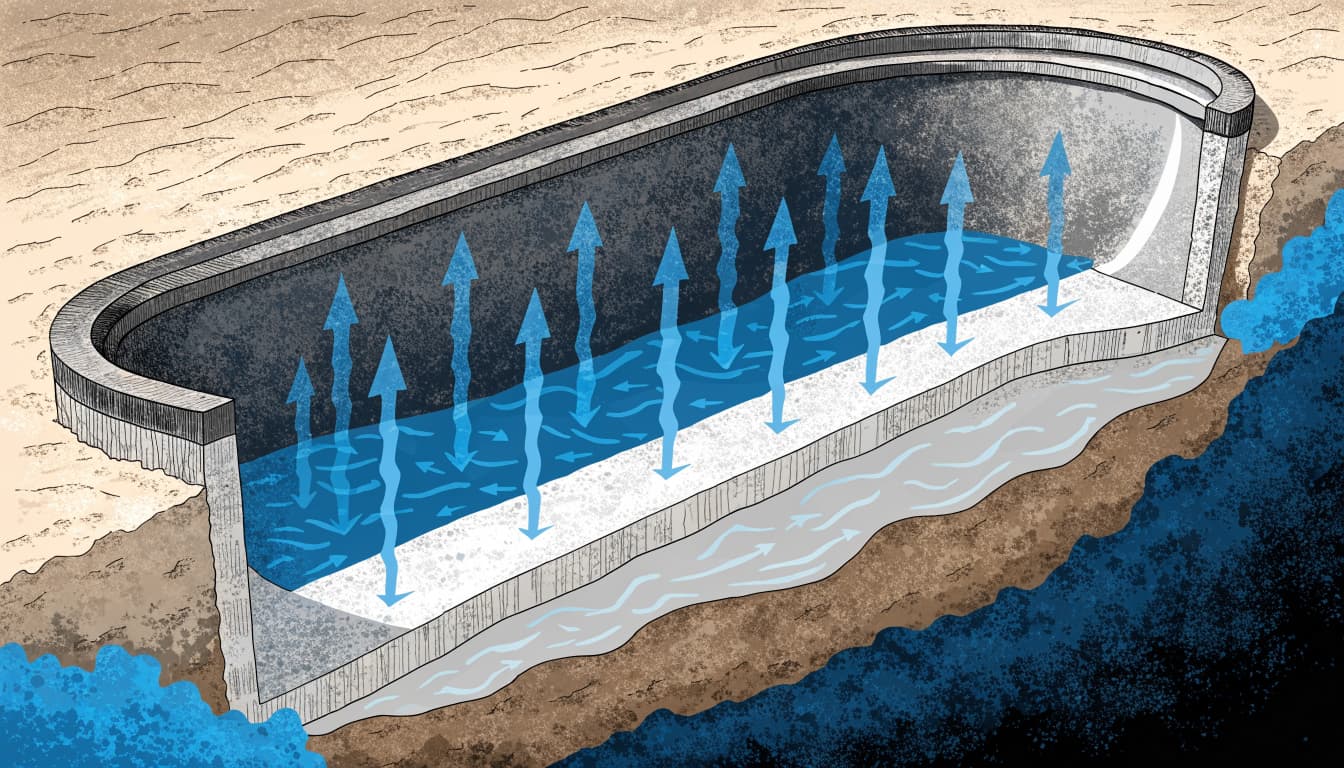
Groundwater in the soil presses against the outside of your pool shell. When the pool is full, the weight of the water inside helps counter that pressure. As the pool drains, that downward weight decreases.
Why a heavy concrete shell can move
Gunite pools are built with reinforced concrete, but their weight alone doesn't guarantee they'll stay in place when empty. If groundwater pressure is high enough, an empty shell can lift or shift. Cracks and damage to connected plumbing or the surrounding deck can follow.
The risk depends on the individual pool and site. Shell design, groundwater conditions, drainage, and the amount of water remaining in the pool all matter. A newer pool isn't automatically protected simply because its structure is newer.
Why Cape Coral conditions matter
Cape Coral often has groundwater close to the surface. Heavy rain, seasonal changes, and changes in nearby drainage can raise or alter the water around a pool.
A lawn that looks dry doesn't establish what conditions are like several feet below it. Likewise, a few sunny days after a storm don't necessarily mean the soil around the shell has drained. That's why a pool professional needs to assess the site before a planned drain-down.
What a hydrostatic relief valve can and can't do
Many concrete pools have a hydrostatic relief device designed to respond when pressure beneath the shell exceeds pressure inside the pool. Depending on the pool's design, the device may be near the main drain at the deep end or in another fitting near the lowest part of the floor.
How the valve relieves pressure
A relief valve can allow groundwater to enter the pool, reducing the pressure difference across the shell. Water entering through a relief device during a low-water event may be part of its intended function.
However, water appearing near the floor can also have another cause. A professional can distinguish pressure relief from a plumbing issue or damage that needs repair.
Why a valve isn't a draining plan
A relief device doesn't replace an assessment of groundwater and drainage. Mineral buildup, debris, damaged parts, or spring problems can affect how a valve operates. Its design and condition also vary by pool.
Don't open a submerged main drain, remove a valve, or drain the pool to test it. Our guide to pool hydrostatic relief valve inspection covers signs that warrant professional attention.
When you may need to drain a gunite pool
Some projects require access to the pool's interior below the waterline. A planned drain may be appropriate for resurfacing, structural repairs, or renovation work that can't be completed with the pool full.
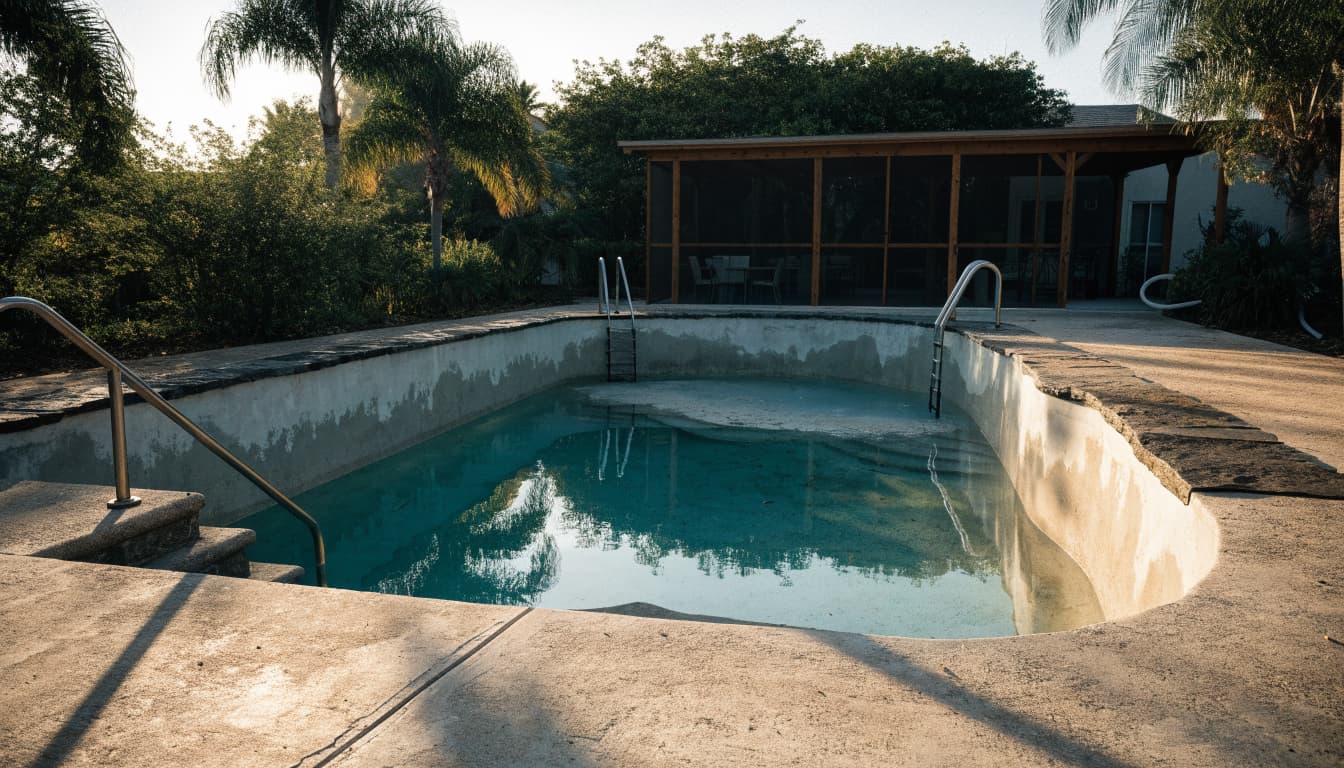
For example, worn plaster, rough areas, or exposed sections of aggregate may lead you to consider a new finish. The signs it's time to resurface your pool can help you recognize when deterioration deserves a closer look.
The scope matters, though. A small surface problem doesn't automatically call for a full renovation, and a visible crack doesn't reveal its cause on its own. A professional assessment can identify the work needed before the pool is emptied.
If you're weighing a larger update, our pool renovation and resurfacing services include interior refinishing and other pool improvements. Planning the work together helps limit unnecessary drain-downs.
Problems that may not require an empty pool
Cloudy water, algae, stains, or an unusual test result can be frustrating, but draining isn't always the first treatment. A pool professional can test the water and evaluate the filter, circulation, and chemical balance before recommending a solution.
Water loss also needs a diagnosis. Evaporation, a plumbing leak, an equipment issue, and a leak in the pool vessel call for different responses. Emptying the pool before identifying the problem can add structural risk without resolving the cause.
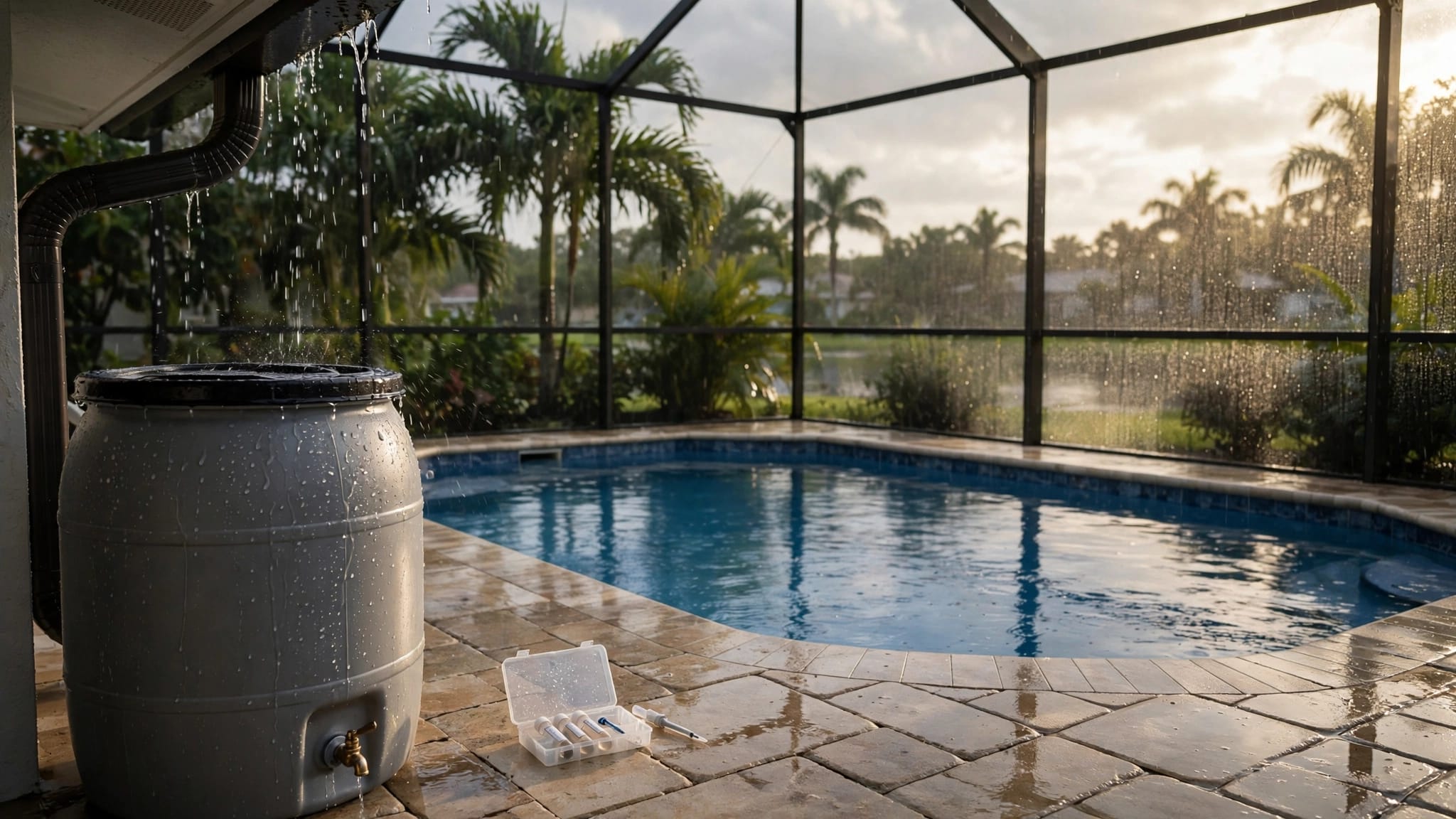
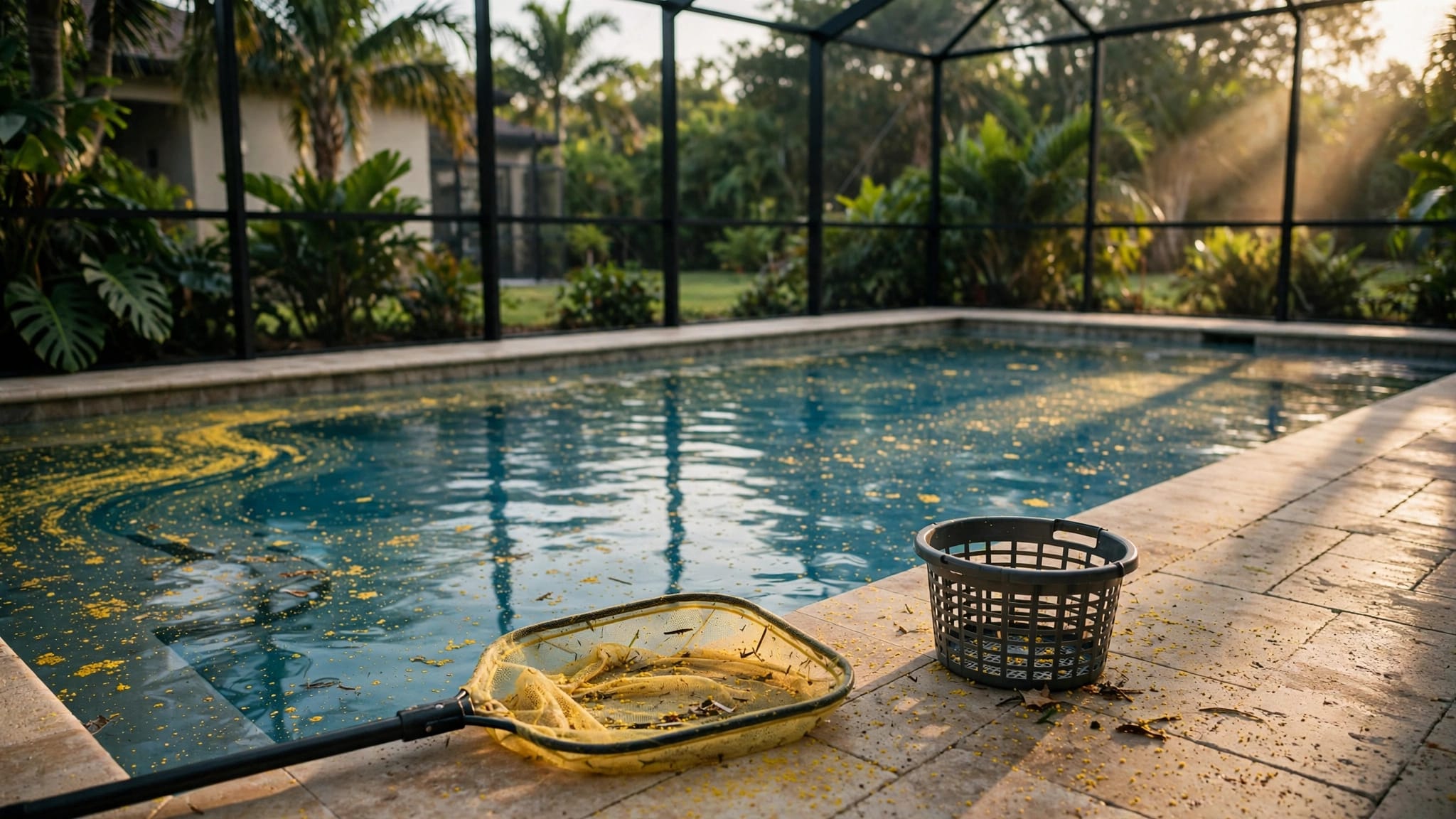
After a storm, debris and diluted chemicals may make the water look worse than it is. Cleaning and water treatment may be options, even when the pool looks neglected. Because the ground may remain saturated after heavy rain, lowering the water level without an assessment can create another problem.
A partial drain also changes the pressure balance . There isn't a universal amount that makes every Cape Coral pool safe, so even a limited water replacement deserves a site-specific plan.
How professionals reduce draining risks
A safe approach starts before the first water leaves the pool. The plan should account for both the structure beneath the deck and where thousands of gallons of water will go.
Assess the pool and surrounding site
A qualified professional can review the pool's condition, available construction records, visible drainage patterns, and history of standing water. The assessment also considers recent rain and groundwater conditions at the site.
The pool's relief system is part of that review. Its location and condition matter, but a professional shouldn't assume that one component alone will manage every pressure condition.
If groundwater or the relief system presents uncertainty, an engineer may be needed. Where conditions aren't suitable, postponing the drain is a safer option than proceeding on a fixed schedule.
Coordinate the work before draining
The repair or resurfacing plan should establish how the shell will be protected, how water will be discharged, and how long the pool needs to stay empty. It should also account for the crew, materials, and access needed to complete the work.
Some sites may need a professionally designed approach to managing groundwater. Excavating near the shell or attempting your own dewatering can create additional hazards, so leave those decisions to the people responsible for the work.
Weather can change a schedule. If heavy rain or new standing water changes conditions, the plan may need to change too.
Cape Coral's pool water disposal rules
Protecting the shell is only part of the job. A draining plan also needs an approved destination for the water and a discharge rate the receiving outlet can handle.
Use an approved outlet and control the flow
Cape Coral's code limits pool-emptying discharge to 250 gallons per minute . It directs drained water to an approved storm sewer or another approved drain or outlet.
The rule doesn't mean every storm inlet or other location near your home is automatically approved for your pool. The outlet and route belong in the project plan before pumping starts.
Keep water out of the sanitary sewer and neighboring yards
The city prohibits pool discharge to the sanitary sewer. Its code also prohibits draining a pool so the water runs onto another person's property.
Even where water stays on your lot, a large discharge can create standing water or affect landscaping. Chlorine, salt, and other substances in pool water also make disposal more than a question of where a hose reaches. A responsible plan considers the water's condition as well as the approved outlet.
Protecting the pool while it's empty
Once the pool is drained, the work should move according to the project's plan. An empty shell left exposed longer than necessary faces continued groundwater pressure, along with weather exposure.
A resurfacing crew also needs to follow the requirements of the chosen finish. Surface preparation and curing affect when the pool can be refilled. The goal is to coordinate those steps before draining, rather than leaving an empty pool waiting for materials or an unfinished decision.
Keep children and pets away from an empty pool. The drop into the basin is a serious fall hazard, and an unfinished interior may have rough surfaces or equipment in the work area.
If water begins entering through the floor, or the shell or deck shows new movement, contact the pool professional directing the work. The cause needs assessment before anyone removes fittings or changes the plan.
What to expect after refilling
Refilling restores the weight of water inside the shell, but the timing depends on the work performed. A new surface may have its own filling and startup requirements, so follow the instructions provided for that finish.
Afterward, the water needs appropriate testing and balancing before normal use. The renovation team can also review the completed work and address any visible concerns around the pool or equipment.
If a pool has shifted or developed new cracks, refilling alone shouldn't be treated as a repair. The shell and connected components need professional evaluation to determine what happened and what work is necessary.
Plan the drain before the project begins
You can drain a gunite pool in Cape Coral, but the decision depends on the conditions around that particular shell. A groundwater assessment, a working plan for the relief system, and responsible water disposal all matter.
If you're considering resurfacing or a repair, we can discuss the project during an onsite consultation. Get a Free Estimate to start planning the work.