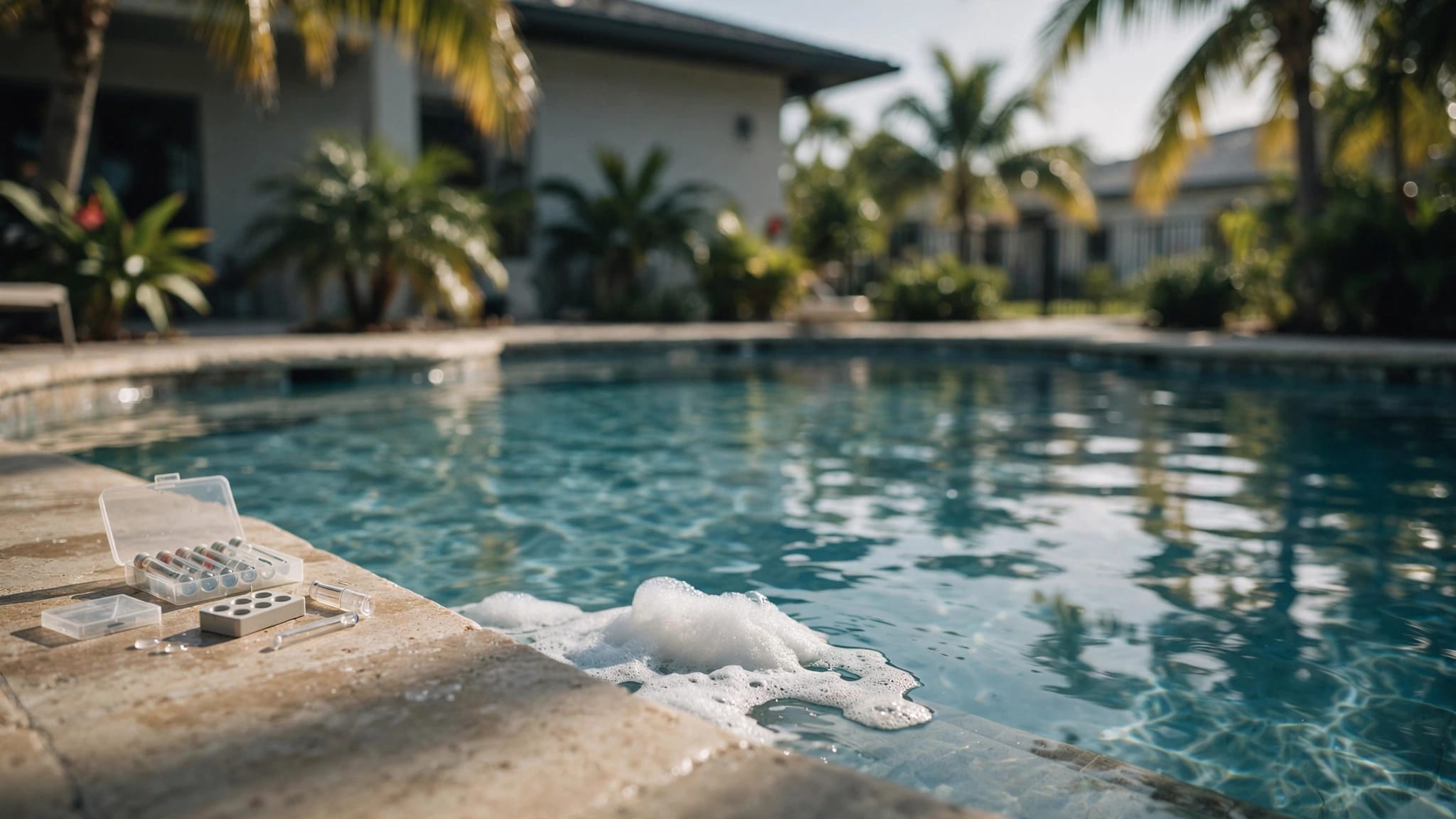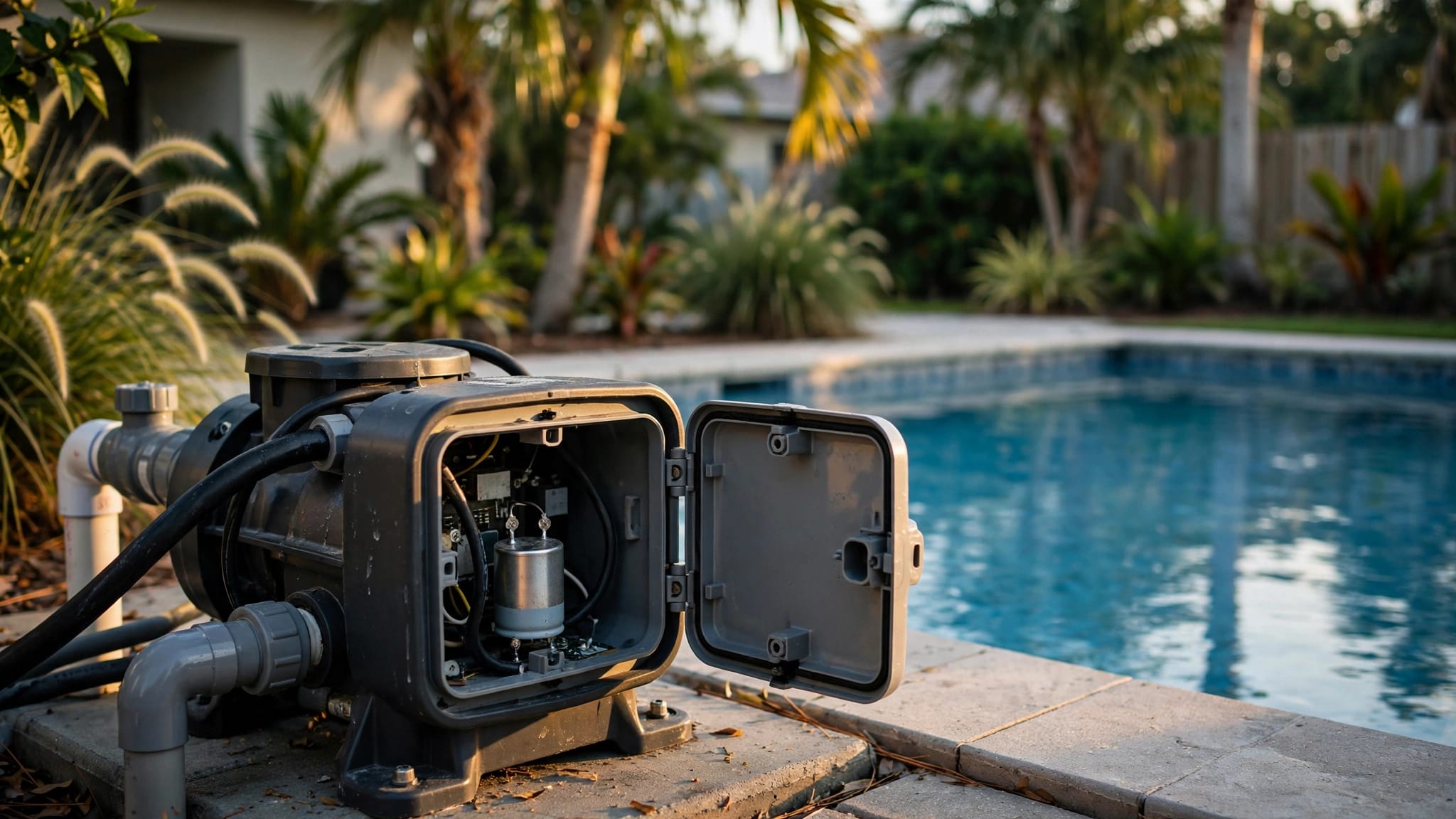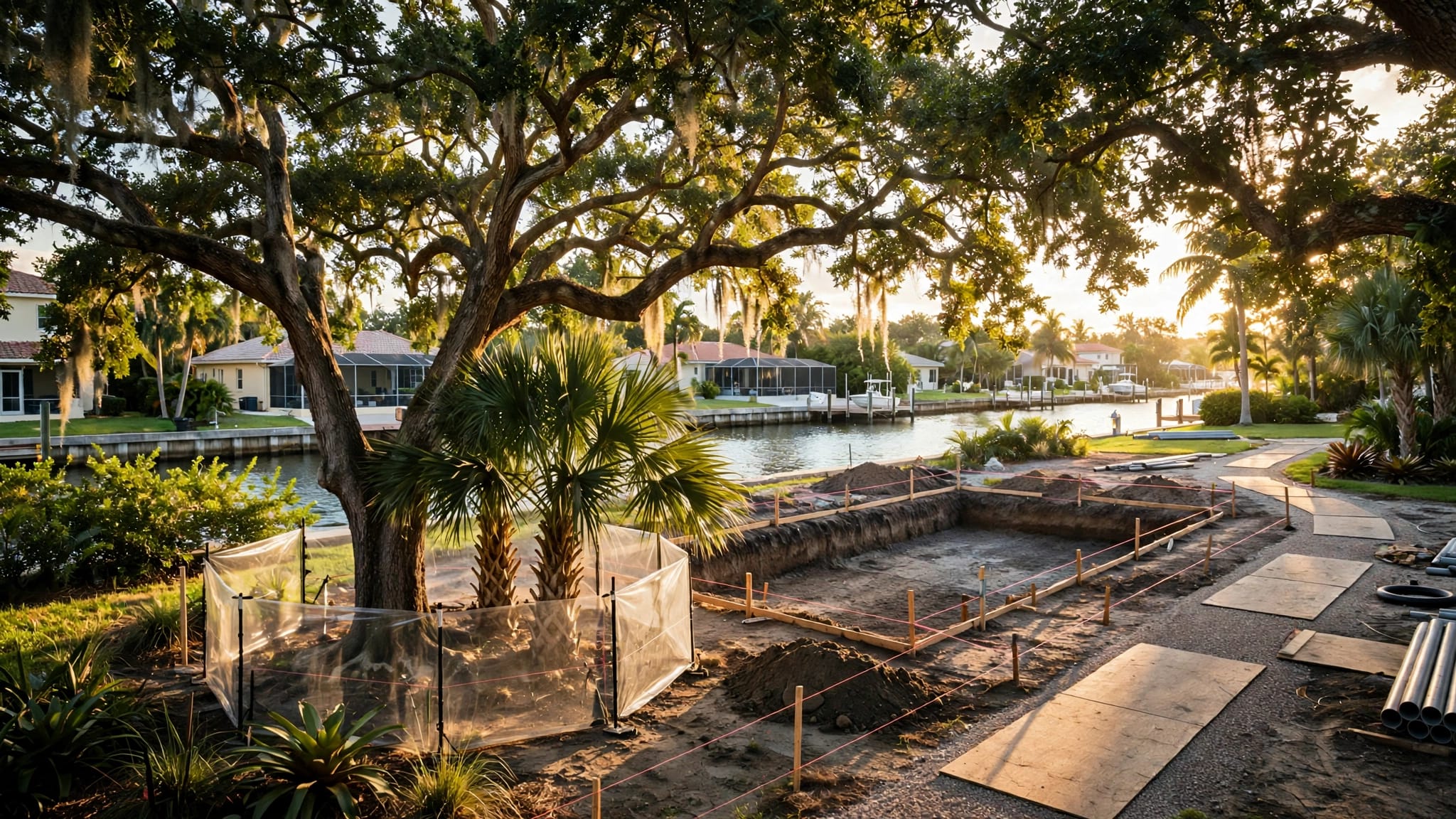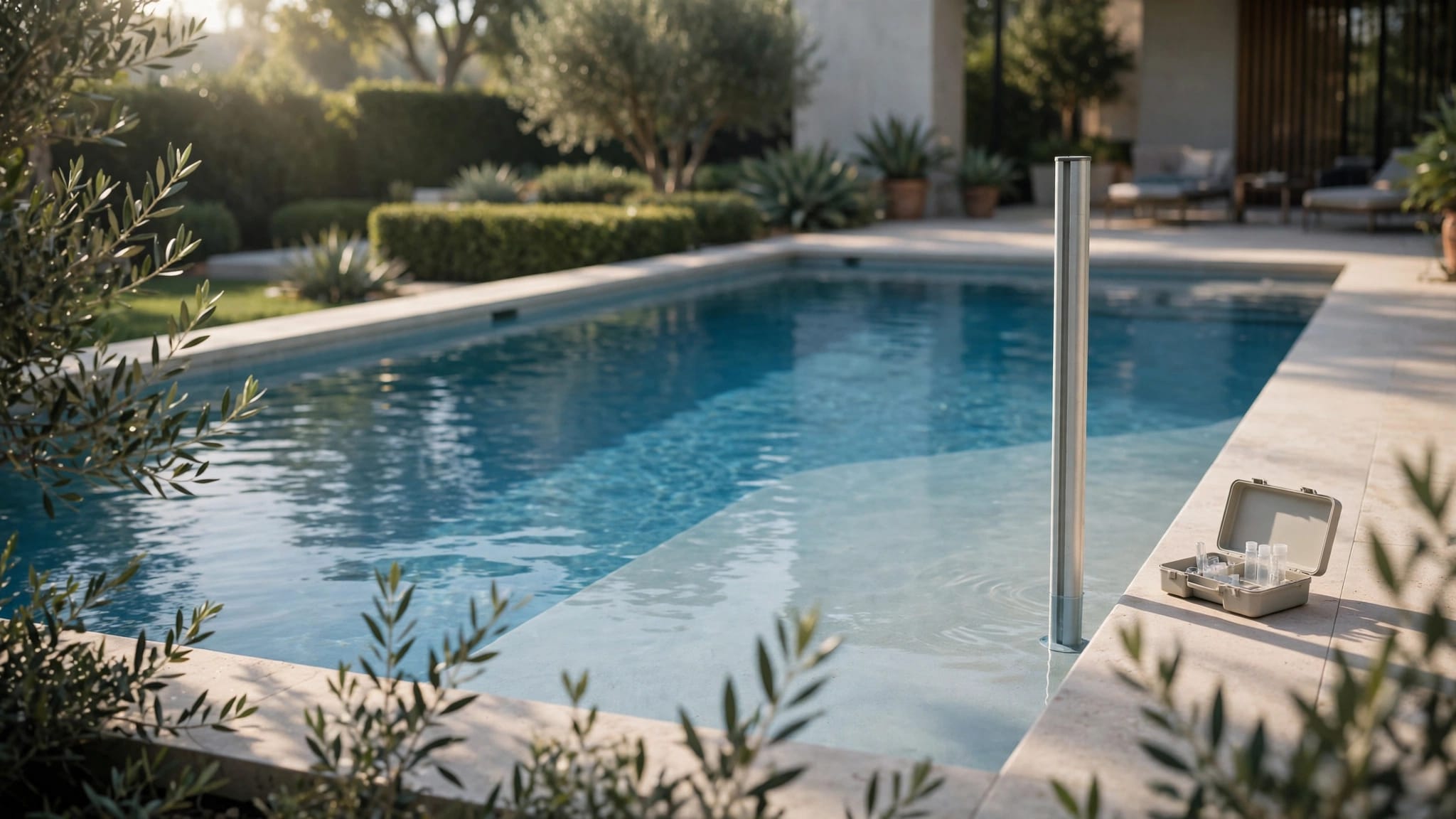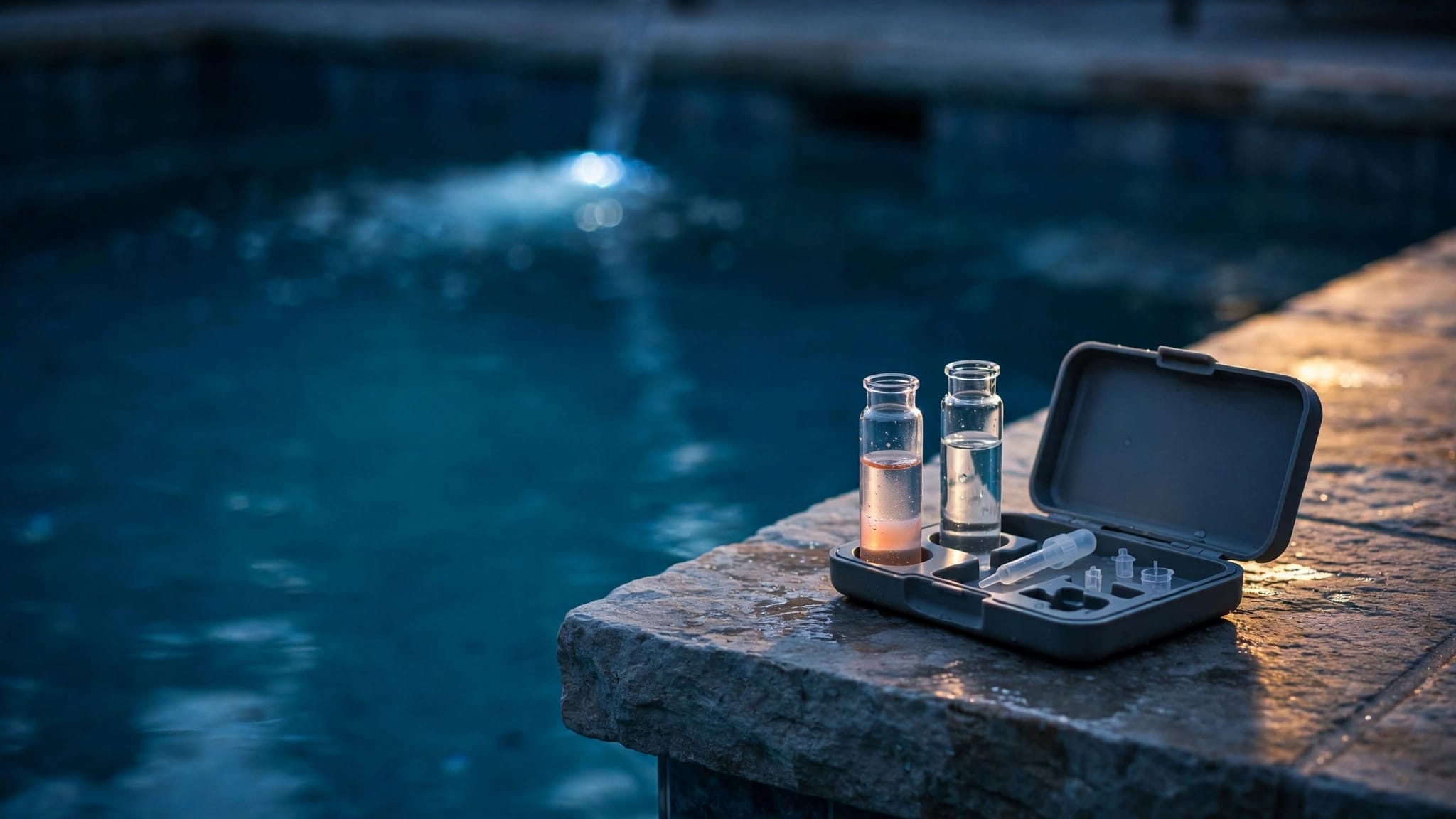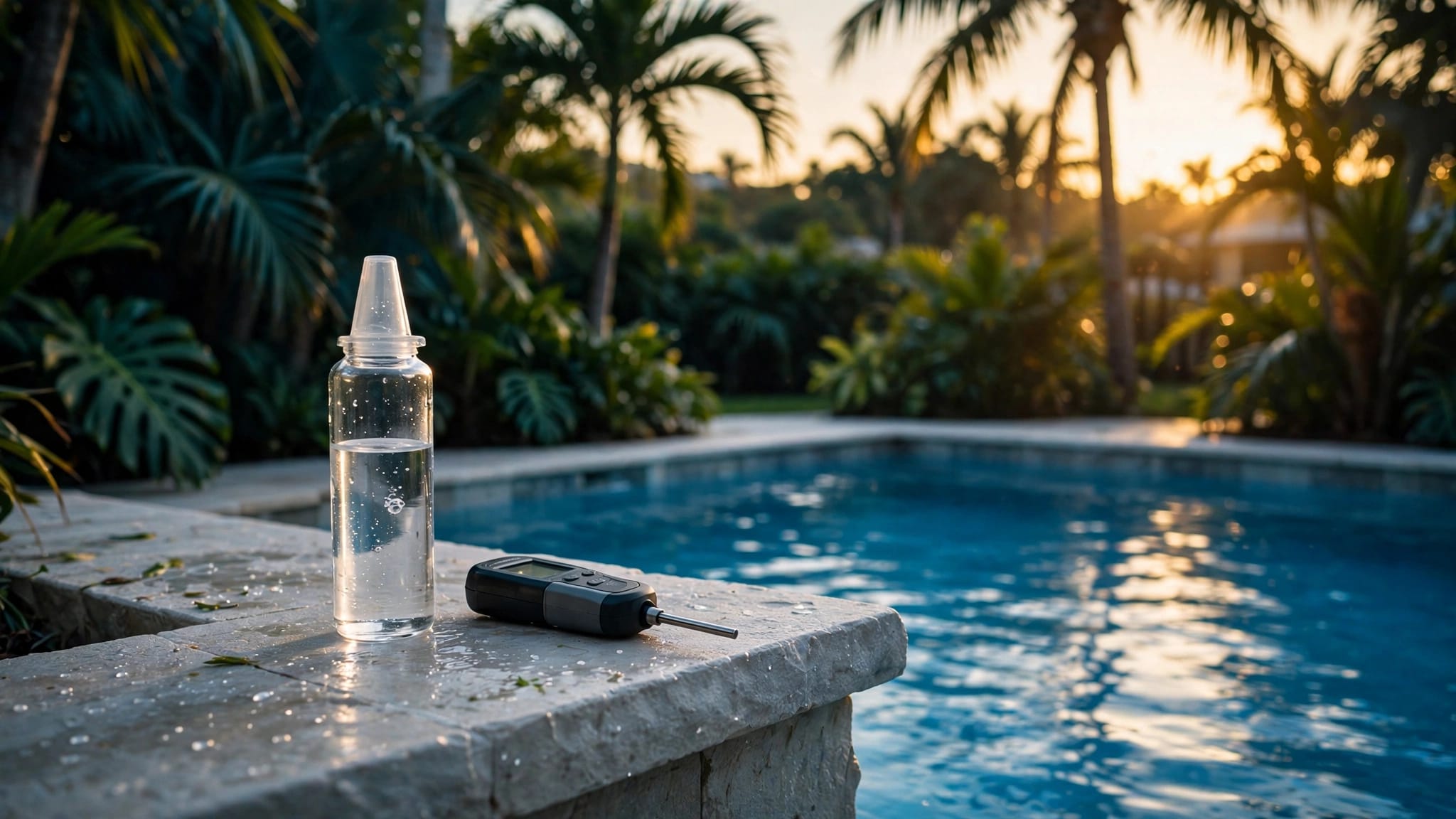
An unattended swimming pool can change quickly in Cape Coral's heat. Strong sun, heavy rain, windblown debris, and a tripped breaker can leave clear water cloudy before you return.
Good Cape Coral pool preparation keeps the water moving, checks chemistry without guesswork, and secures the deck before storms. It also gives a trusted person or pool professional a clear plan. Start 24 to 48 hours before departure, then use the final day to confirm everything works.
Cape Coral Pool Preparation Starts Before You Pack
Begin with the basics at least a day before leaving. That gives you time to find a leak, failed timer, or damaged screen before the bags are packed.
Inspect the pool equipment
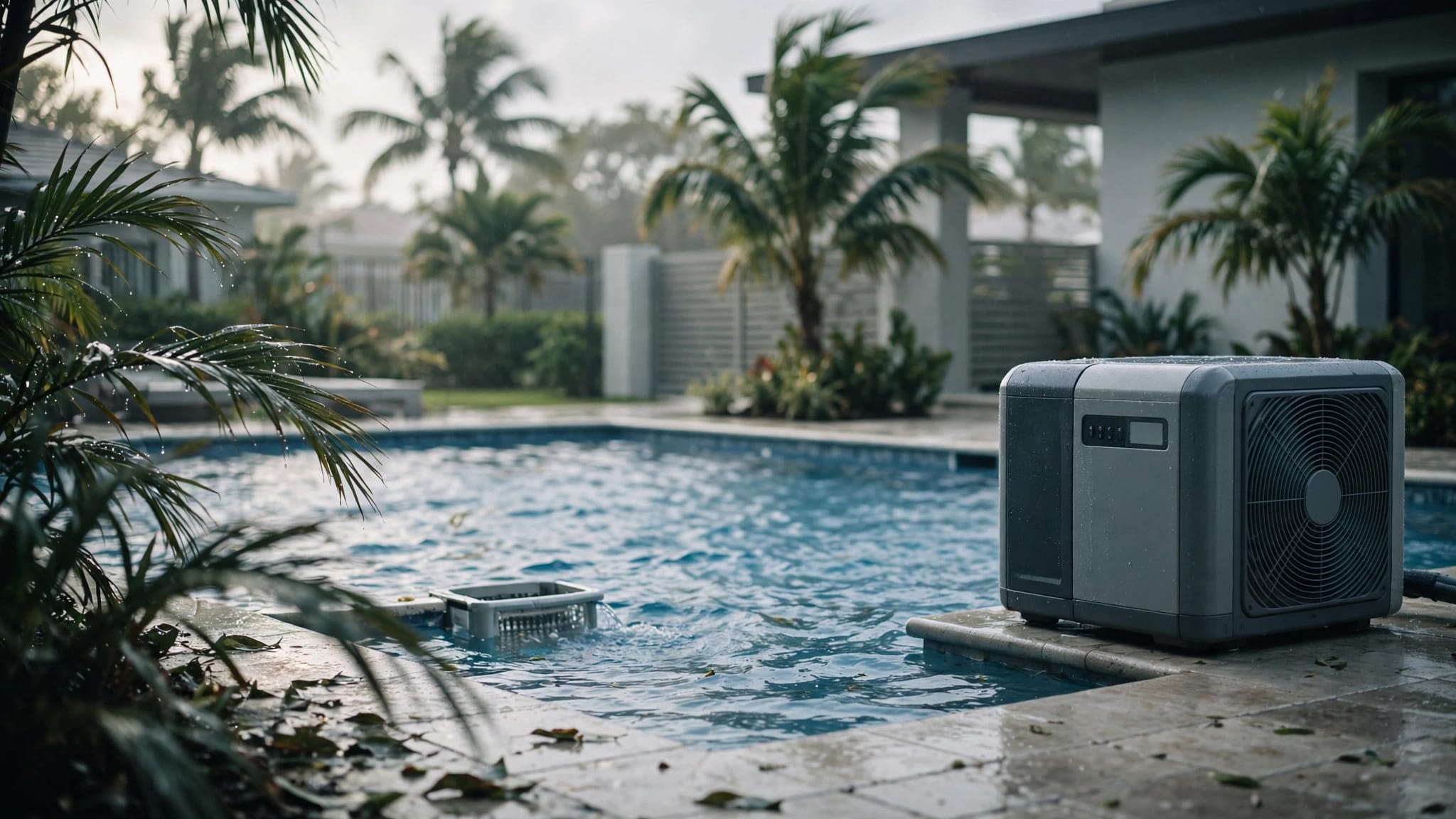
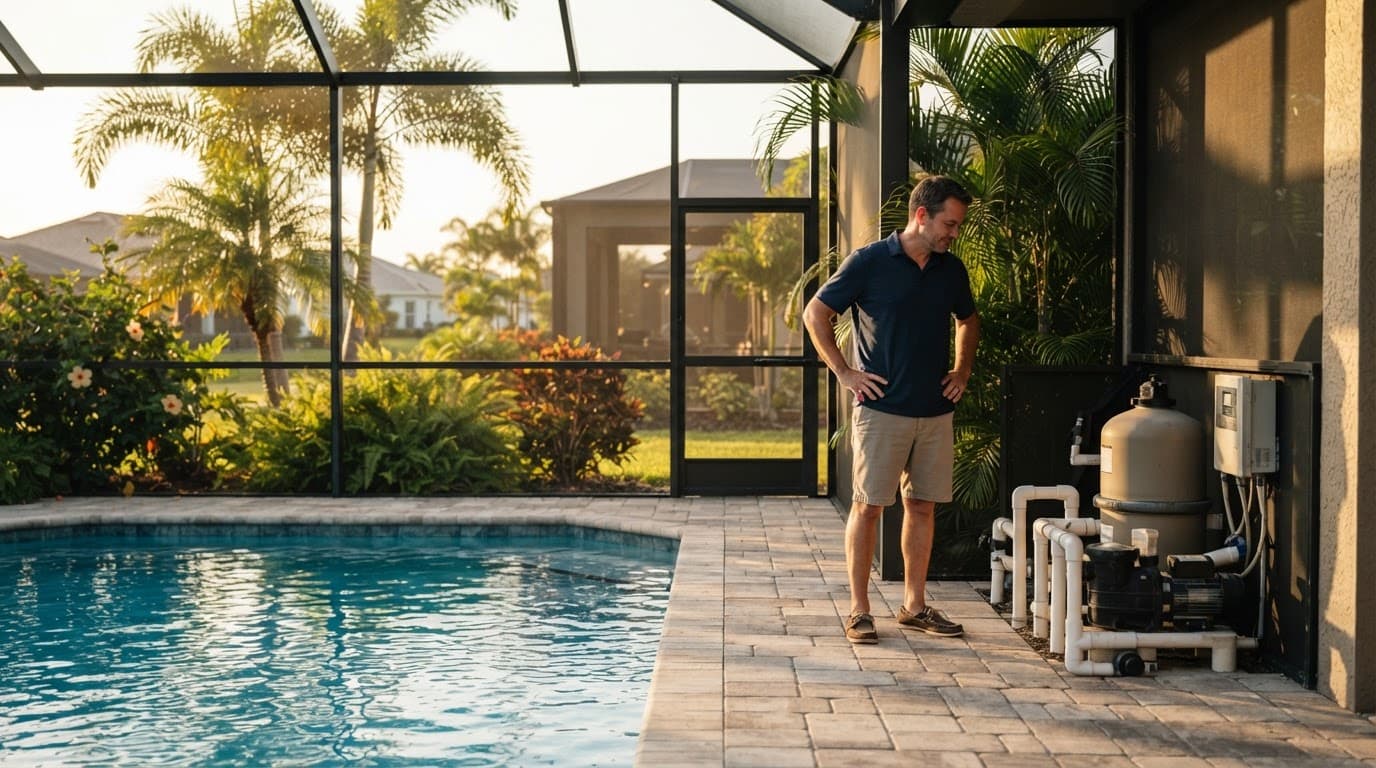
Walk around the pool and equipment pad while the system runs. Listen for grinding, rattling, or a pump that repeatedly loses prime. Look for drips around the pump, filter, heater, valves, and visible plumbing. Check that the return jets have normal flow and that the water level supports the skimmer.
Turn off power before opening baskets or cleaning accessible components. Confirm that the timer, automation panel, and breakers match their normal settings. Follow the pump and filter manufacturer's instructions, and call a pool professional if you find a leak, error code, damaged cord, or unusual pressure reading.
Remove debris and confirm the water level
Brush the pool walls and steps, remove leaves, empty the skimmer and pump baskets, and clean the filter only as the manufacturer directs. Vacuum the floor if debris has settled. A screened enclosure cuts down on leaves, but it doesn't block every insect or piece of windblown material.
Check the water level against the pool's normal operating range. Cape Coral heat can lower it through evaporation, while rain can raise it quickly. Use the autofill or hose only as directed for your system, and don't drain the pool as a vacation shortcut.
Keep Circulation Running in Hot Cape Coral Weather
Circulation is part of leaving a pool unattended safely, especially during hot weather. The right schedule depends on your equipment, pool size, weather, and service plan.
Use the normal filtration schedule
Keep the normal filtration schedule running unless the equipment maker or your pool professional gave you a different plan. Shutting the pump off for the whole trip stops filtration and sanitizer distribution. It can also leave a salt system unable to produce chlorine.
Before leaving, watch the pump start, reach prime, and send water through the returns. If you use a variable-speed pump, verify its programmed speeds and times. Don't create a new schedule right before travel unless you understand the controls.
Check timers and automatic features
Check the timer clock after any recent power outage. Run the system long enough to confirm that the cleaner, heater, water features, and automatic controls behave normally. You don't need to run every feature while away, but a failed timer can keep the pump off.
Keep the equipment area clear and dry. Don't wrap the motor or control panel in plastic, and don't block ventilation. If storms are forecast, follow the manufacturer's instructions for power interruptions instead of improvising with valves or electrical connections.
Test Water for Chlorine and Saltwater Pools
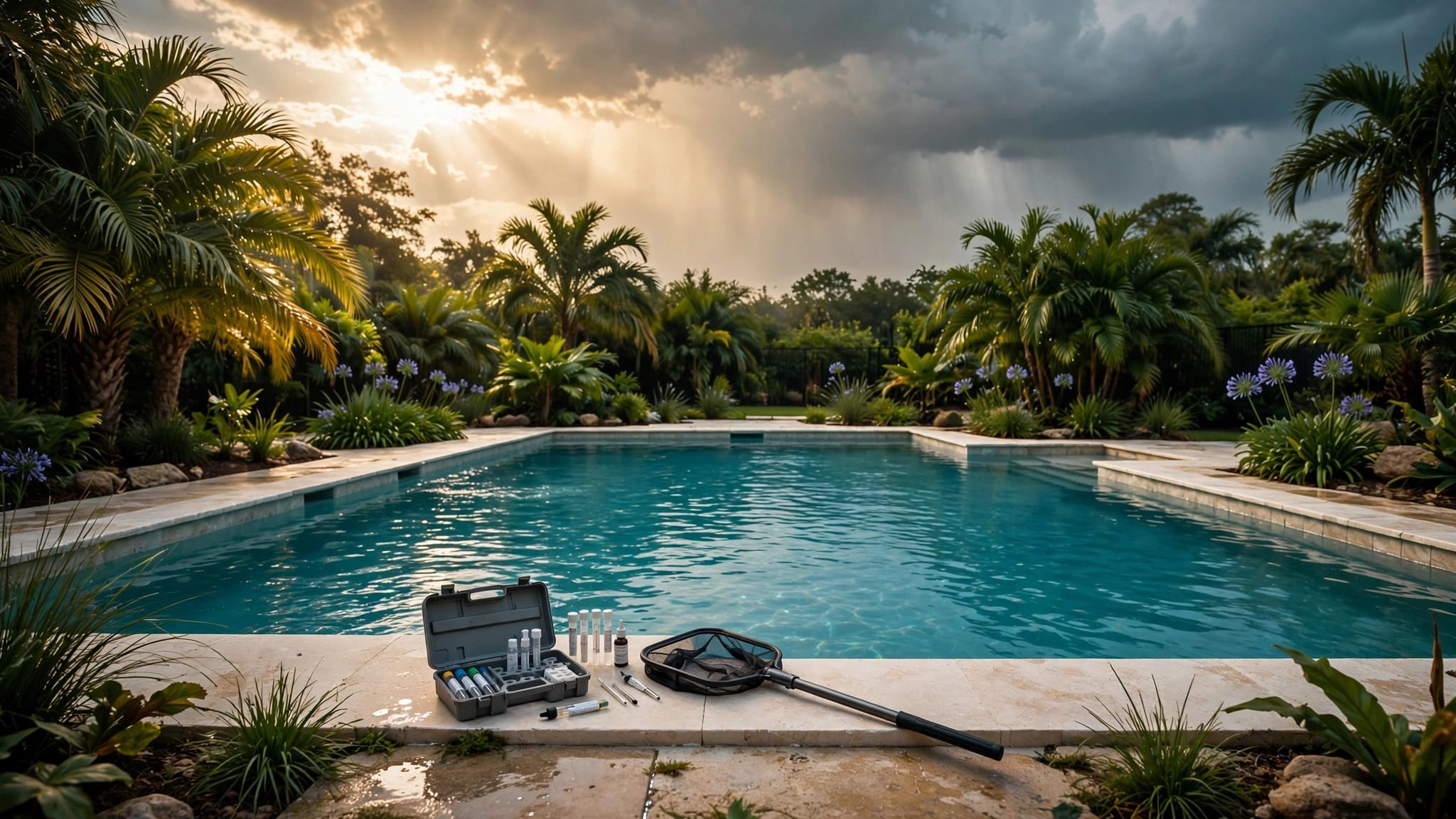
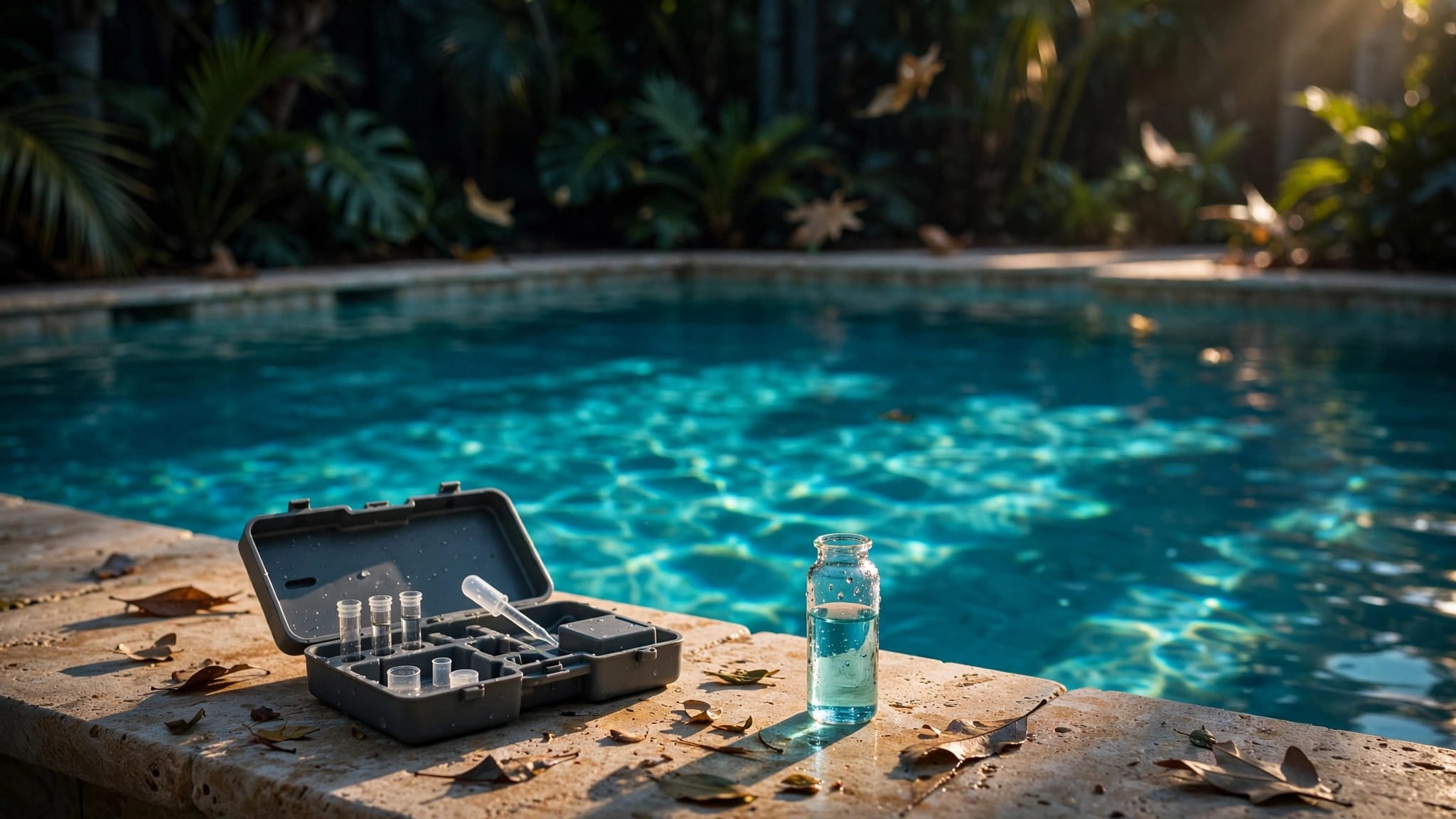
The chemistry part of Cape Coral pool preparation should begin with a fresh test, not a guessed dose. Water balance can shift while you're away, so start with reliable readings and follow product or professional guidance.
Prepare a chlorine pool
For a chlorine pool, test the sanitizer level, pH, alkalinity, and any other readings required by your product or service plan. Adjust only according to the product label, equipment instructions, or guidance from your pool professional. Exact amounts depend on water volume, current readings, and the chemical used.
After an adjustment, allow the system to circulate and test again before you leave. Add products separately, follow all handling directions, and store containers closed in a cool, dry place. Never mix pool chemicals or leave an open container beside the equipment.
Check the salt system
Saltwater pools still need a working chlorine generator, circulation, and regular testing. Check the salt level, sanitizer, pH, and controller readings against the ranges listed in your system manual. A salt cell won't produce sanitizer if the pump is off or the flow sensor detects a problem.
If the cell needs cleaning, use the manufacturer's process and shut off power as directed. Don't add salt because the display looks low without confirming the reading. For a long trip, ask a professional to review the cell, water balance, and operating schedule before you go.
Protect Screened-In and Covered Pools
Screened-in and covered pools need extra checks because each setup handles debris, rain, and access differently.
Inspect the screen enclosure
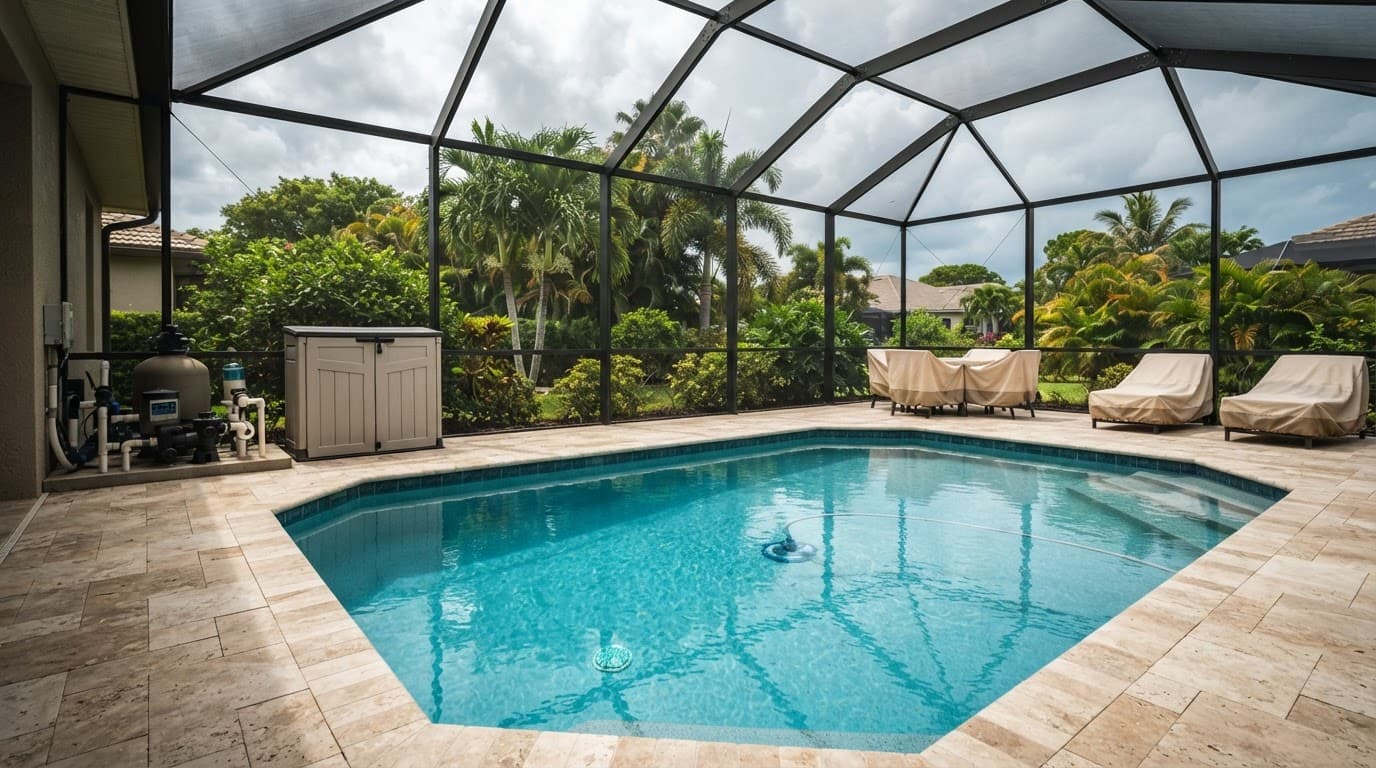
Inspect the enclosure roof, wall panels, spline, frame, and door latches. A small tear can spread during wind, while a door that doesn't latch can let in debris or animals. Remove branches near the cage if they can fall, but hire help for ladder work or damaged framing.
A screen enclosure reduces leaves and insects, yet it doesn't replace water testing or equipment checks. If the mesh is torn or sagging before your trip, schedule professional screen enclosure services before leaving. A repair or rescreen is easier to manage before a storm than after one.
Use a cover only as directed
If your pool has an automatic, safety, or floating cover, follow its instructions exactly. Confirm that the cover sits correctly, the water level matches the required range, and the pump or cover drain works as designed. Keep the cover locked or secured when the product requires it.
Remove toys and floats before closing the pool. Never use a loose tarp as a substitute for a pool cover, and never walk on a cover that isn't rated for people. If you aren't sure whether the cover should stay closed while the pump runs, ask the installer or manufacturer before departure.
Secure the Yard and Arrange a Pool Check
A storm-ready yard protects more than the pool water. It also reduces the chance that windblown objects damage the screen, deck, finish, or equipment.
Put away loose outdoor items
Bring in umbrellas, lightweight chairs, toys, floats, decorations, and anything else wind can move. Secure heavier furniture according to the manufacturer's or local storm guidance. Close and latch screen doors, gates, storage sheds, and equipment enclosures.
Don't put patio furniture in the pool. It can damage the finish, cover, tile, or screen enclosure. Clear leaves from deck drains and the skimmer area, but don't change drain covers, valves, or electrical connections unless a qualified person directs you.
Give a trusted person a clear checklist
For trips longer than a few days, arrange a trusted neighbor, family member, or pool professional to visit on an agreed schedule. A weeklong or longer absence deserves more than a glance through the screen.
Give that person the equipment location, normal water level, alarm instructions, and contact information for help. Ask them to confirm that the pump is running, water remains clear, the level is normal, baskets aren't blocked, and the enclosure has no storm damage. They shouldn't handle chemicals unless trained and instructed. A service company can test and adjust the pool when you can't respond quickly.
Check the Pool Before Swimming After Vacation
When you return, inspect the pool before anyone swims. A quick visual check can reveal problems that aren't obvious from inside the house.
Look for changes first
Check for cloudy or green water, unusual water loss, leaks, damaged screens, debris, and equipment that isn't running. Check the baskets and water level, then test the chemistry with a reliable kit or have a professional test it. Follow product directions and wait until readings return to the appropriate range before swimming.
If a storm passed while you were away, inspect the deck and enclosure before entering the equipment area. Keep children and pets away from damaged electrical equipment, standing water near connections, or an unsecured cover.
Handle equipment and water problems carefully
If the pump is off, don't restart it while the system is empty or the water level is too low. Use the manual's priming and restart procedure, or call a professional. Avoid pouring in extra chemicals to correct a problem you haven't tested.
Persistent algae, repeated loss of prime, cracks, surface damage, or a failing screen may need more than routine maintenance. Before a long absence, Get a Free Estimate for an on-site review of pool equipment, surfaces, or enclosure work.
Keep Your Pool Ready While You're Away
Vacation shouldn't end with a green pool and a repair list. The reliable approach is to clean first, test the water, keep normal circulation running, inspect the salt or chlorine system, secure storm-prone items, and arrange a check when you'll be gone several days.
Cape Coral pool preparation works best when it follows your equipment manuals and the actual condition of your pool. A final test and equipment check before you leave can protect your return home, while a trusted local check adds protection when Florida weather changes.