Fire can turn a Cape Coral pool deck into a comfortable evening retreat, but the flame needs as much planning as the pool itself. Choosing pool fire features Cape Coral homeowners can enjoy starts with the right feature, fuel source, surface, and location.
A fire bowl may complement a raised wall, while a linear burner can sharpen a modern design. However, heat, wind, salt air, children, pets, and pool access all affect the final plan. Start with the main fire feature types, then build safety into the layout before construction begins.
Pool Fire Features Cape Coral Homeowners Can Compare
Outdoor fire features vary in size, heat output, fuel requirements, and how people use the space. The best choice depends on whether you want a decorative accent, a gathering point, or a strong architectural detail.
Fire bowls add height and atmosphere
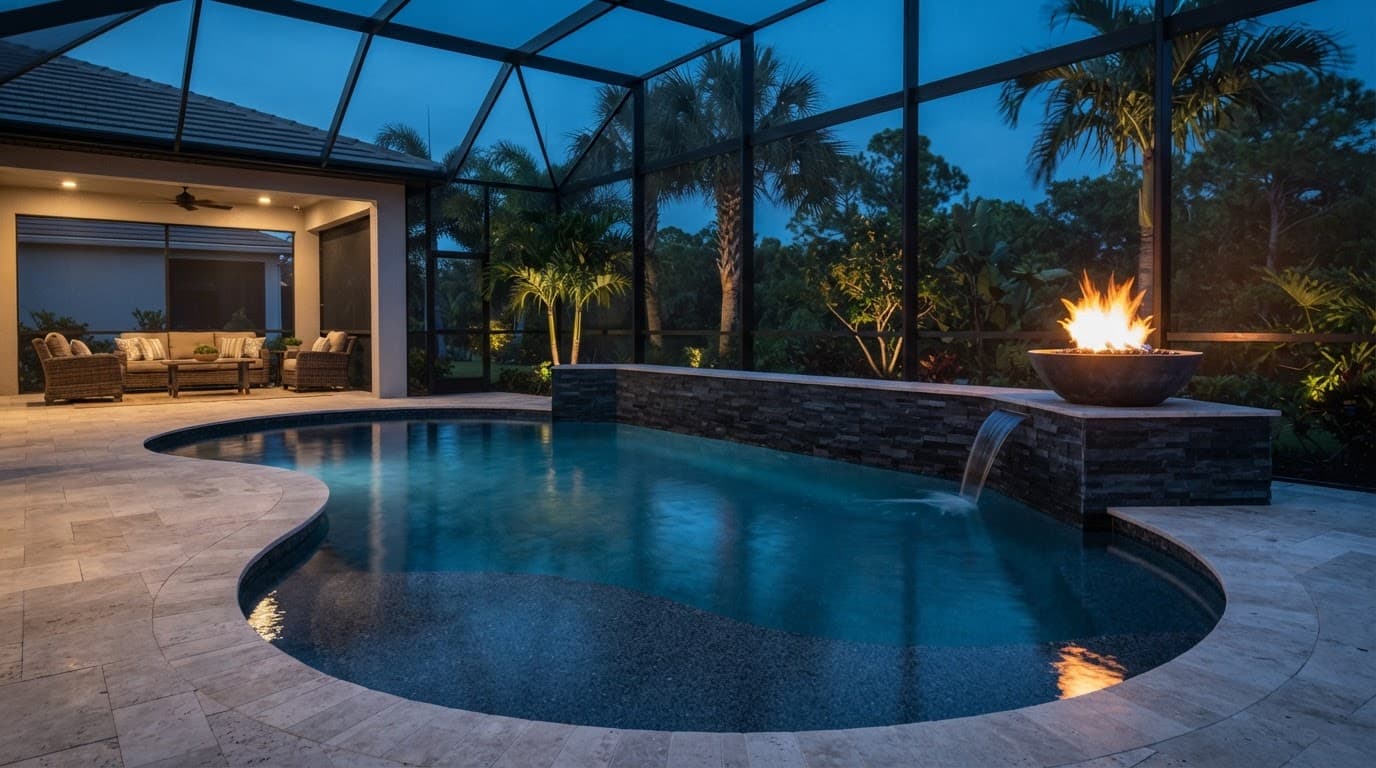
Fire bowls are popular beside raised bond beams, spillways, and tanning ledges. Their elevated position gives the flame visibility without taking up as much floor space as a freestanding pit.
A bowl can hold a controlled burner with lava rock, fire glass, or another approved media. Water can spill beside or beneath it, creating a decorative water-and-fire feature. The flame still produces heat, so the bowl needs a stable base, protected gas connections, and enough separation from traffic.
Fire pits and fire tables create gathering areas
A fire pit gives the pool deck a natural social center. It works well in a separate seating area where people can gather after swimming. Fire tables offer a similar experience while adding a broad surface around the burner for drinks or decorative use.
Both options need careful placement. Wet feet, loose towels, pool toys, and outdoor cushions should stay outside the heat zone. Fire tables also need a level, noncombustible base and open airflow around the burner.
Linear features strengthen modern pool designs
Linear fire features use a long, narrow burner inside a wall, trough, or raised structure. They can frame a spa, highlight a vanishing edge, or create a clean visual line along the pool.
Because the flame runs across a wider area, the design must account for wind direction and radiant heat. A linear feature also needs access for service, drainage, and controls, even when the finished installation looks built-in and minimal.
How Pool Fire Features Cape Coral Designs Handle Heat
A fire feature should fit the way your family moves through the backyard. The pool entry, spa steps, outdoor kitchen, seating, screen doors, and equipment access all need clear routes.
Map the heat zone before choosing a location
Heat travels beyond the visible flame. A feature can warm nearby furniture, walls, screens, railings, and people who sit across from it. Ask the designer to identify both the hot surface area and the radiant heat area around the burner.
Avoid placing a fire bowl where swimmers step out of the pool. Keep pits and tables away from narrow walkways, pool ladders, spa spillways, and doors. A raised wall can add separation, but it shouldn't become a step that gives children access to a hot burner or control.
Safe clearances aren't one universal number. The appliance listing, installation manual, fuel type, surrounding materials, and local review all affect the required spacing. Follow the manufacturer's instructions and have a qualified contractor confirm the final layout.
Use noncombustible, slip-resistant surfaces
Concrete, masonry, and properly selected stone or paver systems are common choices around fire features. The supporting base must stay stable in wet conditions and withstand the heat produced by the appliance.
The area around a pool also needs good drainage and traction. Avoid combustible materials directly below or beside the burner, including wood, synthetic turf, loose fabric, and decorative items that can blow into the flame. Choose a finish that remains comfortable to walk on after splash-out and rain.
A pool renovation is a good time to correct crowded circulation or worn decking. Back Bay Pools provides pool construction and renovation services for homeowners updating the pool, deck, water features, and surrounding outdoor space together.
Propane or Natural Gas for a Cape Coral Pool?
Fuel choice affects installation, storage, convenience, and future maintenance. Discuss the fuel plan before selecting the feature because changing it later can require new utility work and structural access.
Propane offers flexibility
Propane can work well when a natural-gas connection isn't available. It may support a freestanding fire table or a built-in feature, depending on the appliance and tank arrangement.
The tank must remain outdoors in an approved location with proper ventilation. It shouldn't sit inside a screen enclosure, cabinet, garage, or confined space unless the entire setup is designed and approved for that use. Keep cylinders away from heat, impact, standing water, and areas where children can reach the controls.
Inspect connections for damage and follow the appliance instructions for leak checks. If you smell gas, shut off the supply when you can do so safely, extinguish flames, move away from the area, and contact the gas supplier or fire department.
Natural gas supports built-in designs
Natural gas is convenient for homeowners who already have a suitable service connection. It eliminates routine tank changes and often fits permanent fire bowls, wall features, and linear burners.
A licensed professional should plan the gas route, appliance connection, service access, shutoff location, and ventilation. The finished design should include an accessible manual shutoff, plus any automatic ignition and flame-sensing controls required by the selected system.
Never assume an existing gas line can handle a new burner. The contractor needs to verify capacity, routing, fittings, and the location of other utilities before work begins.
Cape Coral Safety Details for Wind, Screens, and Salt Air
Cape Coral yards face strong sun, humidity, storms, and coastal air. Waterfront properties may also experience more wind and salt exposure than inland neighborhoods. These conditions affect both daily use and the life of the equipment.
Plan for wind exposure and screen enclosures
Wind can push flames toward furniture, walls, screens, or people. It can also disturb the burner pattern and make ignition less predictable. Place the feature where the surrounding design provides reasonable protection without blocking required ventilation.
A wind guard may help when the appliance manufacturer approves it, but it doesn't make every location safe. A fire feature under a covered lanai or inside a screen enclosure requires special care. Some products prohibit covered patios or enclosed areas entirely, so follow the exact manual rather than assuming a roof or cage is enough.
The Cape Coral Fire Department publishes current fire pit and open-burning guidance. Built-in gas fire features can involve different questions than recreational fires, so confirm the current requirements with the City of Cape Coral and a qualified licensed contractor before installation.
Protect components against humidity and salt air
Moisture can affect burner pans, ignition parts, fasteners, gas fittings, and control boxes. Salt air increases corrosion risk, especially near waterfront homes or pools with salt systems.
Ask about corrosion-resistant components suited to Florida exposure. The design should drain rainwater and splash-out instead of trapping moisture around the burner. A fitted cover can help when the unit is cool and the manufacturer permits one, but covers shouldn't trap heat or conceal a gas problem.
Keep children, pets, and pool access in mind
Hot fire glass, metal surfaces, and surrounding stone can stay hot after the flame goes out. Position seating so children and pets can't easily reach the burner, and keep remote controls or switches out of their path.
The fire feature also cannot interfere with the pool barrier or gate. Florida Statutes section 515.29 requires residential pool barriers to meet requirements for height, openings, placement, and self-closing, self-latching gates. Review the Florida residential pool barrier requirements as part of the pool design.
Safety note: Fire features require outdoor placement, proper ventilation, manufacturer-approved clearances, working shutoffs, and active adult supervision. This article is general information, not a substitute for local review, product instructions, or advice from a licensed professional.
Decorative Water-and-Fire Features Need Real Safety Planning
A water-and-fire feature usually integrates a controlled burner into a bowl, wall, trough, or fountain. The water adds visual movement, but it doesn't cancel the risks created by fuel, heat, ignition, or wind.
An open-flame installation, such as a fire pit or fire table, usually places the burner closer to people. It needs more attention to seating distance, circulation, hot surfaces, and supervision. Linear burners also require careful control of the surrounding wall and any materials above or beside the flame.
The difference matters when you compare designs. A small raised bowl may fit a narrow deck, while a fire table may need a wider social area. A water-and-fire wall can separate the pool from seating, but it still needs access panels and service clearance.
When reviewing a proposal, ask whether it identifies the exact feature, fuel source, burner controls, gas line work, shutoffs, noncombustible materials, drainage, and maintenance access. A clear scope helps you compare proposals accurately. Back Bay Pools' guide to how to compare pool proposals also addresses gas lines and fire-feature work that may not appear in every quote.
Maintenance and Professional Installation
A fire feature needs routine care, even when the burner runs for only a few hours each month. Before use, look for debris, blocked burner openings, cracked media, damaged hoses, loose fittings, and signs of corrosion.
Clean the feature only when it is fully cool. Keep leaves and pool chemicals away from the burner area, and don't pour water over a hot burner or fire glass. If the flame changes color, burns unevenly, produces an unusual odor, or struggles to ignite, stop using the feature until a qualified technician checks it.
Professional installation helps coordinate the pool shell, deck, masonry, plumbing, gas, electrical controls, drainage, and screen enclosure. The installer should also explain the emergency shutoff, normal operating procedure, cover use, and seasonal inspection needs.
For new construction, plan the fire feature with the pool layout instead of adding it after the deck is complete. For renovations, the existing gas lines, drainage, coping, and screen structure need inspection before the design is finalized. Once you have a direction, you can Get a Free Estimate for an on-site discussion of the pool and outdoor living area.
Conclusion
Pool fire features Cape Coral homeowners choose should add warmth and character without crowding the pool deck. Fire bowls, pits, tables, and linear burners each create a different experience, but all require proper fuel planning, noncombustible construction, clear heat zones, accessible shutoffs, and regular maintenance.
The safest design starts before materials are ordered. Confirm current City of Cape Coral requirements, follow the selected appliance manual, and work with a qualified licensed contractor who can coordinate the pool, deck, gas, screens, and fire feature as one project. A well-planned flame looks inviting because every surrounding detail has a safe place.