A phosphate test can look alarming even when your pool is clear. If you're trying to balance pool phosphate levels, start with the water's overall condition, not the phosphate number alone. Phosphates can feed algae, but chlorine and balanced water remain your first defenses against a bloom.
For Cape Coral homeowners, warm weather, storms, and debris make regular testing especially useful. The right approach is to confirm the reading, address any sanitizer problem, and decide whether phosphate treatment would help.
What pool phosphate levels tell you about algae
Phosphates are nutrients that algae can use. They may enter a pool through leaves, soil, some fertilizers, and other material carried in from the yard. A phosphate reading tells you something about available nutrients, but it doesn't tell you whether the water is sanitized.
A high reading isn't an algae diagnosis
Algae needs conditions that allow it to grow. If free chlorine stays in its recommended range and circulation is working, a phosphate reading alone doesn't mean a bloom is coming. If the pool is green, treat the sanitation problem first.
Likewise, clear water isn't proof that every reading is acceptable. Test chlorine and pH even when the pool looks inviting. A phosphate remover cannot replace either check.
There isn't one target for every pool
You'll see different phosphate numbers on test kits and treatment labels. Pool size, current water conditions, recurring algae problems, and the product's directions all affect how useful a particular target is. Avoid treating a number from a general chart as a universal cutoff.
First, find out what your test measures and which units it uses. Parts per million (ppm) and parts per billion (ppb) aren't interchangeable: 1 ppm equals 1,000 ppb. Check the unit before comparing your result with a product label or a professional test.
Test the water before choosing a treatment
A phosphate result is more useful when you can compare it with chlorine, pH, and the pool's recent history. If algae keeps returning, write down the readings before adding another chemical.
Collect a representative sample
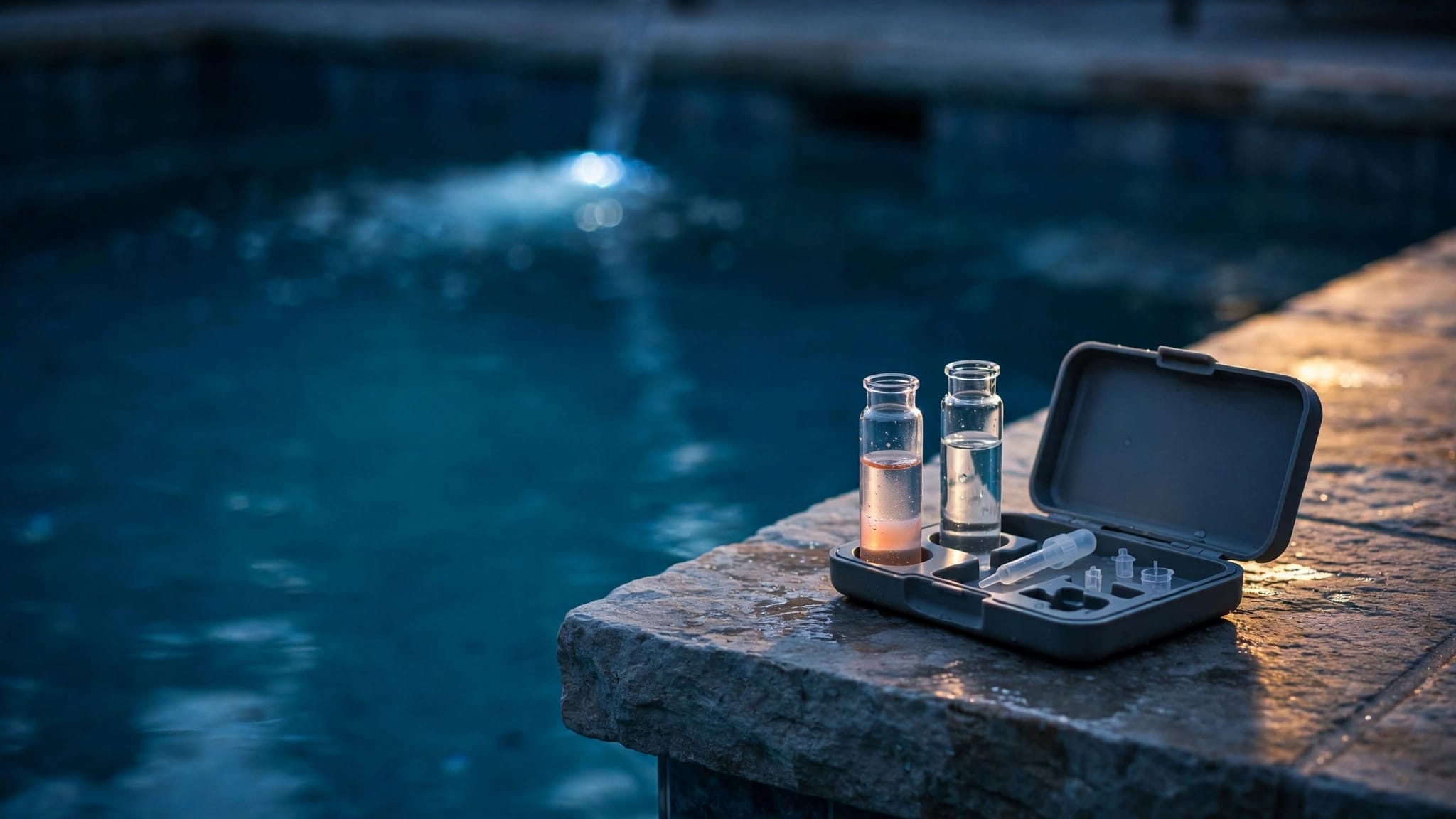
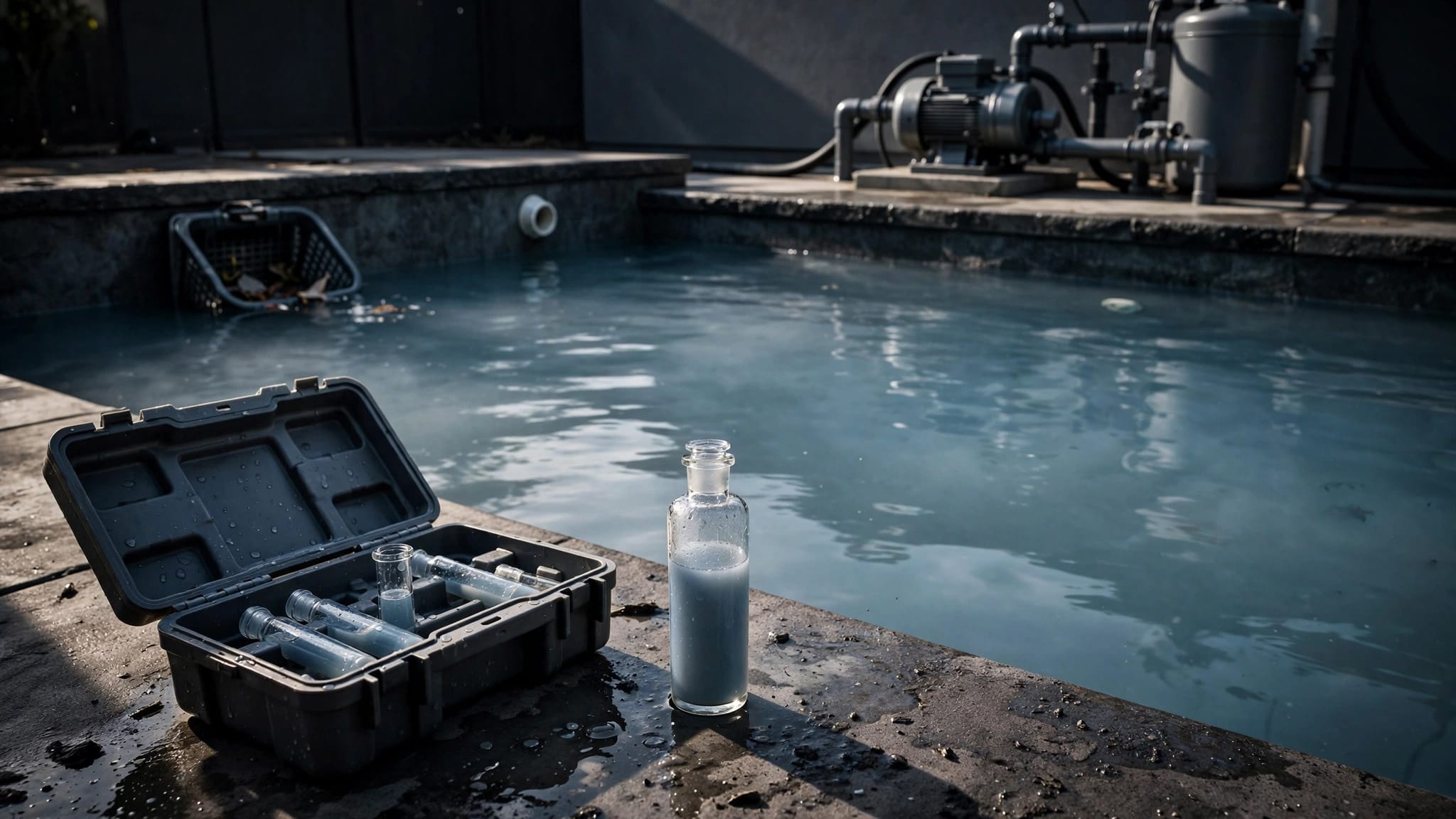
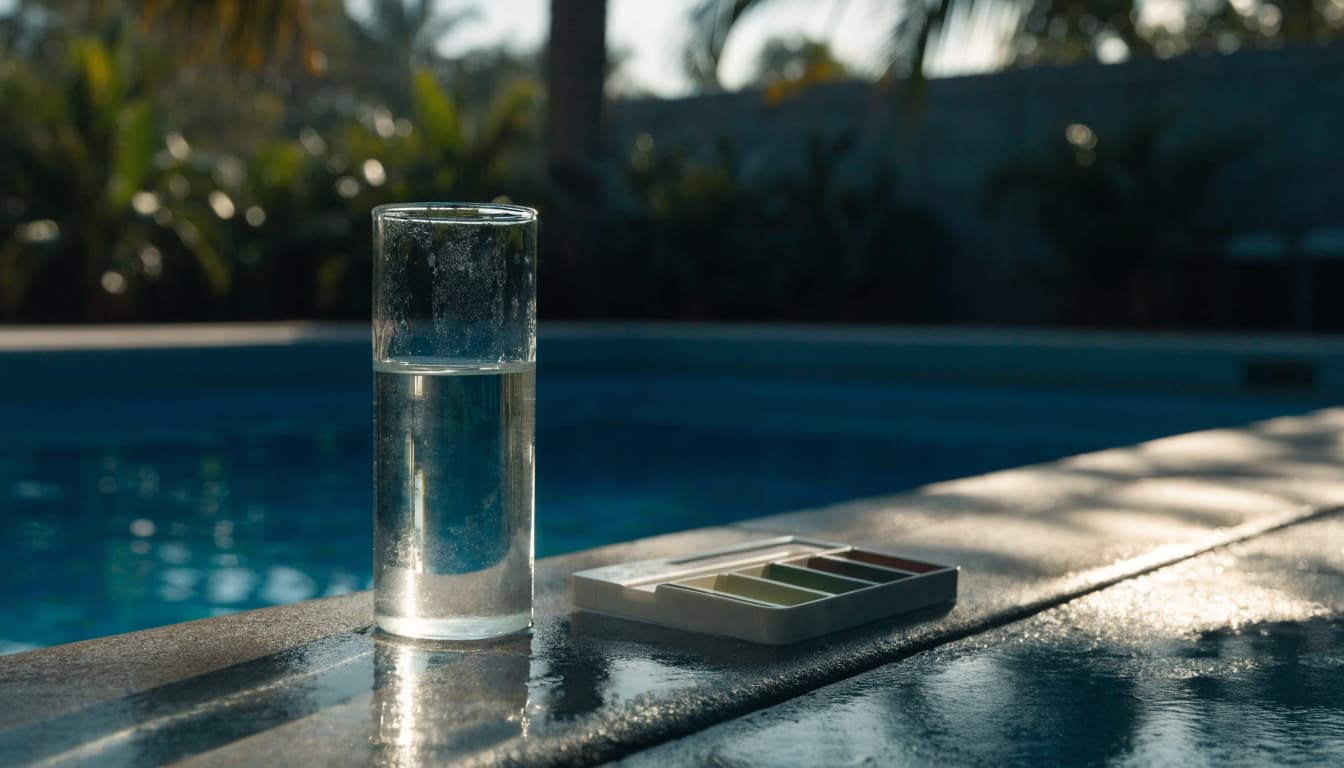
Use a clean container and take water from below the surface, away from return jets, skimmers, and chemical feeders. Follow the phosphate kit's sample depth and timing instructions. Ordinary chlorine or pH strips won't measure phosphate unless the package says they do.
If a result seems inconsistent with previous tests, repeat it with a fresh sample or ask a pool professional to test the water. Use the same test method when possible, since different methods may report different forms of phosphate. Record the result and its units alongside the date.
Check the readings that affect swimming
At the same time, measure free chlorine and pH. Also check total alkalinity, calcium hardness, and cyanuric acid as your pool's care plan requires. These readings help you spot a sanitation or balance problem that phosphate treatment won't fix.
During normal use, check chlorine and pH at least twice a week. Test more often after heavy rain, major water additions, extreme heat, or a busy pool party. If your pool is new or recently refinished, follow its startup plan, which may call for closer monitoring. Back Bay Pools explains why pool water chemistry during startup needs attention after construction or renovation.
Put sanitation and water balance first
A pool with visible algae needs a different response than a clear pool with a phosphate reading you want to investigate. Start with the conditions that affect swimmers and sanitizer performance.
Restore sanitizer before addressing nutrients
The CDC recommends a residential pool pH of 7.0 to 7.8 and at least 1 ppm free chlorine. Its minimum is at least 2 ppm when the pool uses cyanuric acid or stabilized chlorine products. Follow the applicable sanitizer label and your pool professional's guidance, since your system may have additional requirements.
If chlorine is low, correct it using a measured dose based on a current test. Then brush affected areas, maintain circulation, and clean the filter as needed. Keep swimmers out when the water isn't clear enough to see the entire floor or when a treatment label requires a waiting period.
Keep the rest of the water in range
Many residential pools target pH within 7.2 to 7.8 and total alkalinity around 80 to 120 ppm, but the finish and equipment manufacturer's instructions come first. For plaster pools, calcium hardness often falls within a 200 to 400 ppm working range. Fiberglass, vinyl, saltwater systems, and specialty finishes may have different requirements.
These readings interact. For example, adding acid to lower pH won't remove excess calcium. Test, make one measured adjustment at a time, allow circulation, and retest before making another change.
A phosphate remover addresses a nutrient concern. It doesn't disinfect the water or correct low chlorine.
Decide whether phosphate removal is warranted
Once chlorine and water balance are under control, look at the phosphate result in context. The strongest reason to consider treatment is a confirmed reading paired with a recurring problem , not a single number that happens to look high.
These situations call for different next steps:
| Pool condition | Sensible next step |
|---|---|
| Clear water, steady sanitizer, one unexpected phosphate result | Repeat the test and keep monitoring before adding treatment. |
| Recurring algae despite careful sanitation and cleaning | Review circulation and other water readings, then discuss phosphate treatment with a qualified pool professional. |
| Green water or inadequate free chlorine | Address sanitation first and delay swimming until the water meets the applicable guidance. |
A recurring bloom deserves a closer look at the whole pool. Check for poor flow, a dirty filter, missed brushing, and chlorine that falls too quickly between tests. Otherwise, phosphate removal may distract you from the problem that let algae take hold.
If you choose a phosphate-removal product, use its own testing guidance to judge whether treatment is appropriate. Labels differ, and no single phosphate threshold applies to every residential pool.
Use phosphate remover carefully and retest
Phosphate-removal products come with directions for their intended pool size, application, filtration, and follow-up testing. Read the entire label before opening the container. Don't estimate a dose by looking at the water.
Prepare the pool and follow the label
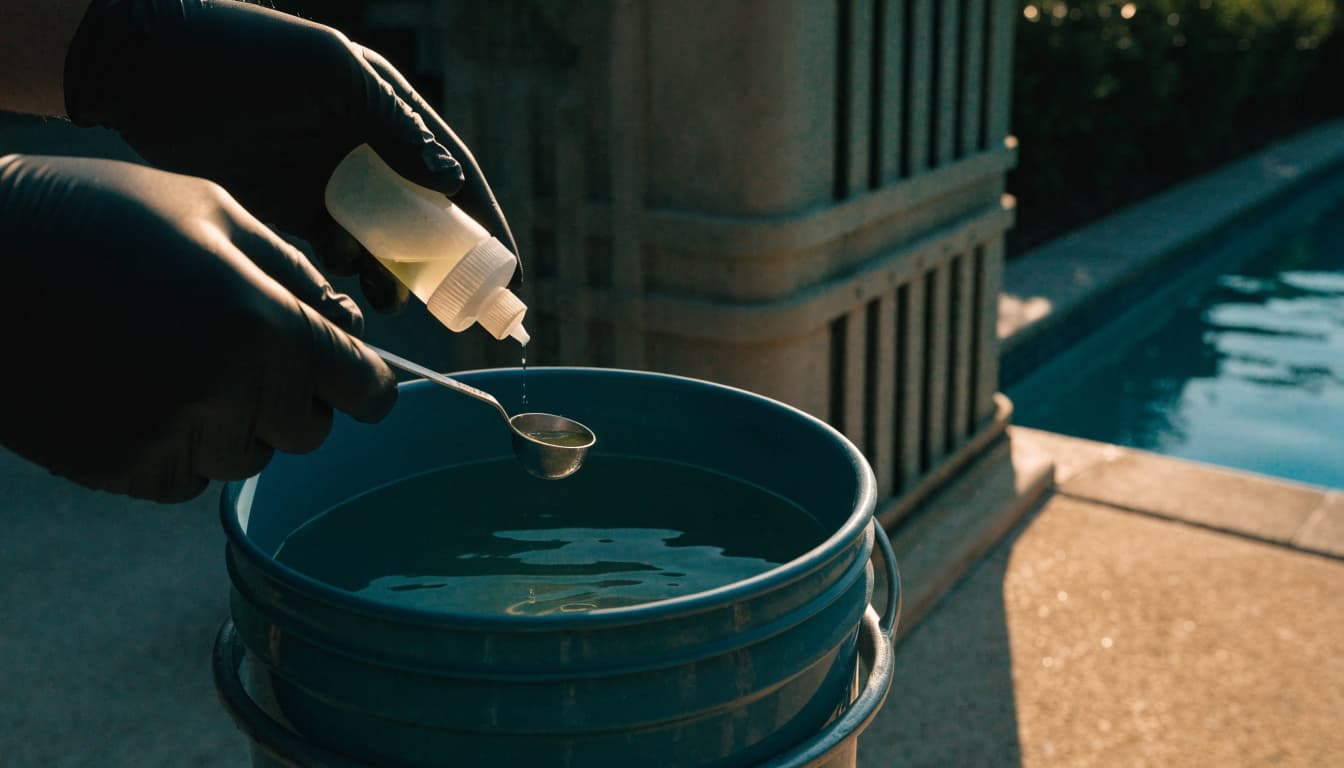
Confirm the pool volume, current phosphate reading, and filter condition. Measure only the amount the label calls for. Wear any protective equipment it specifies, keep children and pets away from the work area, and never mix pool chemicals. Don't pre-mix a product in a bucket unless its instructions explicitly direct you to do so.
Some products have filter-cleaning or swimming restrictions. Follow those directions rather than assuming the water is ready because it looks clear. Store the container closed, in its original packaging, away from other chemicals.
Give the process time, then check again
Run the circulation system for the period stated on the label and service the filter as directed. Retest phosphate only after the product's specified waiting period, using the same test method when possible. Recheck free chlorine and pH, too.
If the phosphate result remains higher than expected, don't immediately add a second dose. Confirm the result, check the label's limits, and consider where new material may be entering the pool. A professional water test can help when readings stay inconsistent or treatments don't produce the expected result.
Reduce debris and runoff around the pool
Prevention is less about chasing a perfect phosphate number and more about limiting material that enters the water. In a Southwest Florida yard, storms can send leaves and soil toward the pool quickly.
Keep up with routine cleaning
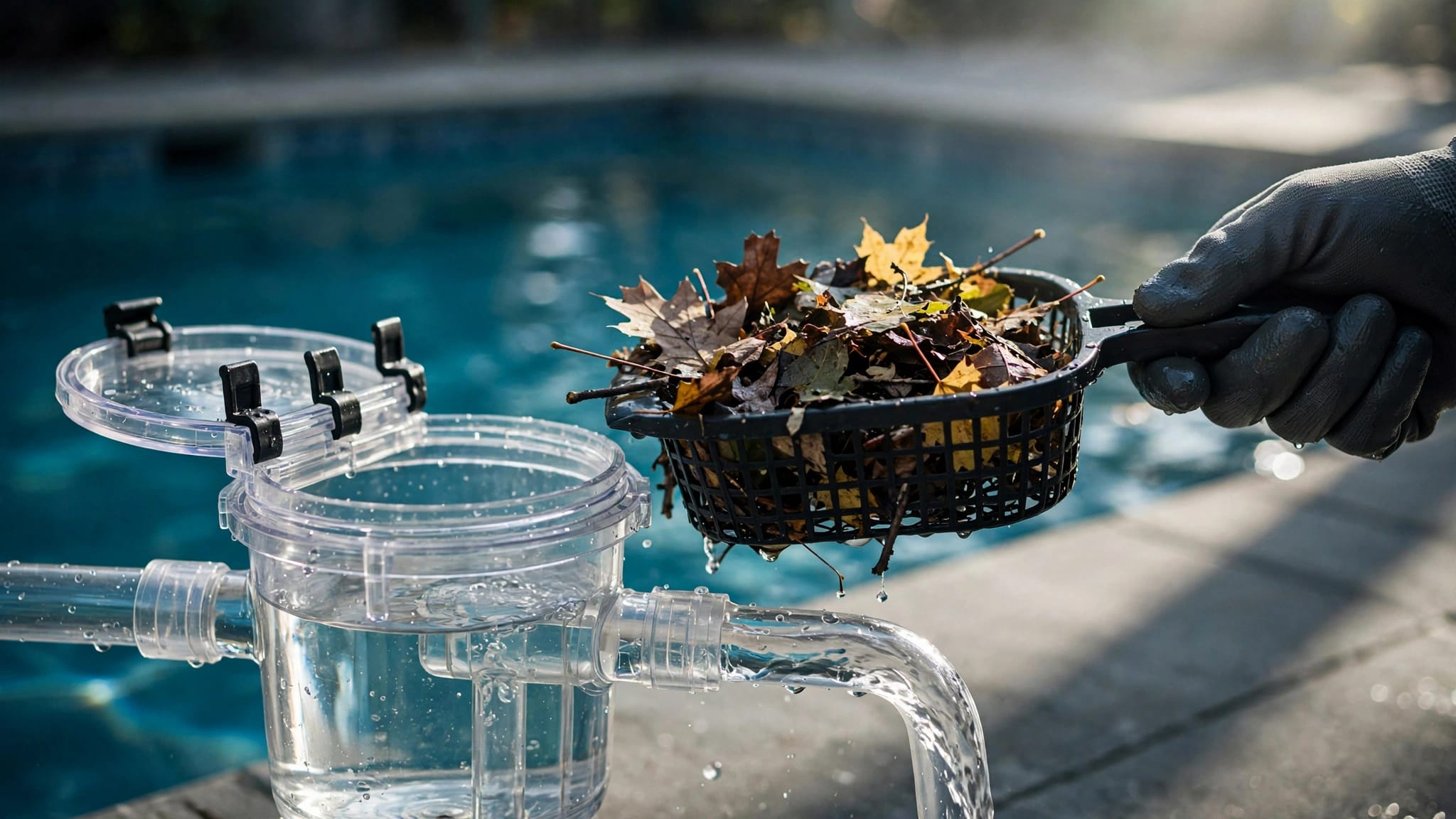
Skim leaves before they sit in the water, empty baskets, brush surfaces, and clean the filter according to its pressure readings and manufacturer instructions. Check deck drains after storms so runoff doesn't carry soil into the pool. These steps also support the circulation and cleanliness you need for effective pool care.
A screen enclosure helps keep larger debris and insects out, although wind-driven rain and fine particles can still enter. If torn panels leave the pool exposed, consider screen enclosure and rescreen services. A screen can reduce debris cleanup; it isn't a substitute for water testing or a guaranteed way to lower phosphates.
Check additions to the water
Keep lawn products and loose soil away from the deck, and avoid washing fertilizer or yard debris toward pool drains. If phosphate readings rise repeatedly after topping off the pool, test the fill water before assuming the yard is the source.
Record when you refill, clean the filter, or see a large reading change. That history makes it easier to discuss a persistent issue with a pool professional than a single test result does. Regular pool water chemistry and routine maintenance remain the foundation for a clean, usable pool.
Consider the pool's condition before adding more chemicals
New construction and renovation can change your maintenance routine. Fresh plaster, for example, often needs frequent brushing and closer water checks during startup. Follow the contractor's and finish manufacturer's instructions before adding an optional treatment. A new surface has care requirements that a mature pool may not.
A worn surface is a separate issue. Rough areas, peeling plaster, cracks, or persistent stains won't be repaired by phosphate remover. If those conditions accompany your water concerns, look into pool renovation and resurfacing rather than trying repeated chemical adjustments. The pool finish, equipment, and water readings all deserve attention on their own terms.
Key Takeaways
- Test phosphate with a kit or professional test that identifies its units, then confirm an unexpected result.
- Maintain free chlorine and balanced pH first. Phosphate removal doesn't sanitize a pool.
- Consider treatment in the context of recurring problems and follow the chosen product's label.
- After treatment, service the filter as directed and retest at the stated time.
- Limit debris and runoff, while keeping a record of changes in the water.
Frequently Asked Questions
Do high phosphates mean my pool is unsafe to swim in?
A phosphate result alone doesn't establish whether the water is safe. Check free chlorine, pH, clarity, and any product-specific waiting period. If algae or cloudiness prevents you from seeing the pool floor, keep swimmers out while you address the problem.
Can I remove phosphates instead of adding chlorine?
No. Chlorine sanitizes the water; phosphate treatment doesn't perform that job. Maintain your system's recommended sanitizer level even if you decide to use a phosphate remover.
How often should I test phosphates?
Test when you're investigating recurring algae, checking a possible source, or following a phosphate product's retesting directions. There's no universal schedule for every pool. Chlorine and pH need more regular attention, particularly after storms and heavy use.
Will a screen enclosure solve a phosphate problem?
A screen can keep some leaves and debris out, which reduces cleanup. It won't stop every source of phosphate, including fine material or additions in fill water. Test before attributing a reading to any one source.
Keep the whole pool in view
An alarming phosphate number deserves a second look, not an automatic chemical dose. Confirm the result, keep sanitizer and water balance on track, and treat phosphates when the pool's history and product guidance support it.
Consistent testing gives you a clearer picture than any single reading. It also helps you protect the pool you swim in, not merely improve a number on a test report.