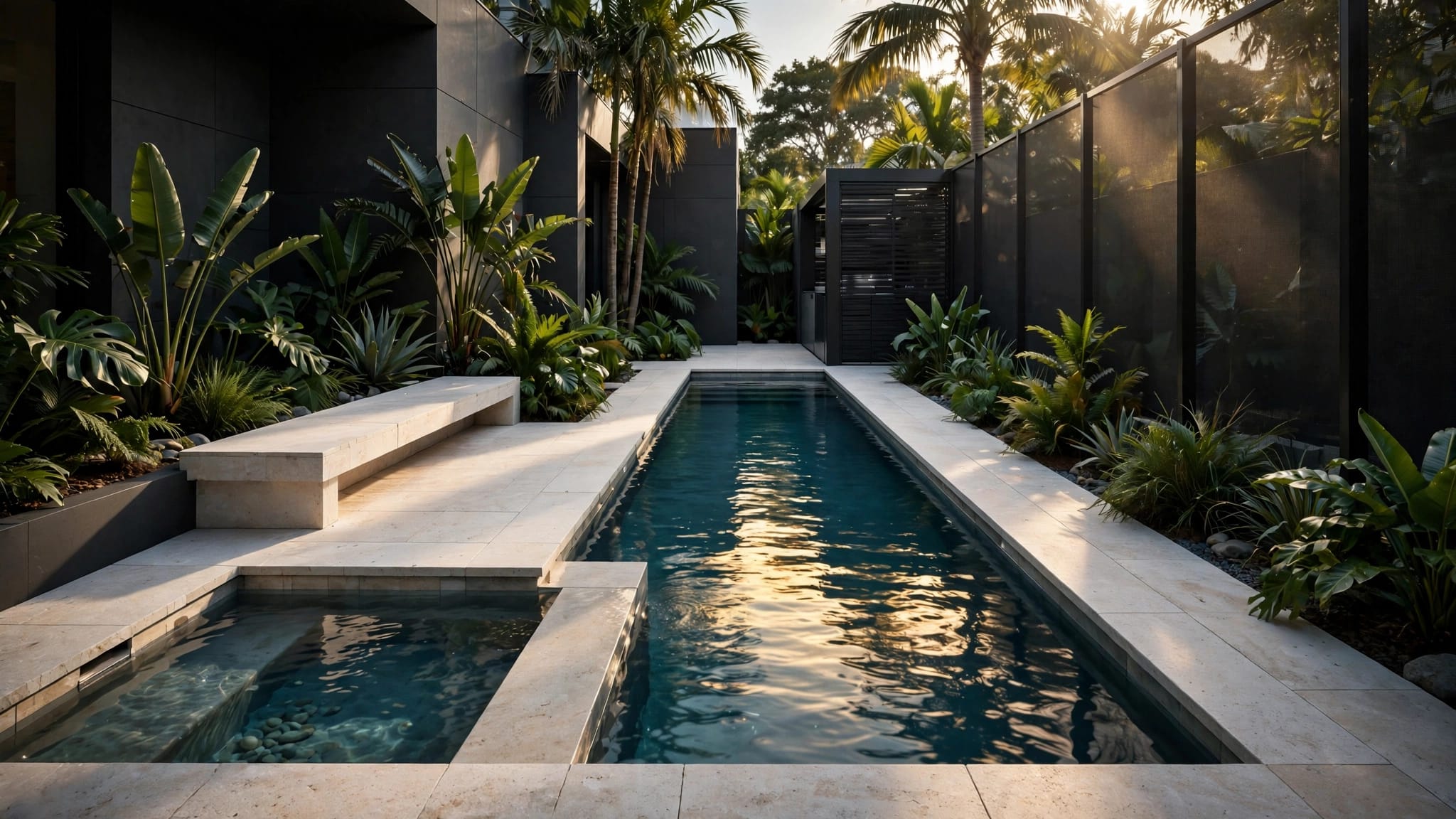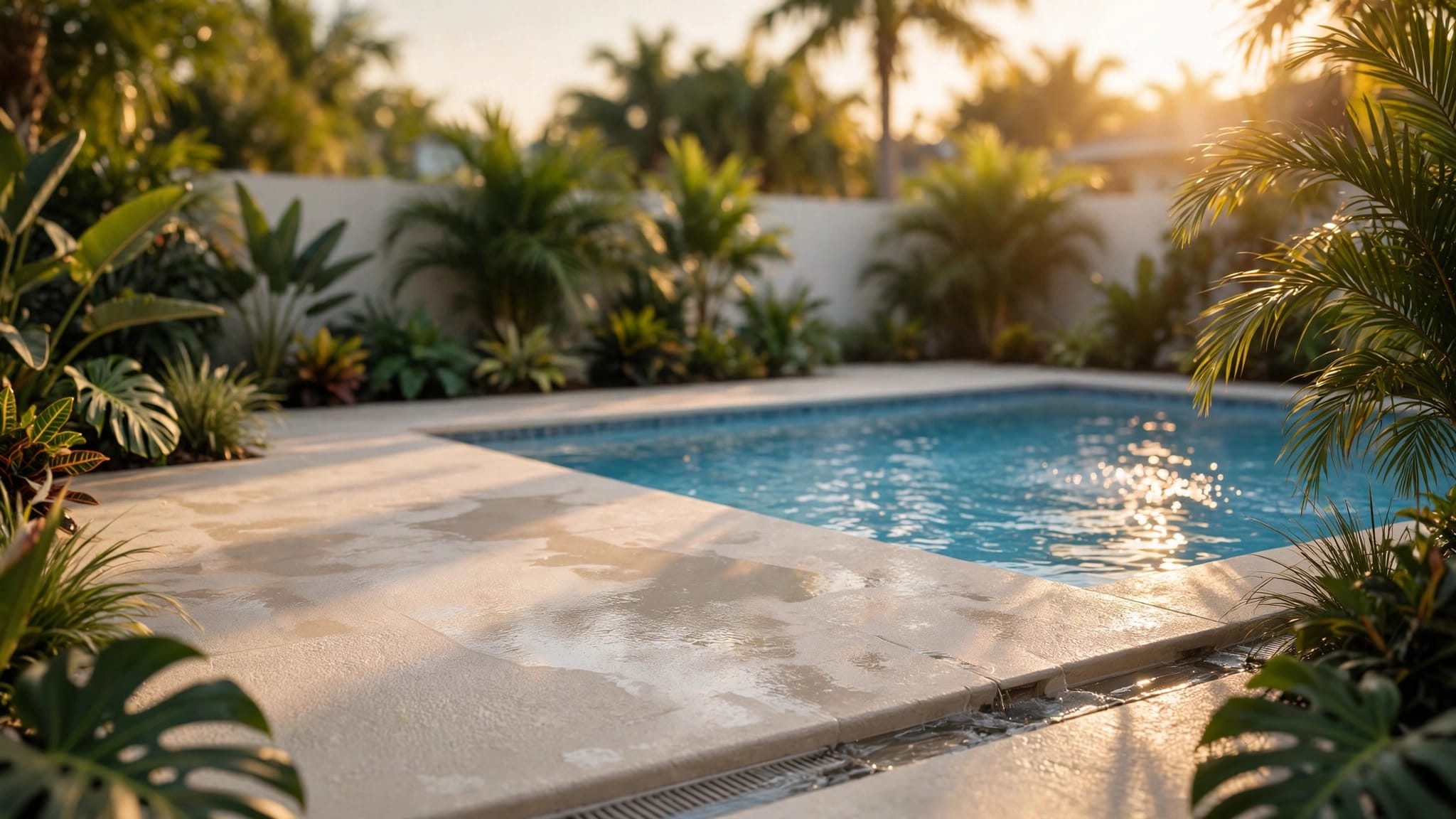
The best place to rinse off after a swim might be a few steps from the pool, or right beside the door you use to reach it. A pool outdoor shower is convenient only when its location, water supply, and drainage fit the way you use your yard.
If you're building or renovating a pool in Cape Coral, plan the shower before the deck and enclosure layout are final. That early decision gives you more room to get the walking path and plumbing right.
Start with the way your household will use the shower
A quick rinse before swimming calls for a different setup than a shower used after a beach trip. Decide who will use it, when they'll use it, and whether they need privacy.
Decide between a rinse station and a full shower
For rinsing off before a swim, a simple showerhead with cold water may be enough. If family members will wash off sunscreen, sand, or salt after returning from the beach, consider whether they need warm water, a hand shower, and a place for towels.
Also think about children and guests. Controls should be easy to reach, and the shower shouldn't force wet feet through a seating area or across a narrow pool entry.
Make everyday access easy
Walk the route you expect people to take. If swimmers leave the pool through a screen door, a shower on the opposite side of the yard may see little use. On a busy deck, place it where someone can rinse without blocking the steps, spa access, or a path to the house.
A pool outdoor shower should also leave room to stand comfortably outside the spray. Check where the water will land when the wind picks up.
Put the shower where water and people can move safely
Shower placement is a deck decision as much as a plumbing decision. Before choosing a fixture, identify the pool entry, house doors, furniture, and likely wet walking routes.
Check the route from pool to shower
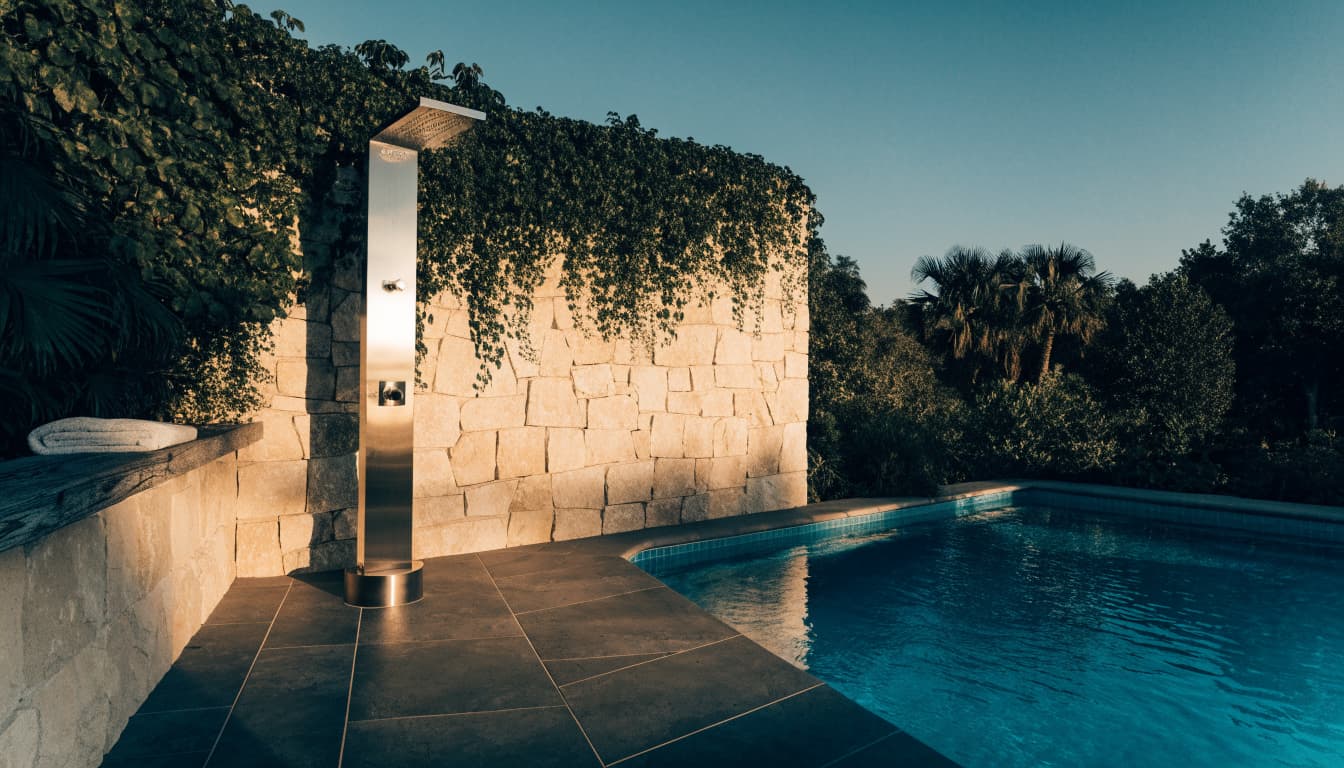
Keep the route direct, with enough space to pass anyone using the shower. Avoid putting the spray beside a door threshold, electrical equipment, or the spot where people set down towels and phones.
If the shower sits near pool steps, make sure someone standing under it won't obstruct swimmers entering or leaving the water. Back Bay Pools' pool design meeting checklist prompts homeowners to review entry points, deck slopes, drainage, and walking surfaces together.
Look past the shower footprint
The fixture may take little wall or deck space, but its wet zone is larger. Stand at the proposed location and picture water spraying toward furniture, screens, and nearby walls. Check whether a privacy panel would narrow the walkway or interrupt your view of the pool.
In a compact yard, a wall-mounted shower may preserve more usable deck than a freestanding unit. The right location depends on the actual layout, so mark it on the plan before ordering.
Compare pool outdoor shower styles by installation needs
The main choice is between a fixed shower and a simpler rinse fixture. A freestanding column can create a distinct shower spot, while a wall-mounted model can use an existing structure when that wall is suitable. A handheld sprayer can help rinse feet, gear, or children, though it still needs a practical place to hang and drain.
These options ask different things of your pool area:
| Shower style | Useful when | Check before choosing |
|---|---|---|
| Wall-mounted shower | A suitable wall is close to the pool route | Wall construction, pipe access, and spray direction |
| Freestanding column | The best location is away from the house | Secure mounting, underground plumbing, and deck space |
| Handheld rinse fixture | You want flexible, targeted rinsing | Hose storage, reach, and where runoff goes |
Installation conditions matter more than appearance. A column may look right in a catalog but require finished paving to be opened. A wall fixture may be easier to place, yet still involve concealed plumbing work. Ask the installer to confirm mounting and service access before you buy.
For a new pool, compare styles while the deck plan is open. For an existing pool, start with locations that won't require extensive changes to sound paving or pool equipment routes.
Decide how the shower will get water
A cold-water rinse station keeps the concept simple. Warm water can make a full shower more comfortable, but it raises questions about supply lines, temperature control, and the distance to an appropriate hot-water source.
Discuss the supply with a qualified plumber
Ask a licensed plumber to assess the proposed location and identify a suitable water supply. If you want hot and cold water, ask how the lines and mixing controls would be installed and maintained. Don't assume a nearby outdoor faucet can support the shower you have in mind.
For a renovation, find out whether the plumbing route crosses the pool deck, landscaping, or enclosure footing area. Opening finished surfaces later can affect both cost and appearance. Keep shower plumbing distinct from the pool's circulation plumbing when reviewing the work.
Confirm where used water will go
A shower creates regular runoff in a concentrated spot. Your installer should review the deck slope and the proposed discharge location, especially if soap or shampoo will be used. Don't assume water can flow into a planting bed, onto a neighbor's property, or into an existing drain.
Ask the appropriate local authority or installer which rules apply to the proposed connection and wastewater disposal. Those details depend on the site and how the shower will be used.
Choose surfaces and fixtures for wet, coastal conditions
Cape Coral's sun, rain, and coastal air put outdoor fixtures and deck materials through daily wear. Compare products based on their stated suitability for outdoor installation, not their finish alone.
Pay attention to the deck underfoot
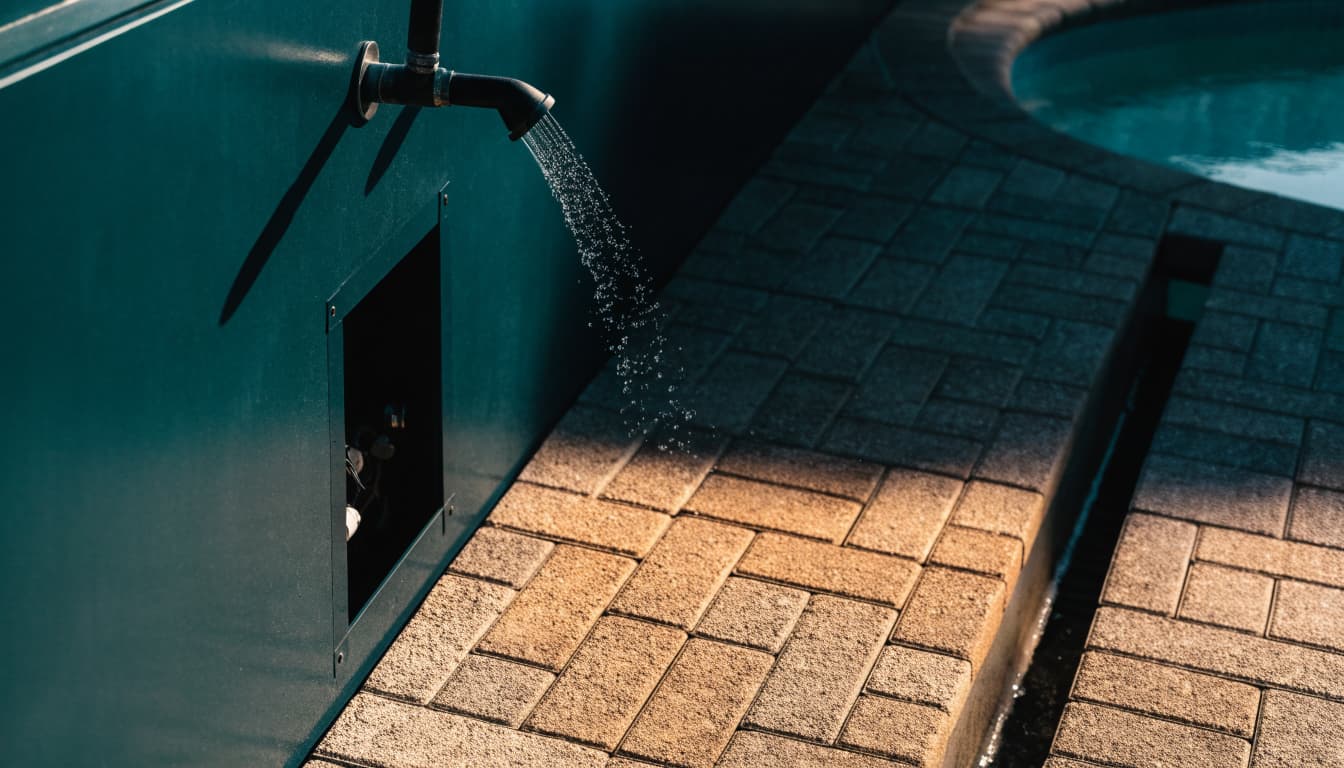
The ground beneath a pool outdoor shower will get wet repeatedly. Ask about a slip-resistant finish suited to barefoot traffic, and examine the transition to the surrounding deck. A textured surface won't solve poor drainage if water collects where people stand.
If you're updating pavers or a concrete deck, review slope before selecting the final surface. Also consider bare-foot comfort in direct sun. The finish you like indoors may feel different beside an uncovered Florida pool.
Make maintenance part of fixture selection
Check the manufacturer's outdoor-use guidance and warranty for any shower you consider. Look at exposed fasteners, connections, and whether a plumber can reach the controls for repairs. A finish that suits your pool area won't help much if its parts are difficult to replace.
Ask how to clean the fixture without damaging its coating. Nearby irrigation spray and standing water can add to the maintenance burden, so factor those into placement too.
Coordinate the shower with pool and screen work
A shower belongs on the same site plan as the deck, enclosure, doors, and utilities. This is especially important when crews are already changing the pool area.
During a new build or renovation
If deck work is planned, discuss the shower location before paving and drainage decisions are complete. Back Bay Pools' pool renovations and resurfacing can include deck updates, so a broader pool refresh is a practical time to review the shower's future location.
Keep the project scopes clear. Pool resurfacing changes the interior finish; it doesn't automatically include shower plumbing, drainage changes, or deck reconstruction. Ask which contractor will evaluate and perform each part.
Beside a screen enclosure
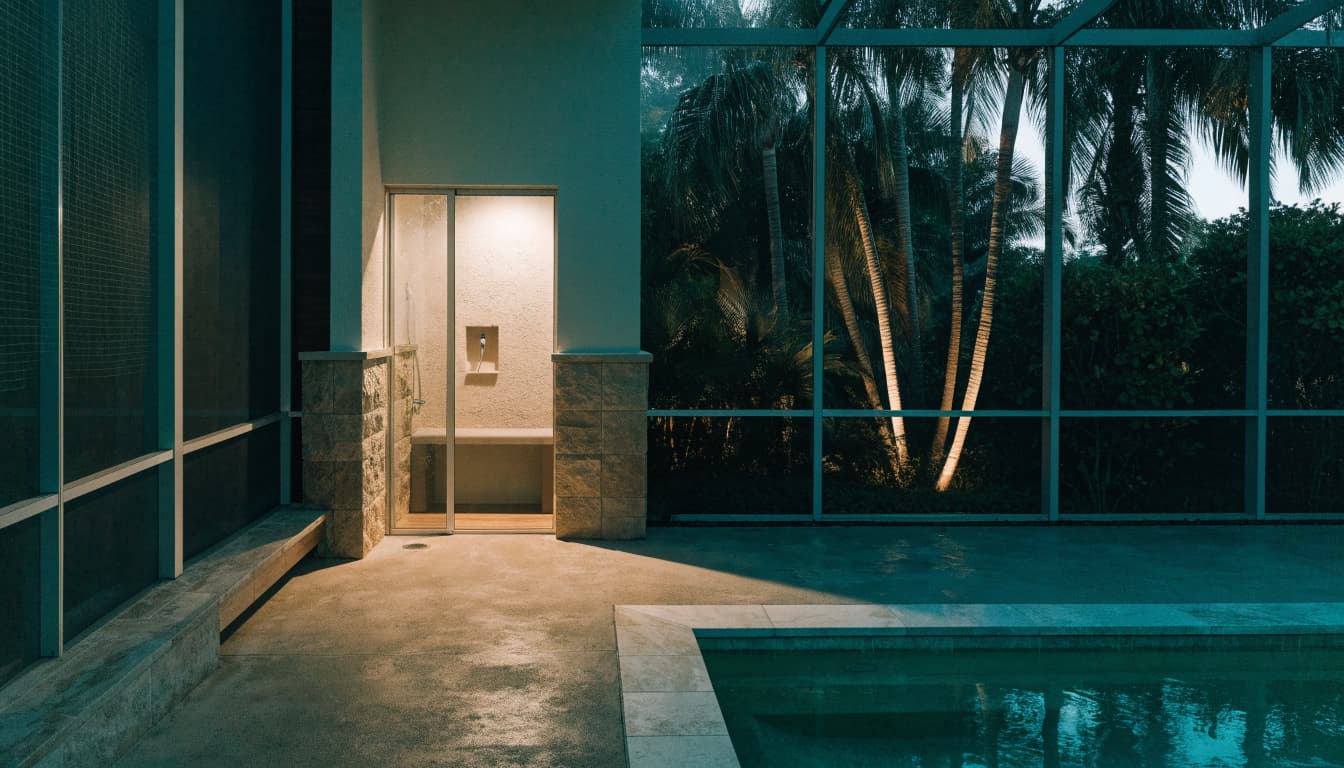
An enclosure can change where people enter the pool area and how much space they have to move. Place the shower so its spray doesn't routinely wet a screen door or crowd a narrow passage. If an enclosure is planned, identify the shower location before its posts and doors are finalized.
For an existing cage, assess frame condition and access before planning work nearby. Back Bay Pools offers screen enclosure and rescreen services, which can be discussed alongside pool-area changes without assuming shower installation is included.
Get a written scope before choosing the fixture
The final price depends on the site, not only the shower model. Supplying water, routing drainage, changing paving, and working around an enclosure can create separate costs. That makes a site visit more useful than choosing from a product photo alone.
Ask for a written scope that identifies the shower fixture, supply and drainage work, surface repairs, permits if applicable, and cleanup. It should also say who will handle each item. Back Bay Pools' guide to reading a pool proposal can help you compare what a larger pool project includes.
Bring a rough shower location to your pool consultation, even if you haven't chosen a model. If you're planning a new pool, deck update, or enclosure work in Cape Coral, Get a Free Estimate to schedule an on-site discussion of the pool-area layout. Confirm separately who will assess and install any shower plumbing.
Key Takeaways
- Choose the shower's location around your usual path between the pool, house, and enclosure door.
- Decide early whether you need a cold-water rinse or a fuller hot-and-cold shower.
- Review deck slope, slip resistance, and runoff before settling on a fixture.
- Put plumbing, drainage, deck repairs, and enclosure changes into a clear written scope.
Frequently Asked Questions
Does a poolside shower need hot water?
No. Cold water may suit a quick rinse before or after swimming. If you want a comfortable full shower, ask a licensed plumber to assess hot-water supply and temperature control at the proposed location.
Can I add a shower to an existing screened pool area?
Possibly, but the enclosure layout matters. Check door clearance, posts, walking space, spray direction, and access for any plumbing or deck work. A site assessment can establish what the existing area can support.
Should I choose the fixture before planning the deck?
Settle on the shower type and approximate location before the deck plan is final. That lets the people planning plumbing and paving account for mounting, water supply, drainage, and service access. You can then select a fixture that fits those conditions.
A shower that fits the whole pool area
The right shower is one your household will use without crossing an awkward or slippery route. Start with its location, then match the fixture to the water supply, drainage, and deck beneath it.
If you're already planning pool work, include the shower in that early layout conversation. A few steps on the plan can prevent a long, inconvenient walk across the finished deck.