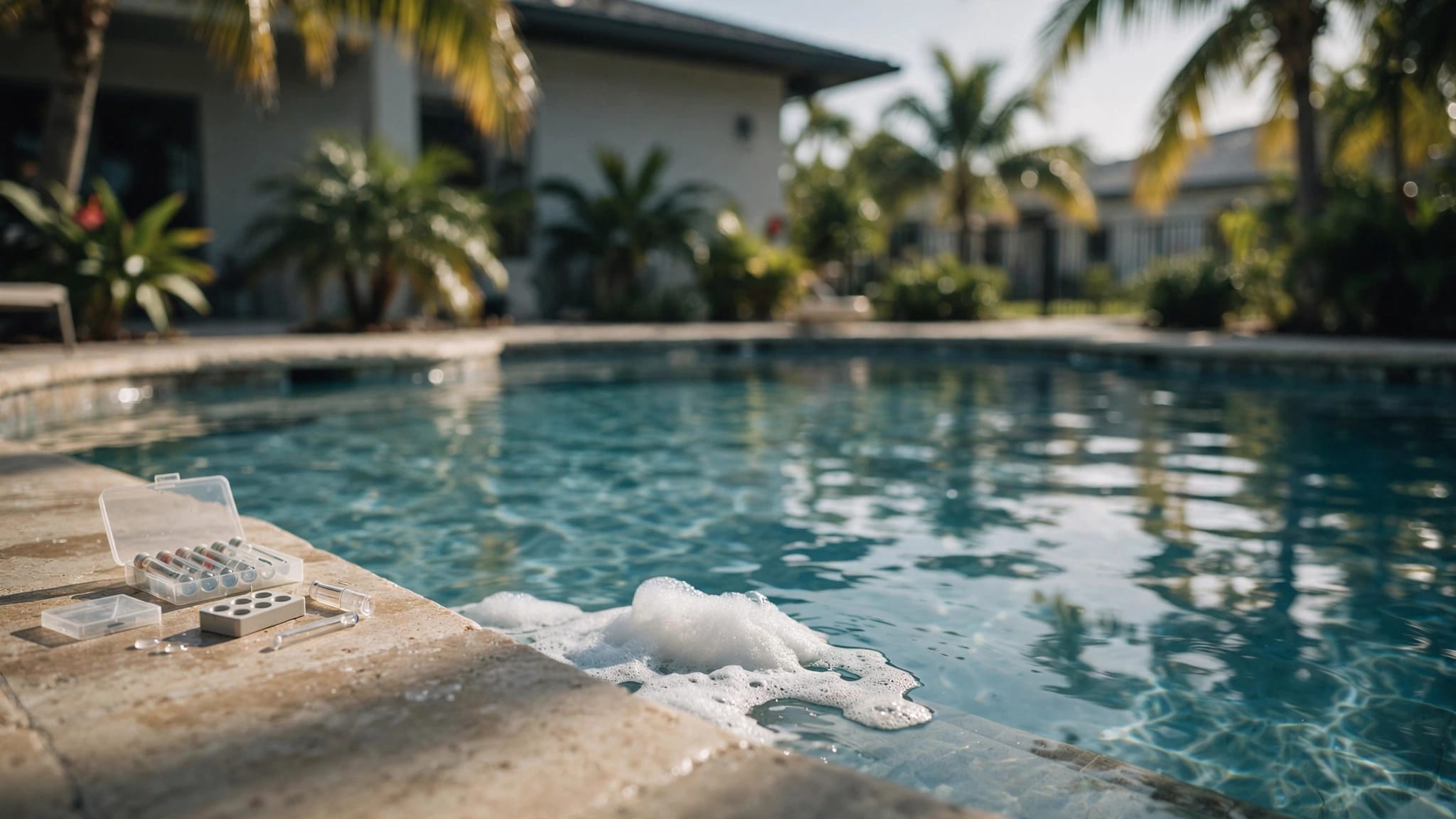
A Florida pool can change fast while you're away. Heat, heavy rain, windblown debris, and an overlooked equipment problem can turn clear water cloudy in a few days.
When you prepare pool for vacation time into your travel plans, you protect the water, equipment, and pool area. A little attention 24 to 48 hours before you leave gives you time to correct problems instead of hoping they stay small.
Use this plan for a long weekend, a week away, or an extended trip.
Florida weather makes pool planning more important
Florida pools face conditions that don't wait for a convenient time. Afternoon storms can dump inches of rain into the water, while intense sun burns through sanitizer faster than many owners expect.
A screened lanai helps keep out leaves and insects. However, screens do not stop rainwater, fine debris, or storm damage. Your vacation plan should account for the pool itself, the enclosure, and the equipment that keeps water moving.
Heat, rain, and debris can shift water chemistry
High temperatures encourage algae when sanitizer drops or circulation slows. Meanwhile, a hard rain can dilute chemicals and carry organic debris into the pool. Leaves, pollen, and grass clippings use up chlorine as they break down.
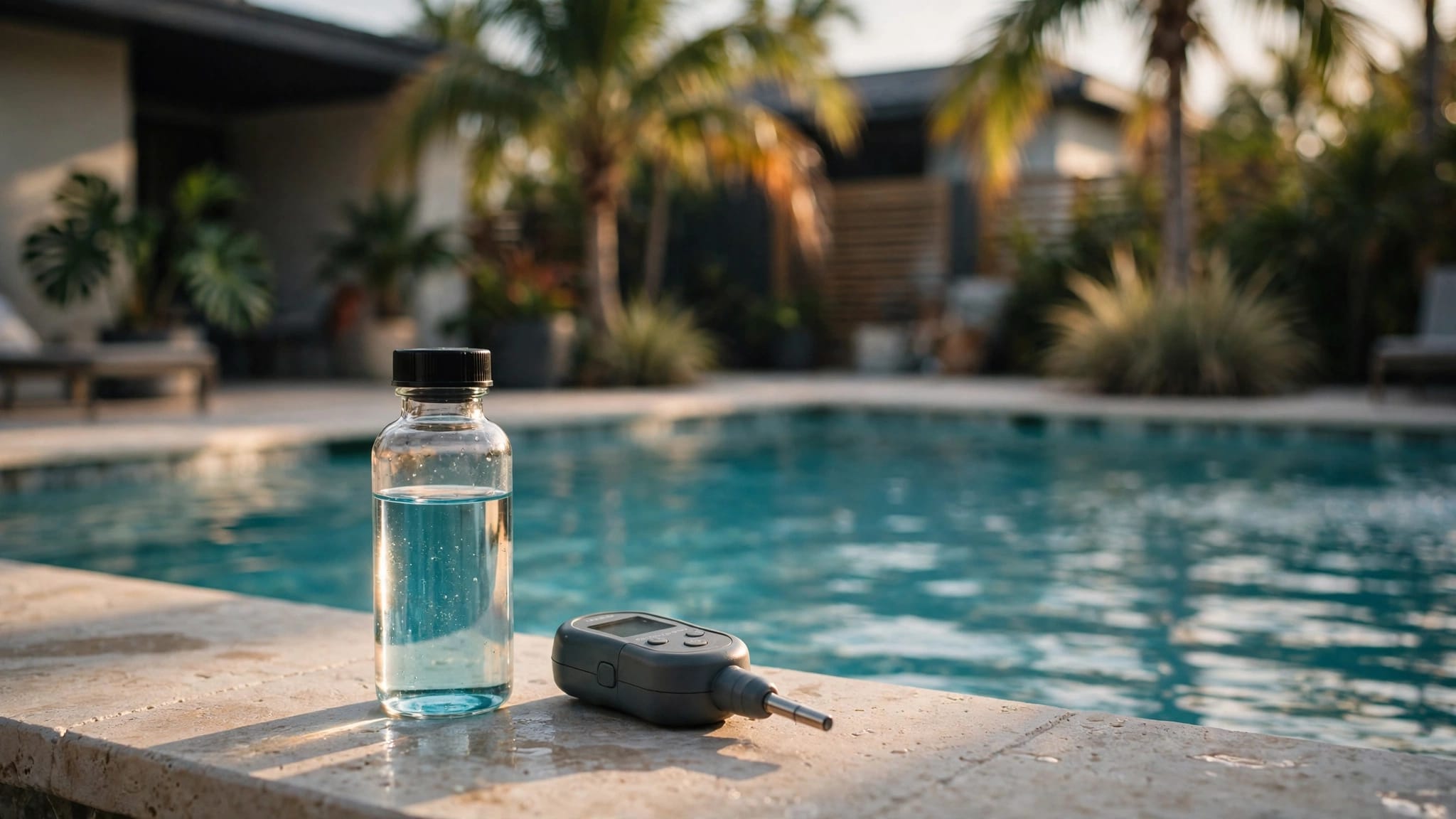
Test water before departure rather than relying on how it looks. Clear water can still have an improper sanitizer level, pH, or alkalinity.
Check your screen enclosure before you go
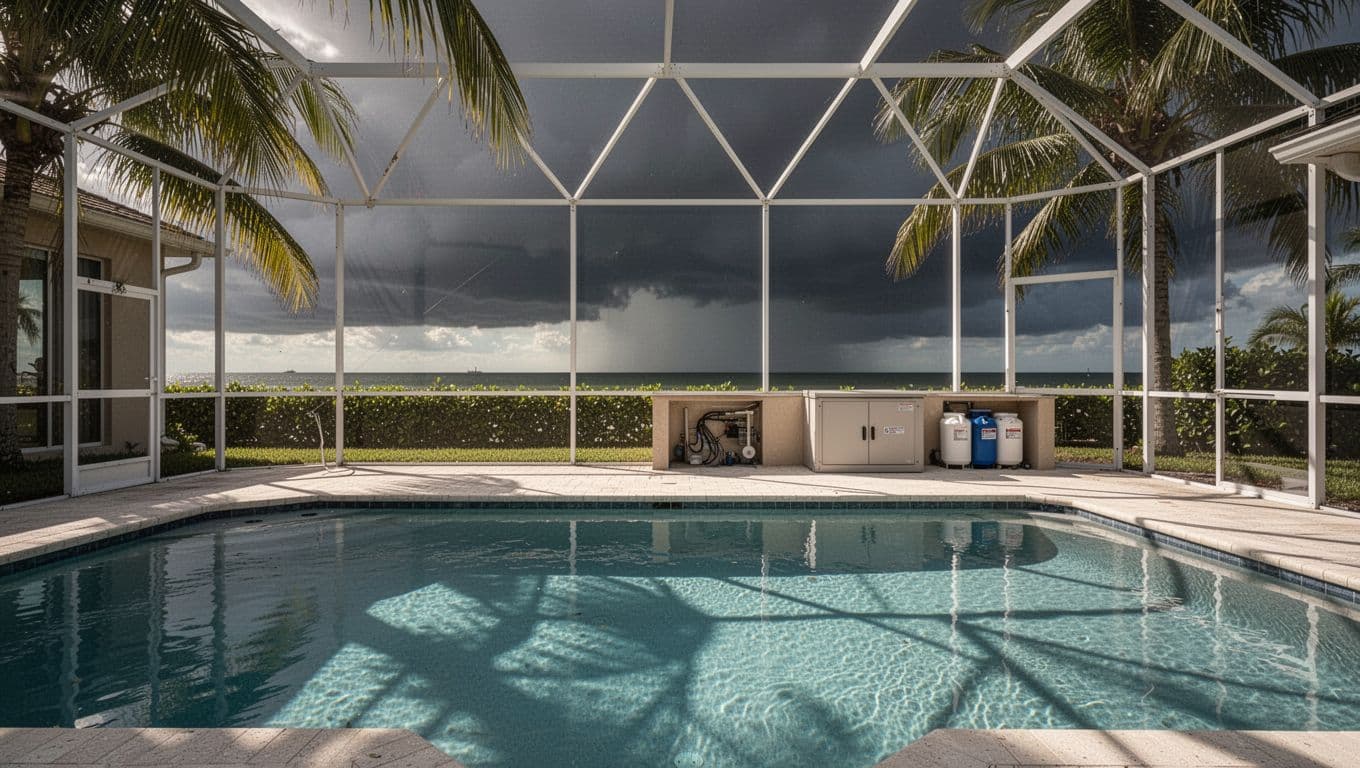
Walk the enclosure perimeter and inspect door latches, screen panels, spline, and the aluminum frame. Remove lightweight patio items that could blow into the cage during a storm.
A torn panel can widen in high winds, while a loose latch can let animals and debris into the pool area. If you find worn mesh, sagging panels, or damaged doors, arrange pool screen enclosure and rescreening before a longer trip.
How to prepare pool for vacation 24 to 48 hours before leaving
Start early enough to see how the pool responds to your adjustments. Waiting until the night before departure leaves no margin for a pump issue, an unexpected storm, or water that won't balance.
Test and balance the water first
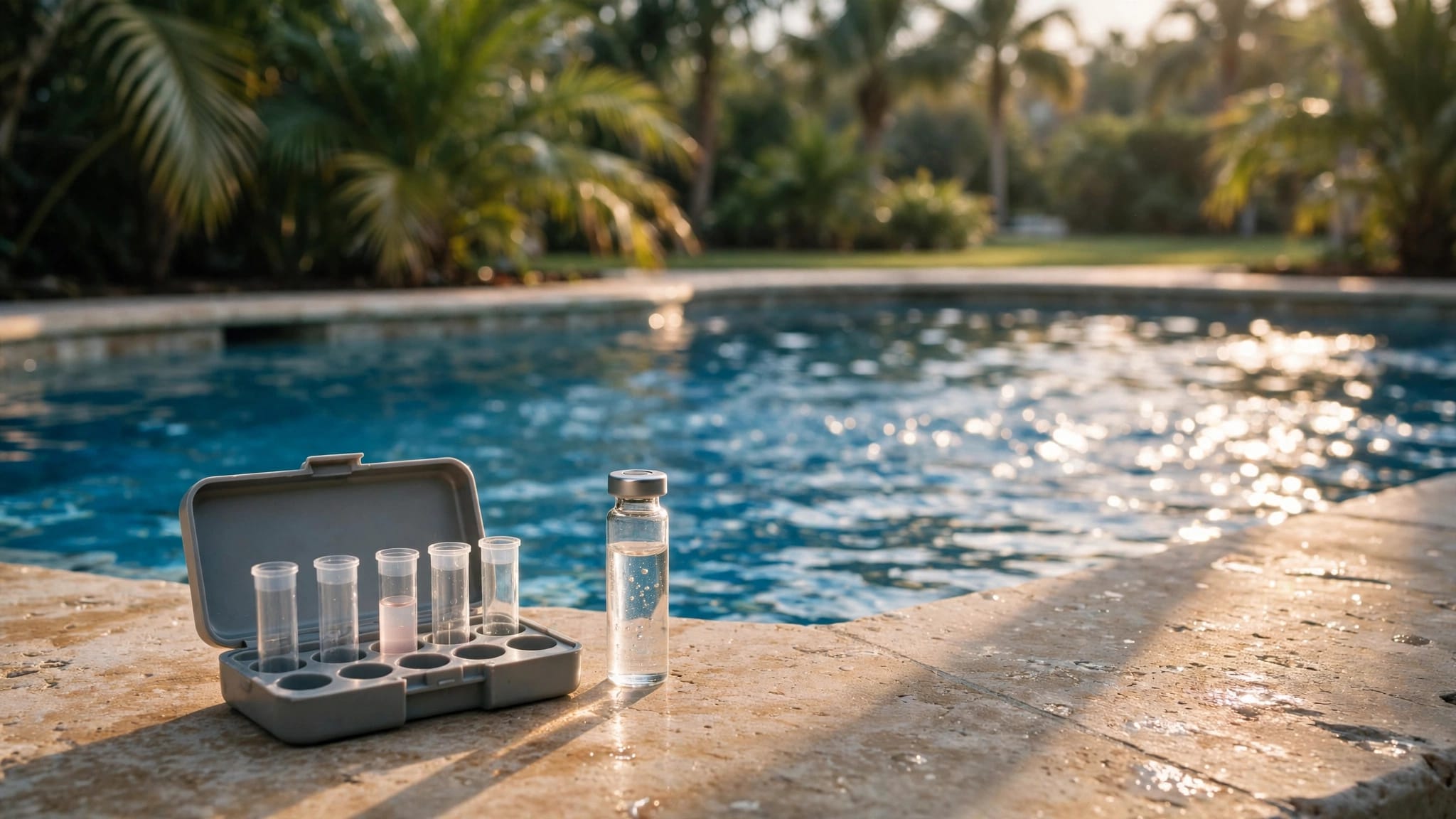
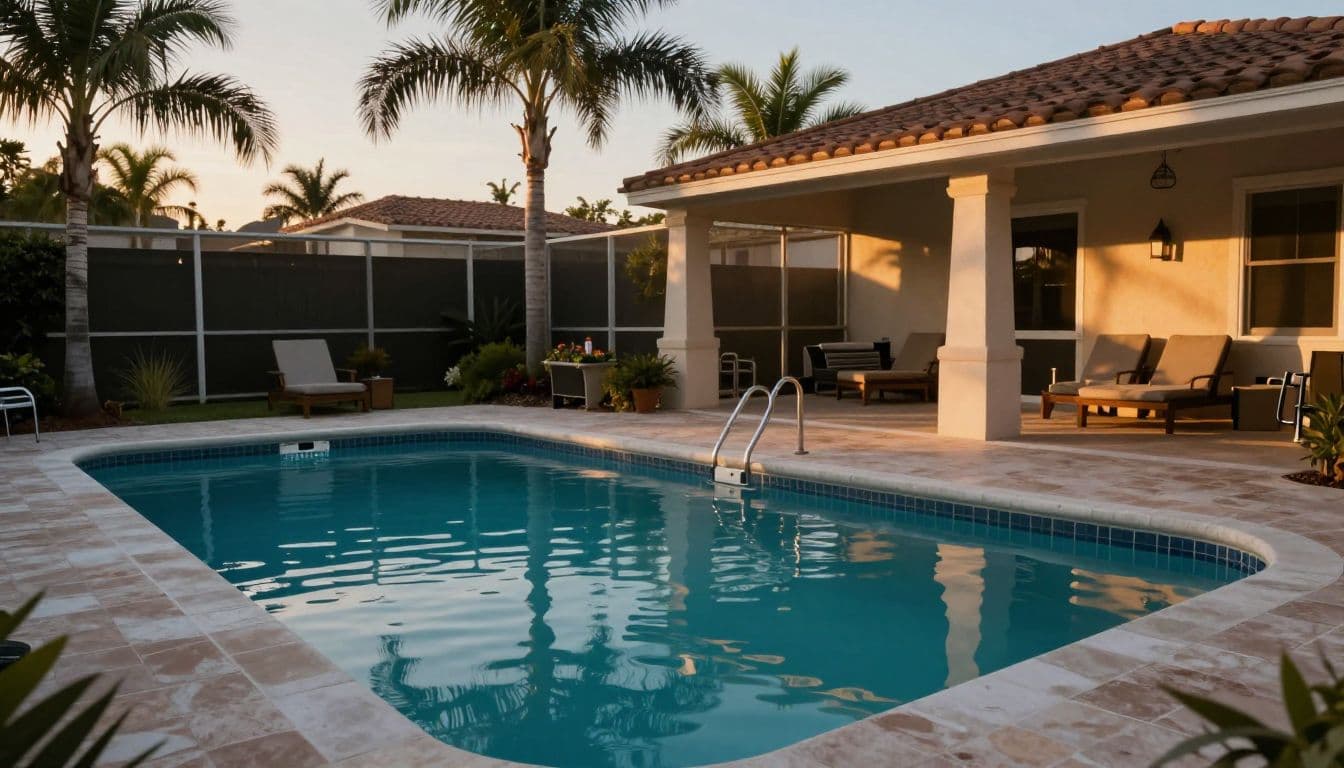
Use a reliable test kit or have a pool professional test the water. Check free chlorine or bromine, pH, total alkalinity, calcium hardness, and stabilizer if you use chlorine.
Bring each reading into the range recommended for your pool and sanitizer system. Add chemicals only according to the product label, and allow the pump to circulate the water for the stated time. Retest the next day if you made a major adjustment.
Never mix pool chemicals together, even if they appear similar. Keep every container dry, sealed, upright, and stored away from heat, children, and pets. Don't leave open buckets or loose chemical bags on the deck for a neighbor to use.
Clean out what will become food for algae
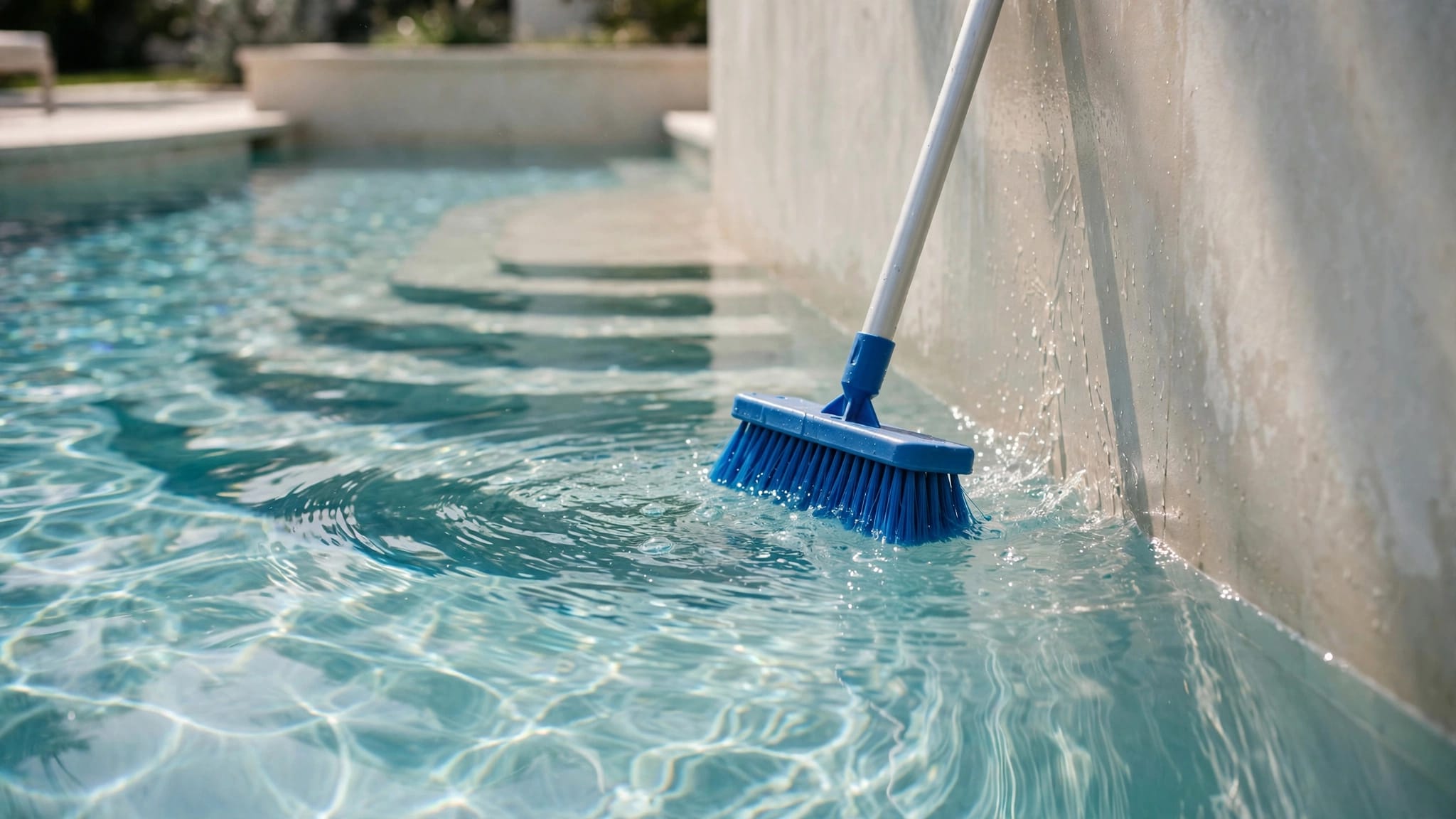
Skim the surface, vacuum the floor, brush steps and waterline tile, and empty skimmer and pump baskets. A clean pool places less demand on sanitizer while you are gone.
Also check the water level. Keep it at the normal operating level, usually around the middle of the skimmer opening unless your builder or equipment manual states otherwise. Water that is too low can disrupt skimming, while an overfilled pool may not handle heavy rain well.
Do not add extra chemicals "just in case." Overdosing can damage finishes, bleach liners, corrode equipment, or create water that is unsafe to enter.
Inspect circulation and equipment before you travel
Your circulation system is the pool's daily housekeeping crew. If it stops, debris settles, sanitizer doesn't distribute properly, and algae can get a foothold quickly in Florida heat.
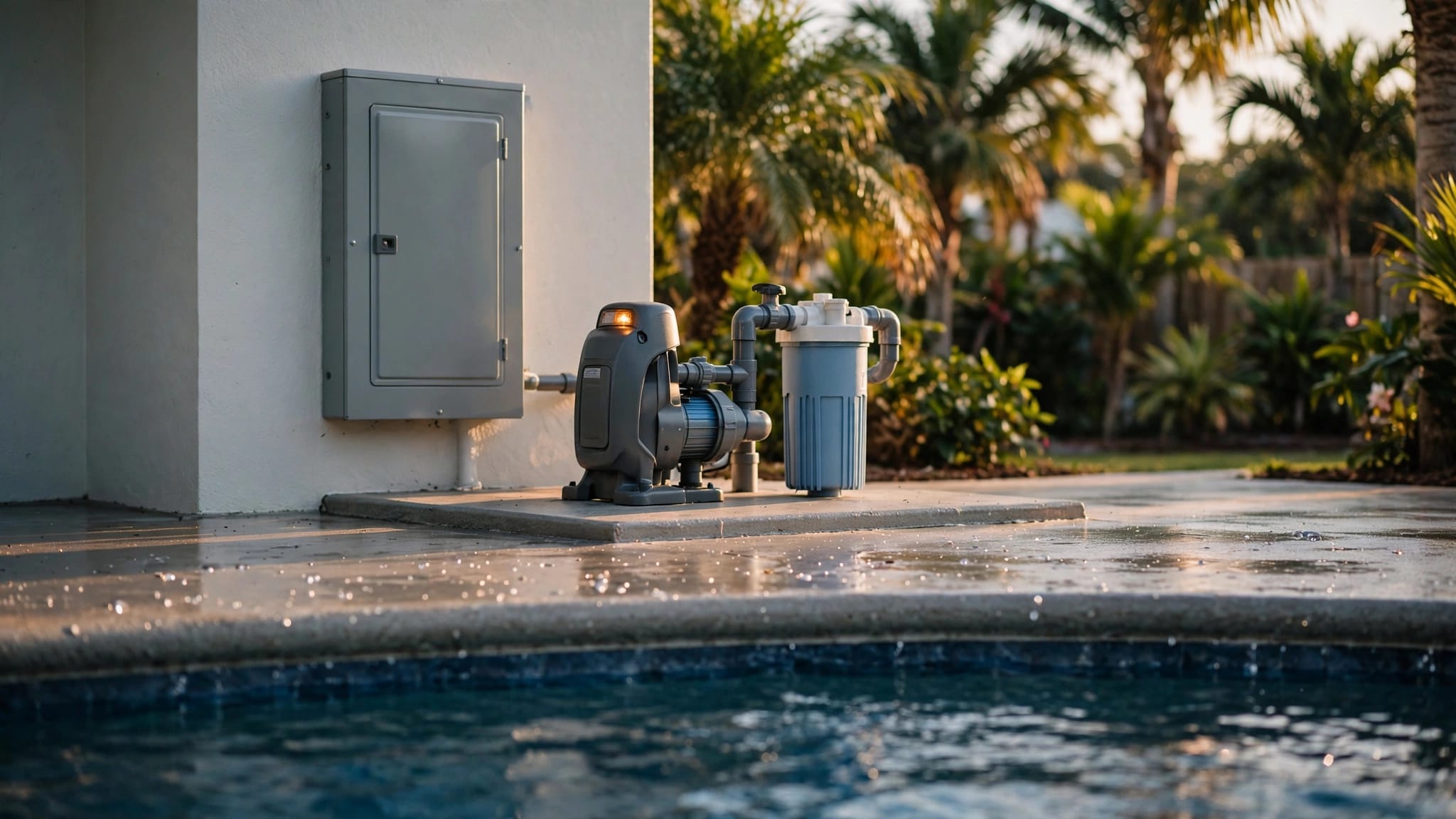
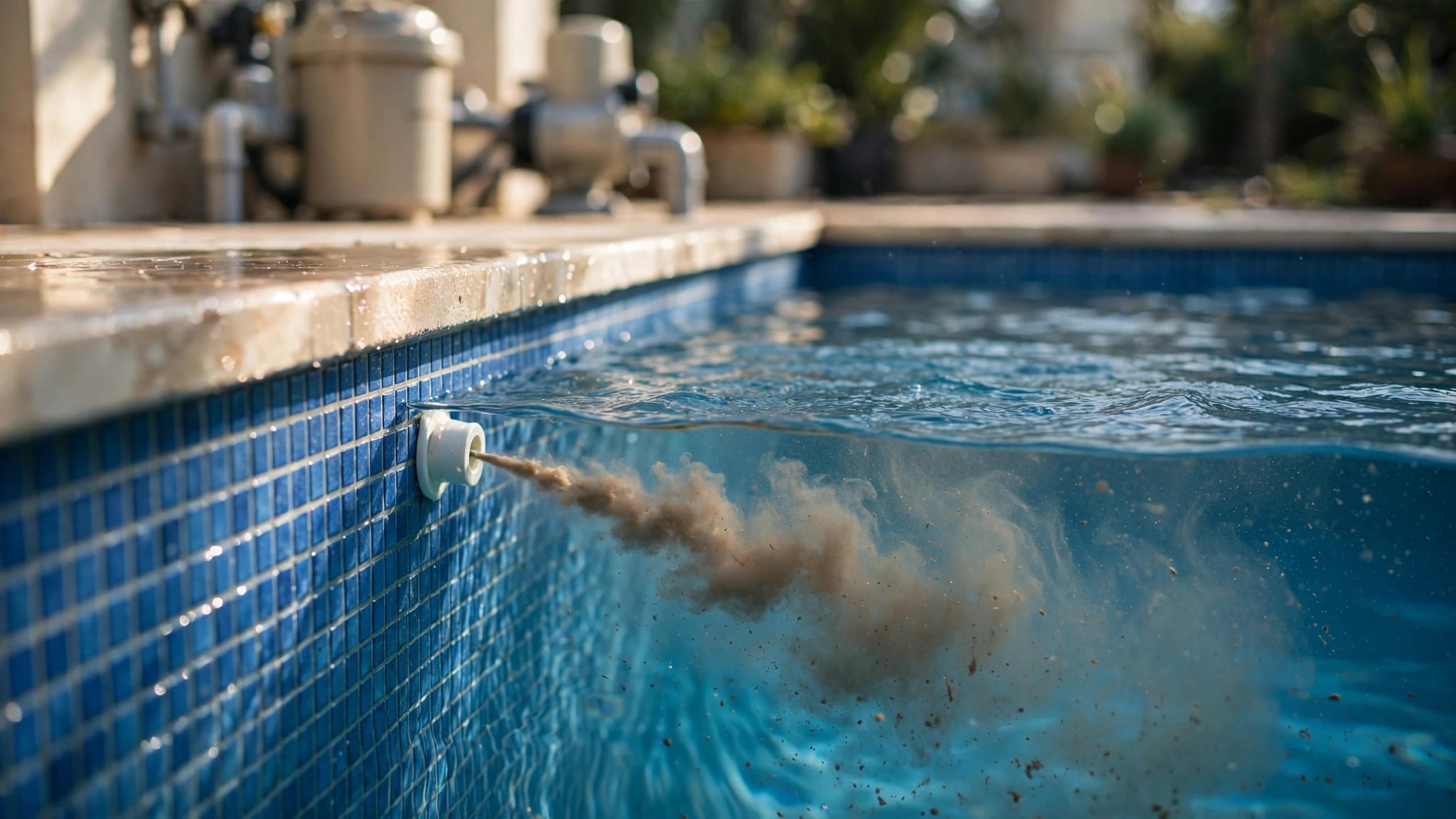
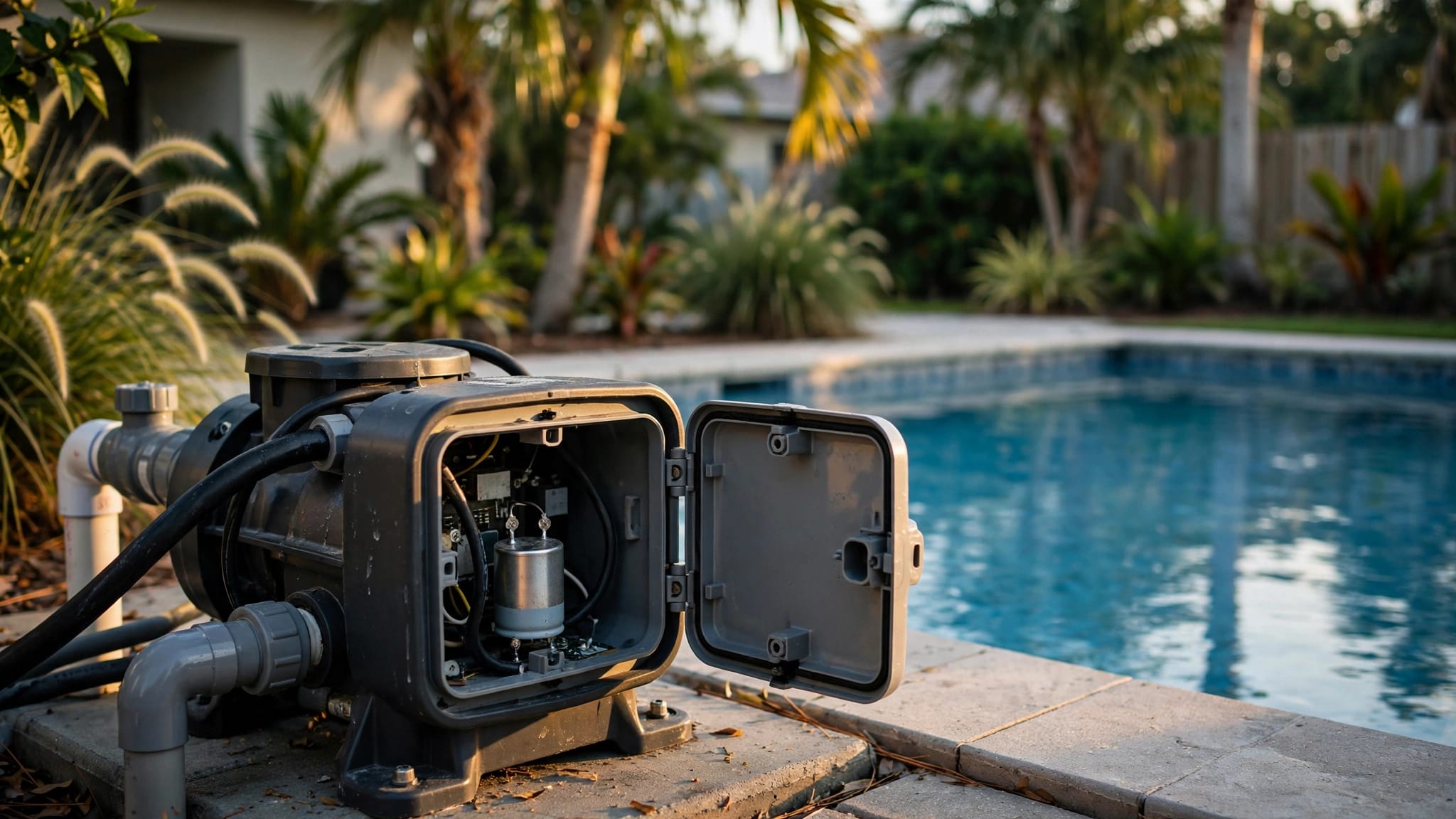
Listen to the pump while it runs. A smooth, steady sound is normal. Grinding, screeching, rattling, air bubbles under the pump lid, or a weak return flow needs attention before you leave.
Empty baskets and check the filter pressure
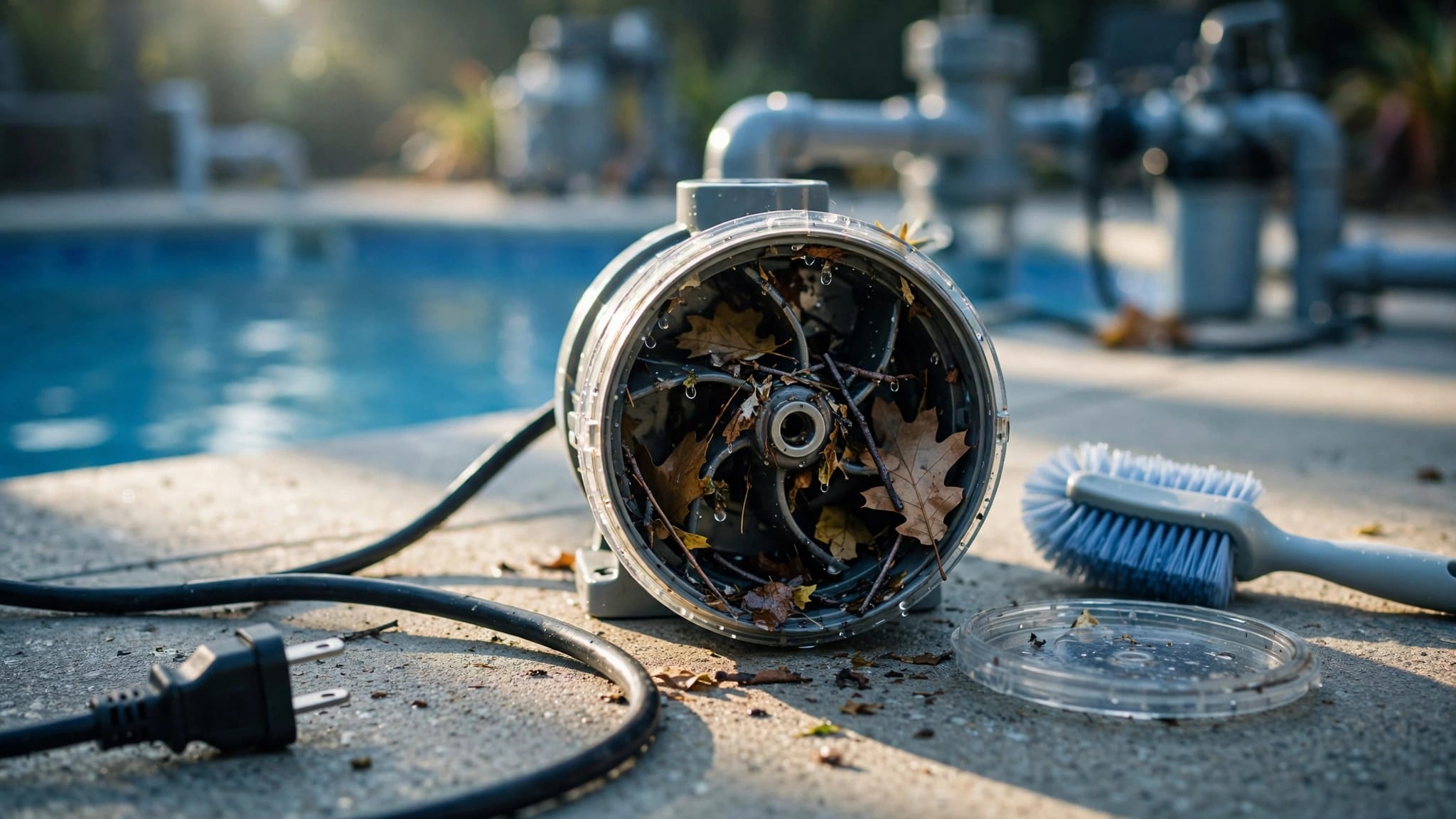
Clear the pump basket and skimmer baskets after cleaning the pool. Then look at the filter pressure gauge and compare it with your normal clean-filter reading.
A pressure jump often means the filter needs cleaning. Follow your filter manufacturer's instructions for cartridge cleaning, backwashing, or DE filter service. Don't dismantle unfamiliar equipment right before a trip, especially if you cannot test it afterward.
Inspect visible plumbing unions and valves for drips. If the equipment pad is wet for no clear reason, call a qualified pool professional.
Use a normal, proven pump schedule
Leave the pump on the same reliable timer schedule that keeps your pool clear at this time of year. Confirm that the timer, breaker, and any automation system are working properly.
Do not bypass a timer, wedge a switch on, or leave damaged electrical equipment operating unattended. If your pump has been tripping a breaker, losing prime, or overheating, turn it off and schedule service. A trained technician should address electrical faults, leaks, and circulation failures.
Handle heaters, covers, and automatic systems with care
Pool equipment can reduce routine work, but it still needs a safe setup. Before you leave, avoid changing several automation settings at once. A familiar schedule is easier for a caretaker to monitor.
Turn off heating you don't need
Most Florida pool owners can turn the heater off before a warm-weather trip. Use the heater's normal control or follow the manufacturer's shutdown instructions. Gas heaters, heat pumps, and electric heaters all have model-specific requirements.
Never allow a heater to run if the pump may not provide proper water flow. If you notice error codes, smell gas, or suspect a leak, stop using the heater and contact a qualified pool professional. Don't ask a neighbor to troubleshoot unfamiliar heating equipment.
Choose pool covers for safety, not convenience
A properly installed safety cover can limit debris and restrict access. Yet a loose tarp, solar blanket, or improvised cover can collect rainwater, tear in wind, or create a drowning hazard.
Don't cover the pool before a storm unless the cover manufacturer approves that use and you have a plan to manage rainwater. Keep children and pets away from any cover with standing water. If you use an automatic cover, test its travel, key switch, and safety features before departure, then lock controls against unauthorized use.
Confirm automation alerts and power protection
If your automation system sends alerts, check that it can still reach your phone. Verify that your caretaker also knows where the main breaker and equipment shutoffs are located.
A surge protector can help protect electronics, but it doesn't make equipment stormproof. During a severe weather warning, follow local emergency guidance and use a pool professional for equipment concerns that go beyond normal homeowner care.
Arrange pool care while you're away
For trips longer than a few days, schedule an in-person pool check. A trusted neighbor can remove leaves and report obvious problems, but a pool service professional is better for water testing, filter care, and chemical adjustments.
Share only the information your caretaker needs. Leave written instructions for gate access, equipment locations, the regular pump schedule, and an emergency contact number.
Give your caretaker a practical visit schedule
A short trip may need one check. A week or more in summer often calls for visits every few days, depending on weather, pool use, and equipment. Ask the person checking the pool to look for clear water, normal water level, active circulation, debris buildup, and storm damage.
Keep their duties simple and safe:
- Remove leaves with a pole or net if they can do so from the deck.
- Empty accessible skimmer baskets only if the pump is off and the task is familiar.
- Check the pool after heavy rain and report water above the skimmer opening.
- Contact a professional for cloudy water, leaks, electrical issues, or chemical adjustments they are not trained to make.
For a more detailed local reference, use this Cape Coral pool vacation preparation checklist.
Plan for tropical weather and power outages
Before hurricane season travel, secure patio furniture, umbrellas, portable décor, and lightweight planters. Trim only small, reachable branches. Leave tall tree work, damaged cage framing, and roof-level repairs to qualified contractors.
If a storm causes a power outage, don't ask anyone to reset breakers repeatedly. A caretaker should keep people away from the equipment pad, take photos from a safe distance if needed, and call a professional. Floodwater, exposed wiring, and damaged screens all require caution.
Address visible pool problems before a long trip
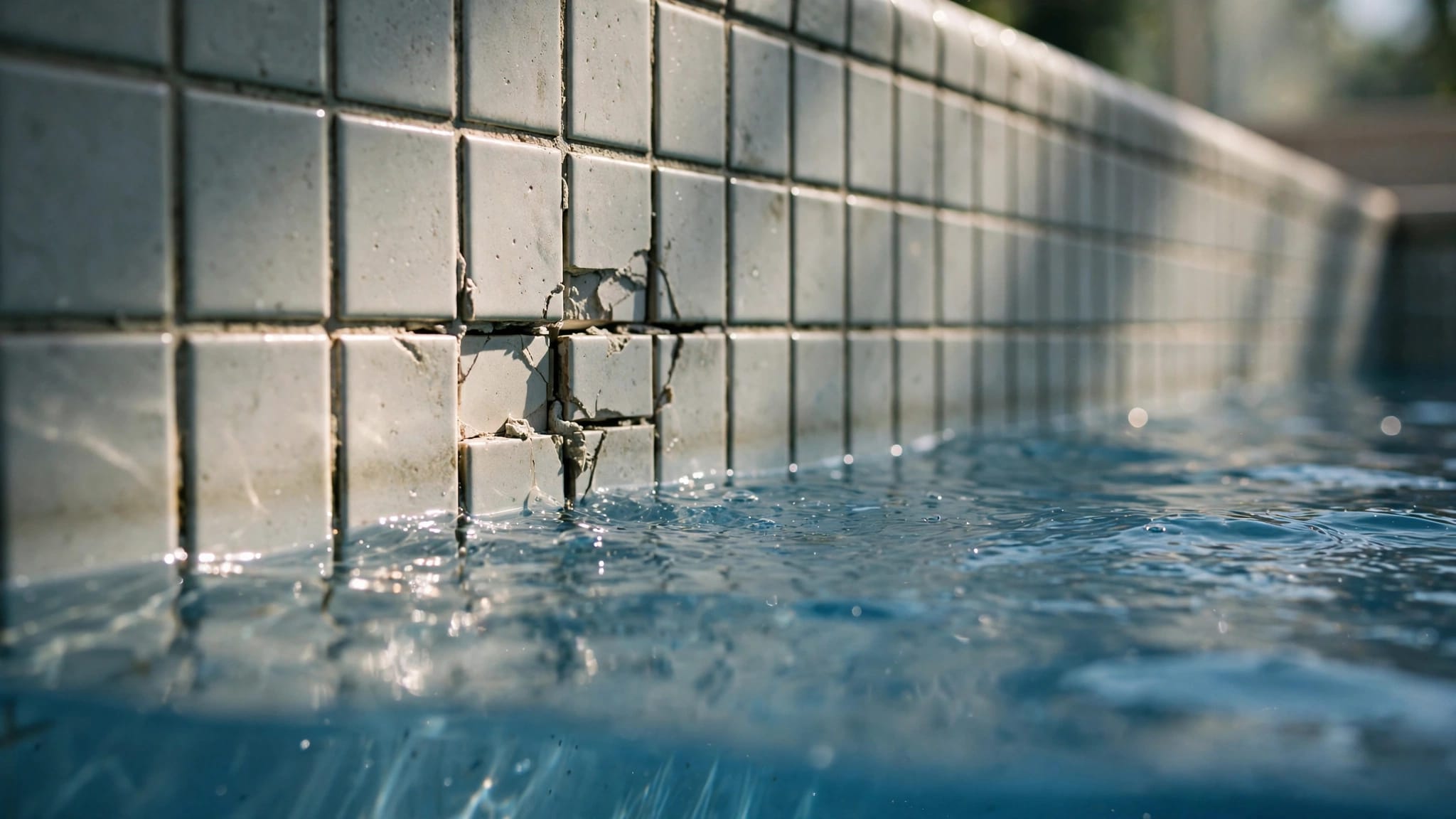
Vacation is a poor time to ignore stains, flaking plaster, rough spots, or persistent waterline buildup. A compromised interior finish can trap algae and make regular cleaning harder. Loose tile or a cracked deck edge may also become worse after heavy rain.
You don't need to start a major project days before leaving. Still, documenting the issue and scheduling an evaluation can prevent another season of postponing repairs. Homeowners considering finish repairs or a larger update can review pool renovations and resurfacing options for Cape Coral homes.
Leave repairs to qualified professionals
Call for service before departure if you find any of these conditions:
- The pump loses prime, leaks, makes unusual noise, or trips the breaker.
- The heater shows a fault, smells of gas, or fails to ignite normally.
- Water remains cloudy after normal testing, cleaning, and circulation.
- The screen enclosure has loose panels, bent framing, or a door that will not latch.
- You see cracks, loose coping, broken tile, or a deteriorating pool surface.
If your pool needs an inspection, equipment upgrade, enclosure repair, or renovation plan before travel season, Get a Free Estimate for an on-site consultation.
Check the pool when you return
Walk the pool area before anyone swims. Look for storm debris, screen damage, standing water on a cover, low water level, leaks, and equipment that is not running as expected.
Then test the water and empty baskets before resuming normal use. Brush and vacuum if debris settled during your trip. If the water is cloudy, green, or has an unusual odor, keep swimmers out until the chemistry and circulation are corrected.
A well-prepared pool makes coming home easier
To prepare pool for vacation, focus on clean water, stable chemistry, dependable circulation, and a person who can spot problems while you are away. Florida weather makes those basics more important, especially during summer and storm season.
A balanced, monitored pool is far less likely to greet you with algae or equipment trouble. Plan ahead, leave clear instructions, and treat unsafe equipment issues as a professional service call.