A pressure gauge can warn you about a pool problem before the water turns cloudy or the pump starts straining. Your pool filter pressure reading tells you how much resistance water meets as it moves through the system.
The number matters, but it only makes sense in context. A clean-filter starting pressure, measured under normal operating conditions, gives you a far better reference than any generic PSI target. Once you know that baseline, changes are easier to spot and address.
What Your Pool Filter Pressure Gauge Is Measuring
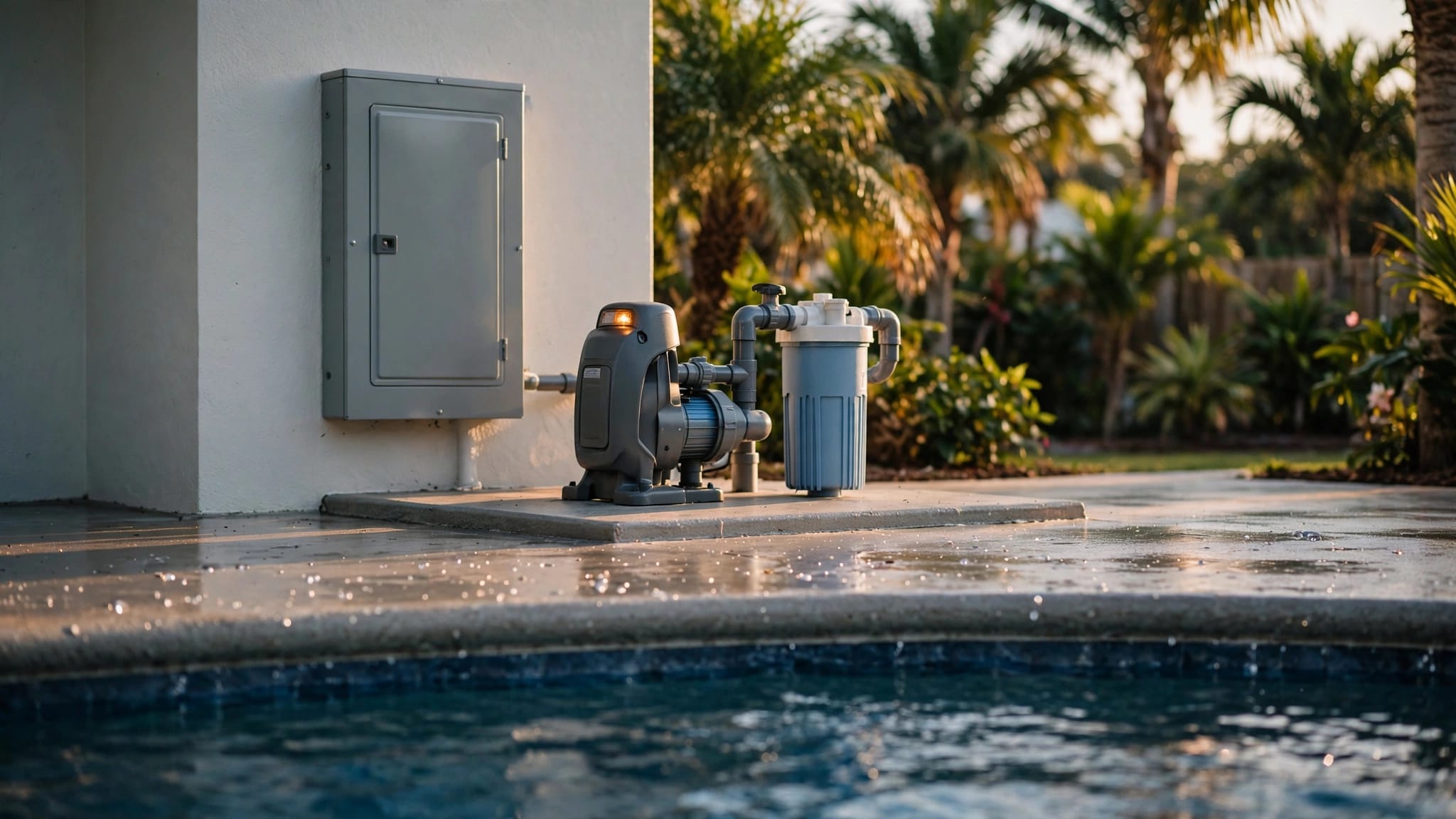
The gauge sits on the pressure side of the circulation system, usually on top of the filter tank. It measures resistance after the pump pushes water through the plumbing and filter media.
As debris collects inside the filter, water has a harder time passing through. Pressure usually rises as a result. Yet a dirty filter is only one possible cause. Pump speed, valve positions, return restrictions, and a faulty gauge can all change the reading.
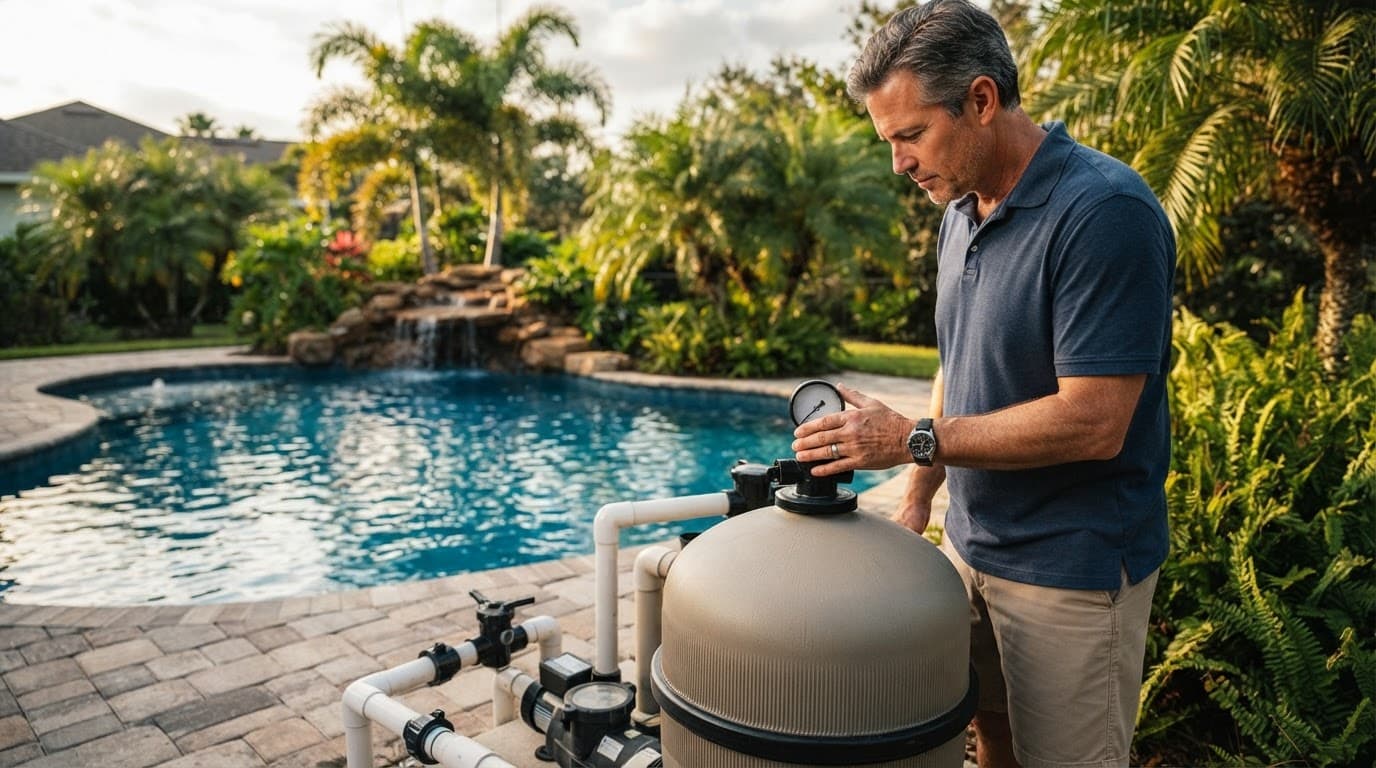
Read the gauge while the pump is running
A gauge should be read with the pump running at its usual setting. If you have a variable-speed pump, compare readings at the same RPM each time. A higher pump speed naturally creates more pressure, even with a clean filter.
Don't compare a reading taken during a high-speed cleaning cycle with one taken during a low-speed daily schedule. That comparison can make a healthy system look like it has a problem.
Establish a clean-filter baseline
After cleaning the filter, emptying baskets, and restoring normal valve positions, run the pump for several minutes. Then write down the gauge reading. This is your clean-filter starting pressure.
Also note the pump speed, water level, and date. A simple note inside the equipment area or a phone reminder works well. For more detail, see this guide on how to read a pool filter pressure gauge.
What Normal Pool Filter Pressure Looks Like
Normal pressure is not one number for every pool. One home may run well at 12 PSI, while another runs well at 22 PSI because of different pipe runs, pump sizes, filters, heaters, or water features.
A modest rise from your clean baseline is normal. Wind, leaves, pollen, swimmer load, and ordinary debris slowly fill the filter. The gauge should climb gradually, while return flow stays strong and the water remains clear.
Use this quick guide to interpret changes against your own starting pressure.
| Gauge Pattern | What It Often Means | First Action |
|---|---|---|
| Stable near the clean baseline | The circulation system is operating normally. | Keep monitoring it weekly. |
| Gradual rise above the baseline | The filter is collecting debris. | Plan cleaning at the manufacturer's recommended threshold. |
| Sudden high or low reading | A restriction, valve issue, air leak, or gauge problem may be present. | Inspect the system before cleaning again. |
Use the change, not a universal PSI target
Many residential systems need attention when pressure rises about 8 to 10 PSI above the clean-filter reading. Still, that range is only a common guideline. Your filter manufacturer may specify a different limit.
For example, a pool that starts at 15 PSI may be ready for service near 23 to 25 PSI. A pool that starts at 22 PSI should not be judged by that same number. Always follow the filter label, owner's manual, and local safety requirements.
When High Pressure Means It's Time to Clean
A steady pressure increase usually means the filter has done its job. Dirt, fine debris, and organic material are building up inside the filter, so water meets more resistance on its way back to the pool.
Before cleaning, confirm that the pump is running at the same speed used for your baseline. Then check the skimmer and pump baskets. A packed basket can also reduce flow and change how the system behaves.
Backwash sand and DE filters at the proper point
Sand and diatomaceous earth (DE) filters often need backwashing when pressure reaches the manufacturer's service range above the clean baseline. Backwashing reverses the water flow and sends trapped debris to waste.
Never open a filter tank or move a multiport valve while the pump is running. Turn off the pump first, then follow the system's pressure-relief procedure. DE filters also need the correct amount of fresh DE added after backwashing. This Florida pool filter backwashing guide covers the safety steps in more detail.
A gauge that climbs soon after a thorough cleaning points to more than normal filter loading. Repeated backwashing without inspection can hide a plumbing, valve, or equipment problem.
Clean cartridge filters instead of backwashing them
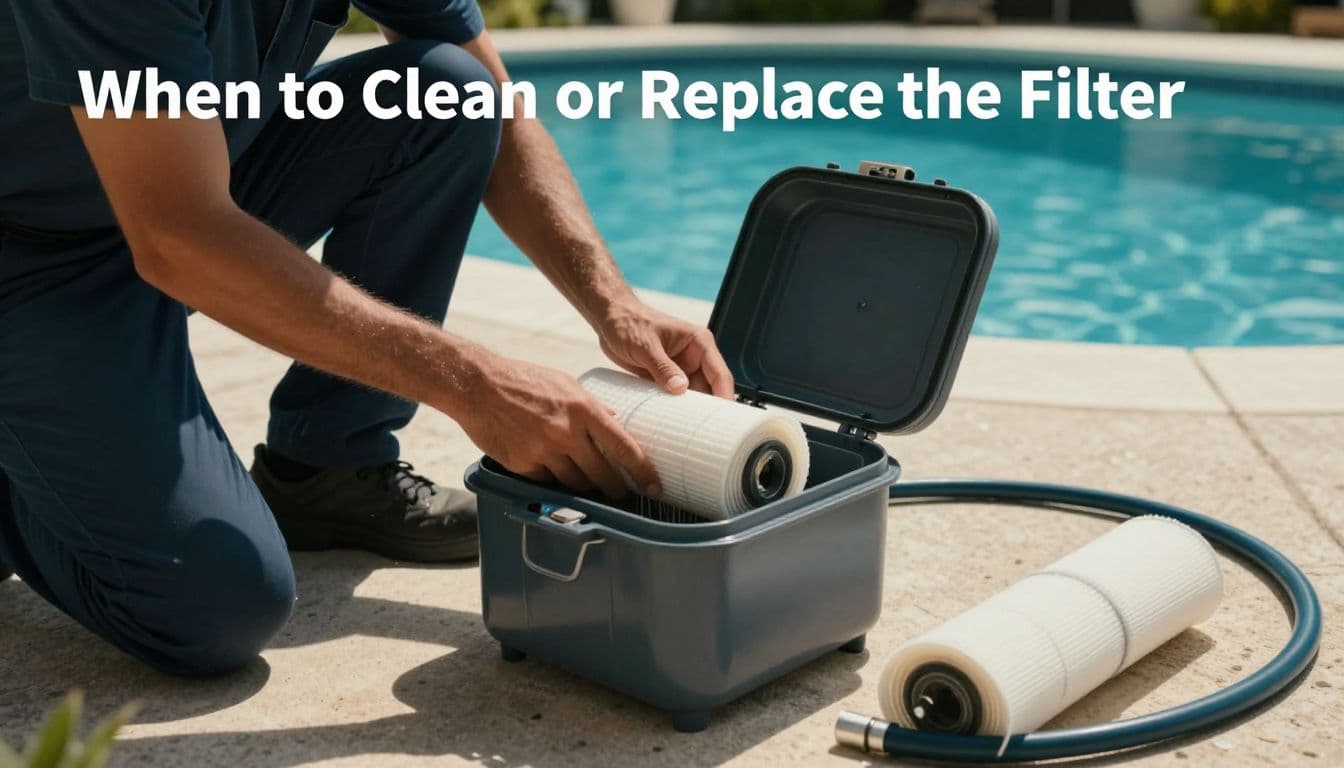
Cartridge filters don't use a backwash setting. Shut off the pump, release all pressure, open the tank according to the manufacturer's instructions, and remove the cartridges for rinsing.
Inspect each cartridge while it is out. Crushed pleats, torn material, broken end caps, or a stiff, permanently dark surface can mean replacement is due. Avoid pressure-washing cartridges, since the force can damage the filter media.
Low or Unstable Readings Need a Different Check
High pressure often points to resistance after the pump. Low pressure often points to poor water supply into the pump, weak circulation, or a gauge that isn't reading correctly.
If the needle jumps around, falls suddenly, or stays near zero while the pump runs, don't assume the filter is clean. Work through the basic checks before opening equipment.
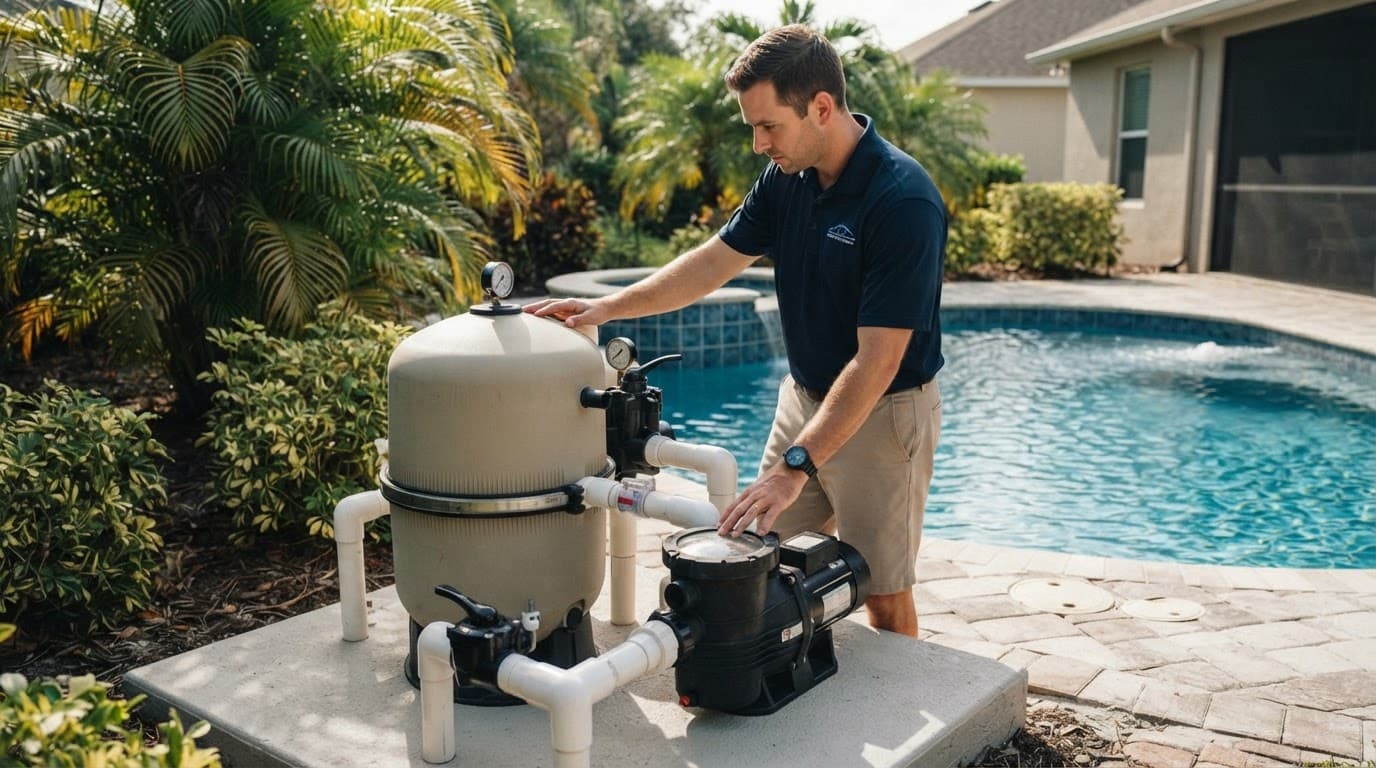
Start with the gauge and pump
With the pump off and pressure released, the gauge should return to zero. A stuck needle, cloudy dial face, water inside the gauge, or visible corrosion can mean the gauge needs replacement.
Next, look through the pump lid while the system runs. A steady stream of large air bubbles can point to a suction-side air leak. Check the lid O-ring, drain plugs, and fittings, then use the lubricant approved for your equipment.
Check water level, valves, and return flow
Keep the pool water level around the middle of the skimmer opening. If it drops too low, the skimmer can pull air and interrupt flow to the pump.
Then inspect the skimmer basket and pump basket with the pump off. Verify that suction and return valves are fully open for the normal circulation setting. Finally, check the return jets in the pool. Weak flow at every return can point to a clogged basket, blocked impeller, air leak, or a pump issue.
A high reading immediately after cleaning can also come from a partially closed return valve or a blocked return line. Pressure tells part of the story, while the water movement tells the rest.
Make Pressure Checks Part of Your Pool Routine
A quick reading once a week can prevent surprises. Check more often after heavy use, strong winds, nearby landscaping work, or a storm that fills the pool with debris.
Follow the same five steps each time
- Run the pump at the same daily speed used for your clean baseline.
- Look at the water level and remove leaves from the skimmer basket if needed.
- Check that the pump basket is clear after shutting off the pump.
- Read the pressure gauge and compare it with your written baseline.
- Look across the pool for steady return flow, surface movement, and clear water.
This routine takes only a few minutes. It also helps you notice a gradual change before circulation becomes poor.
Keep pressure in perspective
A normal pool filter pressure reading does not confirm that the water chemistry is balanced. Test sanitizer, pH, and other water conditions on their own schedule.
Likewise, clear water does not always mean circulation is strong. A clogged filter can develop slowly, especially when the pool gets regular chemical care. Pair the gauge reading with visible return flow and basic water testing.
Florida Weather Can Change the Reading Fast
Cape Coral pools work year-round, so filters often collect debris in every season. Summer storms can wash leaves, pollen, and fine particles into the pool. A screened enclosure reduces larger debris, but it doesn't stop every fine particle or storm-driven buildup.
Recheck after storms and heavy pool use
After a major rainstorm, empty the skimmer and pump baskets first. Then run the system long enough to circulate the water and compare the gauge with your normal reading.
If pressure rises faster than usual after storms, the filter may simply need more frequent cleaning for a short period. Persistent rapid pressure increases deserve a closer inspection, especially if the pool has poor return flow or recurring cloudy water.
Don't ignore changes after equipment updates
A new heater, salt system, spa, water feature, or pump can change how water moves through the plumbing. Your old clean baseline may no longer apply after an equipment upgrade.
Take a fresh clean-filter reading once the work is complete and the system is set to its normal schedule. That new starting number becomes the reference for future maintenance.
When a Filter Problem Calls for Professional Help
Some pressure problems need more than routine cleaning. Turn off the system and arrange service if you see water leaking from the filter tank, a cracked housing, a damaged clamp, or pressure approaching the maximum marked on the equipment.
Repeated pressure spikes after proper cleaning also deserve attention. The cause may involve undersized equipment, worn filter parts, a blocked line, aging valves, or a pump that no longer matches the pool's needs.
Renovations are a good time to review filtration
Pool resurfacing and renovation projects can be a practical time to inspect aging equipment. If you are adding a spa, water feature, or new circulation components, the filter and pump should suit the updated plumbing plan.
Review pool filter sizing for Cape Coral homes before replacing major equipment. A properly matched system gives you clearer pressure readings and more dependable circulation.
If your pressure readings stay abnormal or your equipment needs an on-site review, Get a Free Estimate for a pool consultation.
Keep Your Baseline in Sight
Your clean-filter starting pressure is the number that matters most. It accounts for your pump, plumbing, filter type, and normal operating speed in a way that a generic PSI target never can.
Watch for gradual rises, sudden changes, weak return flow, and pressure that doesn't match the system's condition. With a simple weekly check, pool filter pressure becomes a useful maintenance signal instead of a mystery on the equipment pad.