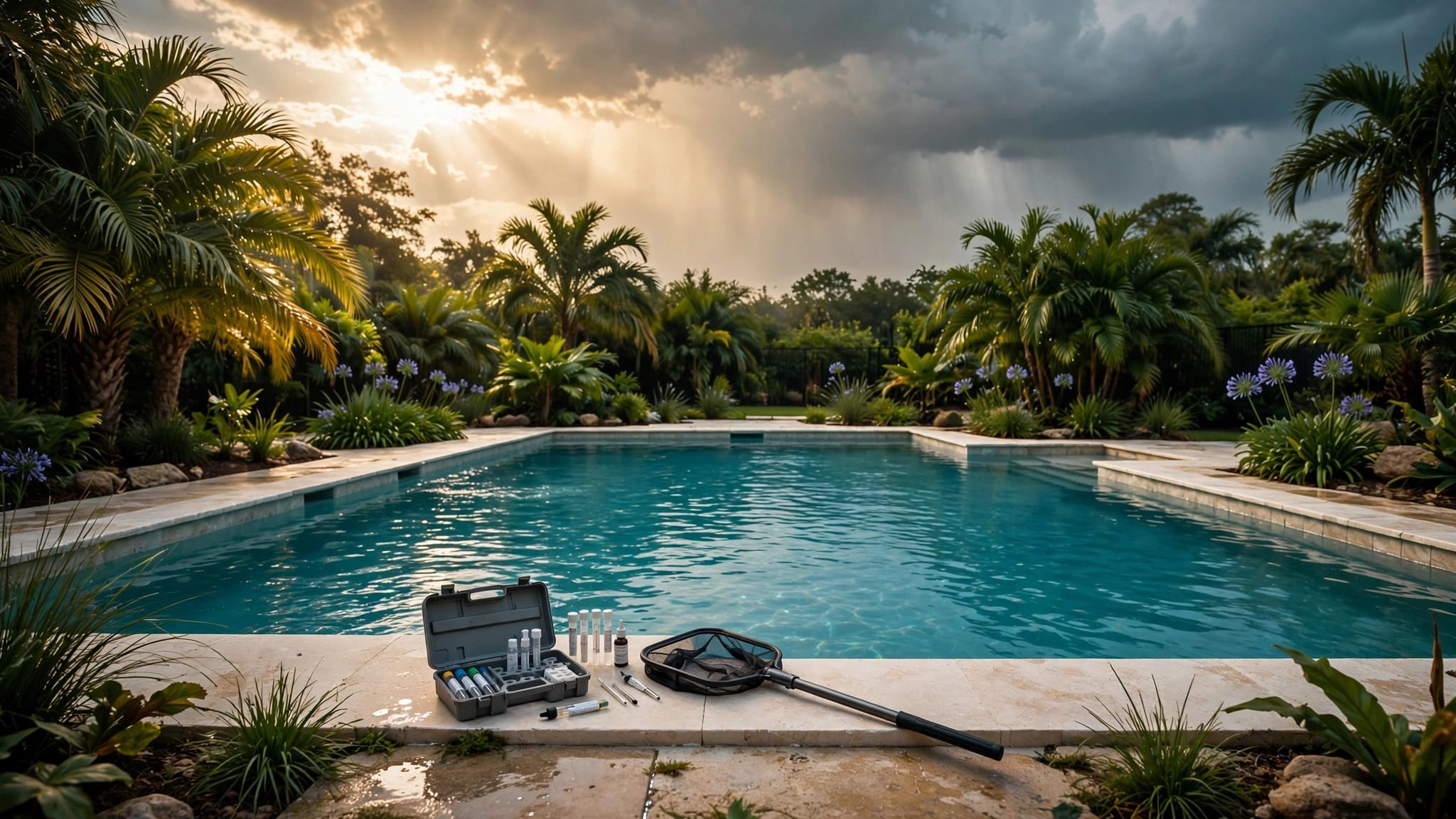
Your pool heater can appear to run while the water stays cooler than you expect. Before scheduling pool heater repair, check the controls, circulation, and conditions around the equipment.
In Cape Coral, rain, windblown debris, and cooler overnight temperatures can affect pool heating. A few safe observations can help separate a settings problem from a fault that needs professional attention.
Start outside the cabinet, and leave electrical testing, gas work, and internal repairs to qualified professionals.
Key Takeaways Before You Troubleshoot
- Check the heater's normal user controls and pool circulation before assuming an internal component has failed.
- Heat pumps depend on outdoor warmth, so cooler weather and overnight heat loss can slow recovery.
- Persistent faults, repeated shutdowns, ignition problems, or unsafe conditions warrant professional service rather than repeated resets.
A clear pool doesn't prove that water is moving correctly through the heater. Likewise, a working display doesn't confirm that every electrical component has the power it needs. Keep your checks observational, and record what happens before changing anything.
Safe Checks Before Pool Heater Repair
Identify the Heater and Its Symptoms
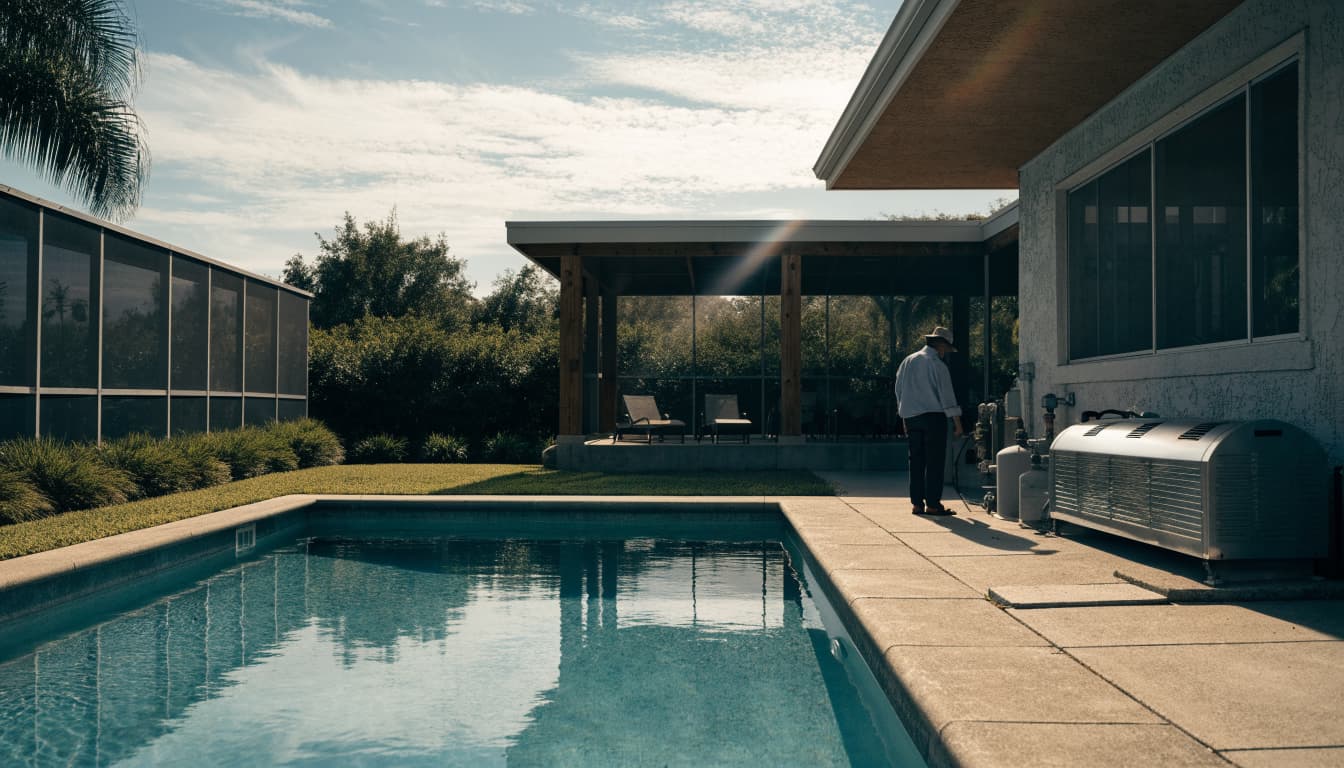
First, find the make and model on an accessible exterior label. Pentair and Built Right Pool Heaters are among the brands Back Bay Pools lists for its pool projects, but operating instructions differ by model.
Determine whether you have an electric heat pump or a gas-fired heater. Then note whether the equipment stays silent, runs continuously, starts and stops, or displays a message.
Photograph the display without removing covers. The exact wording matters because a technician needs the actual message, not a guessed diagnosis.
Keep Your Inspection Outside the Cabinet
Use only normal homeowner controls described in the owner's manual. Don't remove access panels, open electrical compartments, bypass safety switches, touch gas lines, or attempt internal repairs.
Also, don't keep resetting equipment that repeatedly shuts down. A protective shutdown needs investigation, even when the heater briefly starts again.
If you smell gas, move away without operating nearby switches. Call the gas utility or 911 from a safe location. For smoke, sparks, or storm-flooded electrical equipment, stay clear and seek appropriate emergency assistance. Wait until lightning has passed before inspecting the equipment area.
Confirm That the Controls Are Calling for Heat
Review Temperature and Pool Mode
Compare the displayed water temperature with the selected target. If the water has already reached that target, the heater may have no reason to run.
For a pool-and-spa system, check which body of water the controller has selected. A spa setting doesn't necessarily apply to the swimming pool.
Also, review the normal heating mode against the manual. Some systems offer different operating choices, including cooling on certain heat pumps. Stay out of installer menus and advanced settings unless a qualified professional directs you.
Check the Schedule and Recent Changes
Next, review the circulation and heating schedules together. A heating period that doesn't overlap the necessary circulation period can leave you expecting warmth when the system isn't operating as intended.
Think back to recent changes. A power interruption, controller adjustment, pool service visit, or switch between pool and spa use may explain when the problem began.
Observe one normal operating cycle rather than changing several settings at once. Write down when the pump starts, when the heater responds, and what the display shows. Those details give a service technician a clearer starting point.
Check Circulation Before Blaming the Heater
Look for Water-Level and Debris Problems
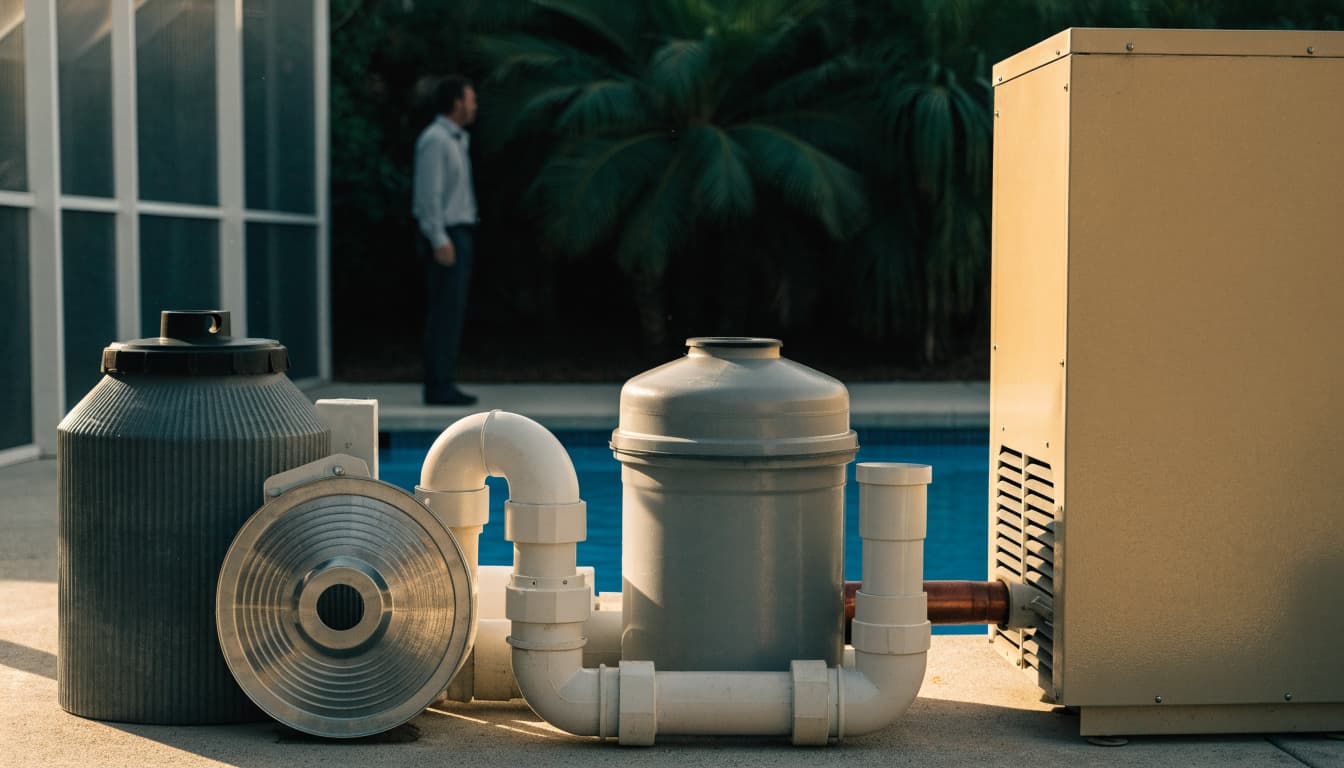
Pool heaters need adequate water movement to transfer heat safely. Therefore, a circulation problem can interrupt heating even when the heater itself isn't the original source of trouble.
Look at the pool's water level, visible basket debris, and return flow. Cape Coral storms can leave leaves and other debris around skimmers and equipment.
Handle routine basket maintenance only according to your equipment instructions, with the system safely shut down. Don't open a pressurized filter housing casually. If you're unsure how to make it safe, leave that work to your pool professional.
Note Air, Pressure Changes, and Lost Prime
Persistent bubbles at the returns, unusually weak circulation, or a pump that loses prime deserve attention. Compare the filter gauge with your system's established clean-filter reading rather than an internet pressure target.
A failing check valve can allow water to drain backward after shutdown. However, repeated loss of prime can also involve other plumbing problems, so the symptom doesn't identify one failed part.
If the circulation pump also overheats, review the separate guidance on pool pump overheating causes. Restricted flow and pump faults require their own assessment.
A heater flow warning identifies a condition the heater detects. It doesn't prove that the heater needs replacement.
Account for Heater Type and Cape Coral Weather
Heat Pumps Recover More Slowly in Cooler Air
A pool heat pump takes warmth from outdoor air and transfers it into the water. Cape Coral's warm, humid conditions often suit that process, but a cool front changes the operating conditions.
Meanwhile, wind and cooler nights increase heat loss at the pool surface. The heater may be adding heat while the pool loses enough warmth to make progress difficult to notice.
Track water temperature with the same thermometer under similar conditions. A trend across normal heating periods is more useful than touching the water once. Check your model's manual for its operating limits rather than assuming every heat pump performs alike.
Gas Heaters Need a Different Assessment
Gas-fired heaters use combustion, so their troubleshooting involves different hazards and components. Repeated ignition failures, unexplained shutdowns, or concerns about combustion require professional inspection.
Don't investigate burners, igniters, gas valves, or fuel piping yourself. Even when a display seems straightforward, the underlying problem may need testing that homeowners shouldn't attempt.
If you're unsure which system fits your swimming habits, compare pool heat pumps and gas heaters. Your current heater type also helps explain what recovery speed to expect after a cool night.
Inspect Airflow, Debris, and Visible Water
Heat pumps need open airflow around the cabinet. Check for vegetation, stored furniture, pool toys, or storm debris crowding the unit.
Use the manufacturer's clearance requirements. A fence, enclosure modification, or landscaping addition can change airflow even if the heater previously worked well. Don't reach through grilles or attempt to straighten coil fins during a visual inspection.
Cape Coral's coastal exposure also makes visible corrosion worth recording. Photograph rusted areas without removing the cabinet, and let a technician assess their extent.
Water beneath a heat pump may be condensation during operation. Still, don't assume every puddle is harmless. Note whether water appears only while heating or continues afterward, and report unexplained pool water loss.
Avoid spraying cleaning chemicals or directing a pressure washer at the unit. Coil cleaning and corrosion treatment should follow the manufacturer's instructions or professional recommendations.
Know When to Stop and Arrange Service
Schedule pool heater repair when a fault persists after normal control and circulation checks. The same applies when heating performance changes sharply without an obvious schedule or weather explanation.
Repeated short cycling, recurring ignition failures, new mechanical noises, and suspected leaks need diagnosis. A heat pump fan running doesn't prove that the compressor is working. Likewise, an illuminated gas-heater display doesn't establish safe combustion.
If a breaker repeatedly trips, leave the equipment off and have a qualified professional investigate. Don't open the electrical panel or repeatedly reset the breaker to keep the heater running.
A heater that stops after starting may be responding to a protective control. Never bypass that control to test whether heating returns.
For a non-emergency fault, keep the heater off using its normal controls if conditions are safe. Ask your pool professional whether circulation should continue while you await service. Equipment damage, water loss, and electrical concerns can change that answer.
Finally, choose service appropriate to the problem. Gas combustion work, electrical faults, refrigerant work, and pool plumbing aren't interchangeable tasks. Confirm that the provider is qualified for your heater type and the work required.
Prepare for the Visit and Compare Your Options
Give the Technician Useful Details
Before calling, collect the heater's make, model, approximate age, and photographs of its display and exterior condition. Include the displayed water temperature, target temperature, and exact fault message, if any.
Describe when the problem started and whether it followed a storm, maintenance visit, or control change. Also report weak returns, bubbles, lost prime, visible leaks, or unusual sounds.
Avoid clearing messages just to make the display look normal. Your observations can help the technician distinguish a circulation problem from a control, heating, or electrical fault.
Consider Repair Versus Replacement After Diagnosis
An isolated sensor or control problem may justify repair when the heater is newer and otherwise sound. Extensive corrosion, a leaking heat exchanger, or recurring failures can shift the decision toward replacement.
Service life varies. Back Bay Pools gives broad ranges of about 10 to 15 years for well-sized, maintained heat pumps and 5 to 10 years for gas heaters. Those ranges aren't replacement deadlines.
Ask for a written diagnosis and an itemized quote before deciding. Confirm whether the price covers only the failed part or also related work. For replacement, electrical or gas work and plumbing changes can affect the installed total.
If heating upgrades are part of a larger project, Back Bay Pools' pool renovations and resurfacing services include equipment options such as heat pumps and filters.
A Clearer Path to a Warm Pool
When your Cape Coral pool stays cold, start with the safe, visible checks : normal controls, circulation, and conditions around the heater. Record what you find instead of attempting internal repairs.
Persistent faults and unsafe conditions need qualified service. Useful observations help the technician find the cause, whether the problem begins in the heater, its controls, or the circulation system.