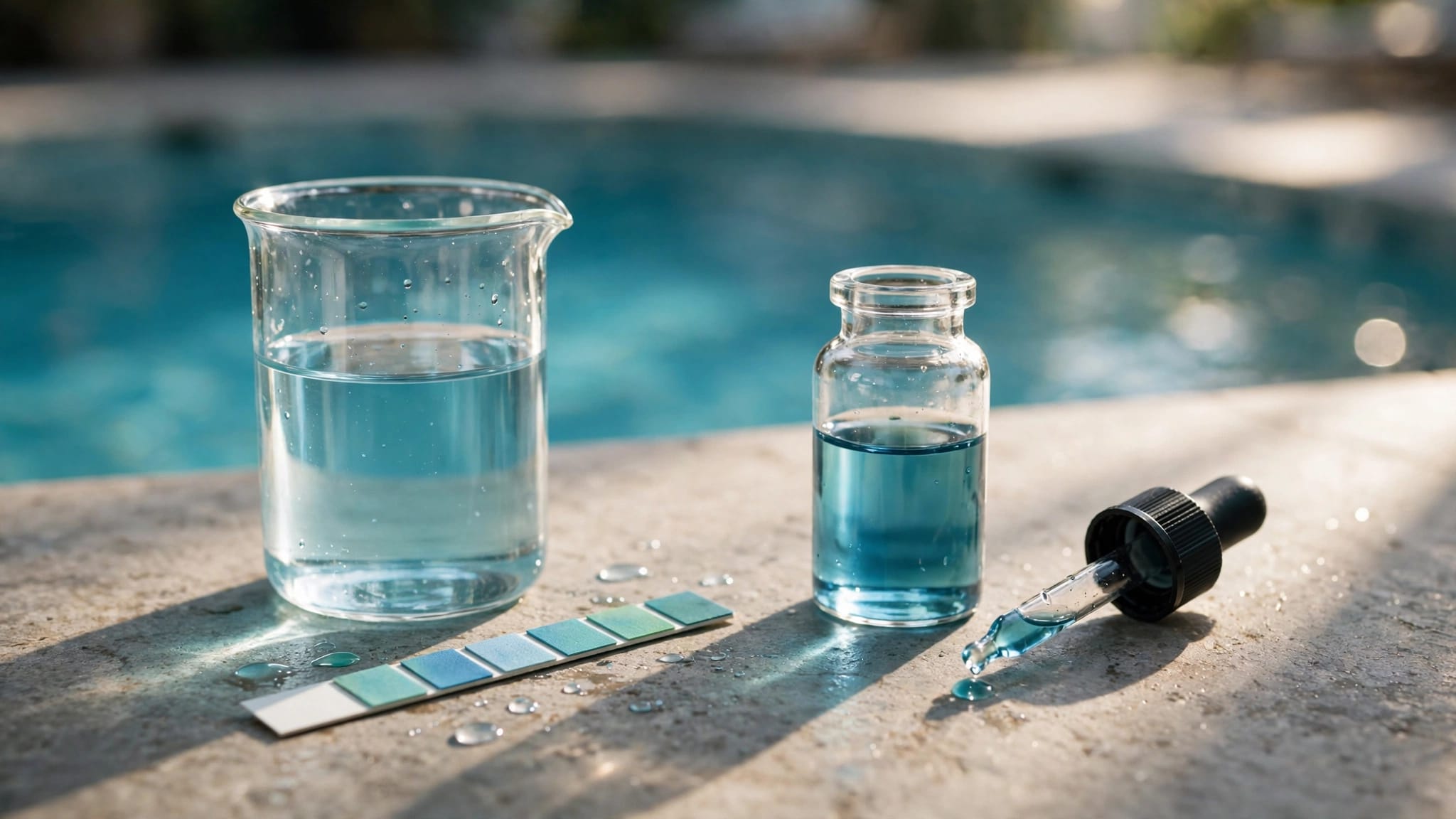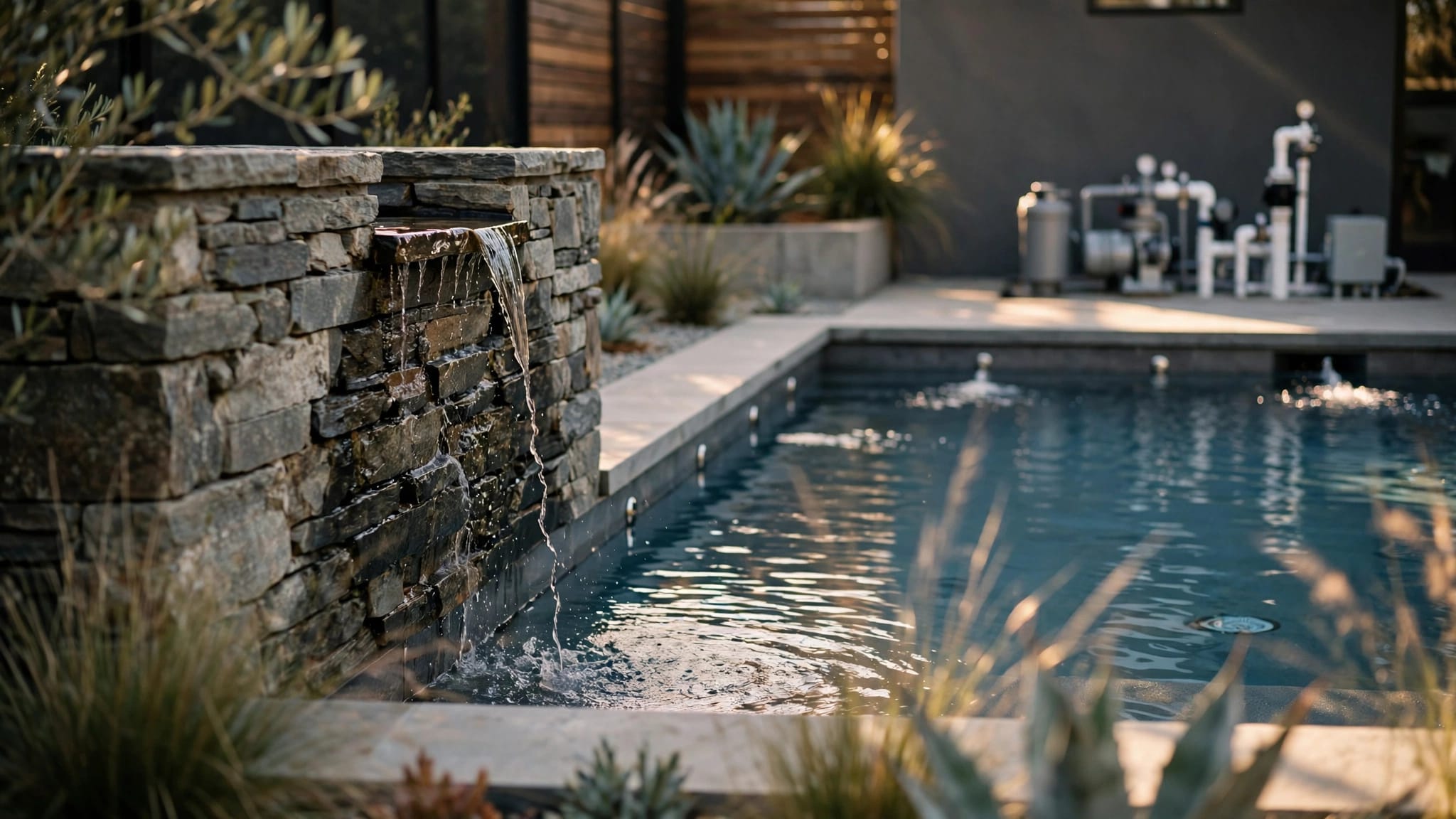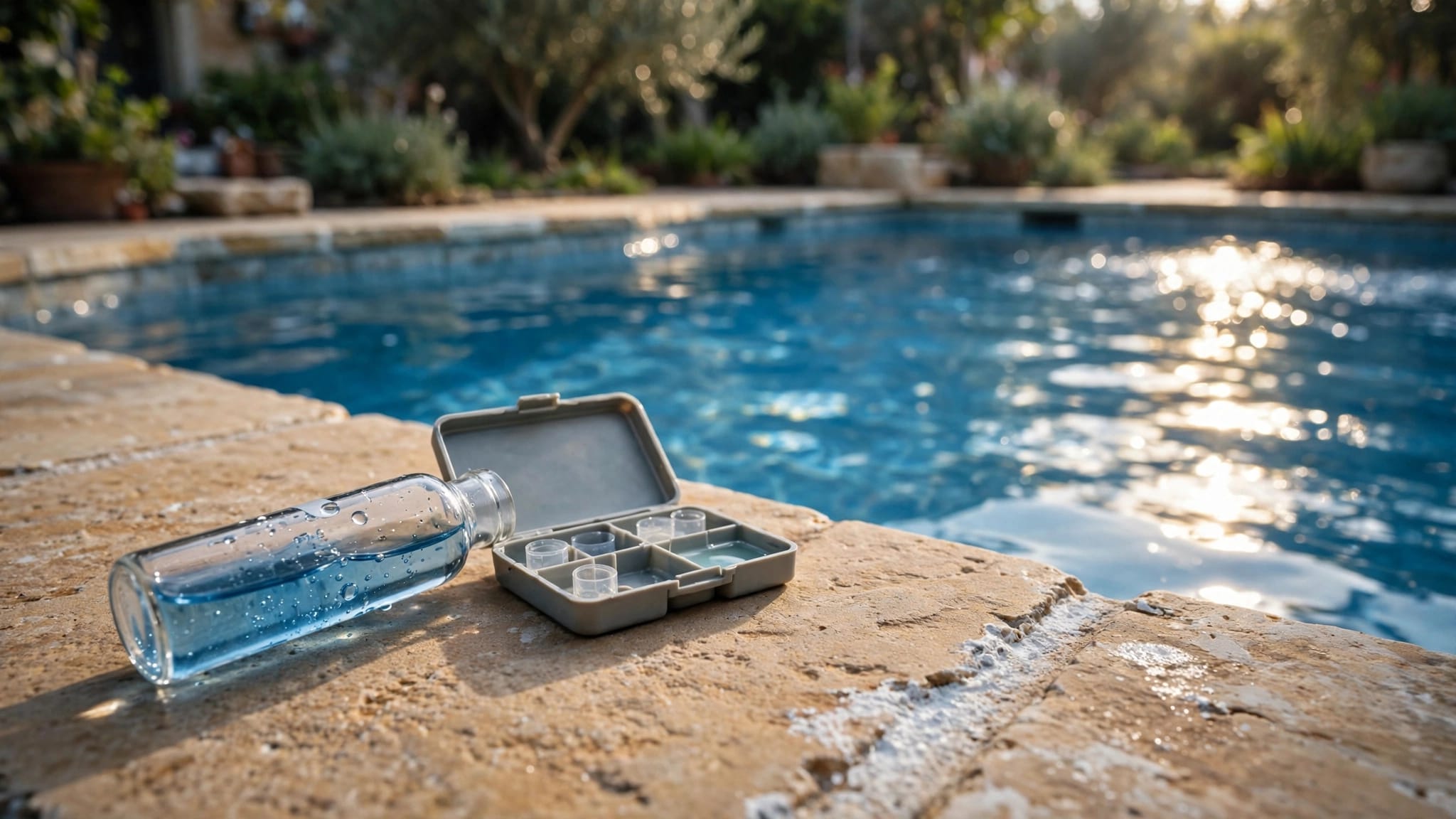
When chlorine tablets remain in a pool feeder, their appearance alone can't tell you what's wrong. Start with a water test , then look at how the pool's circulation equipment is operating. A qualified pool professional can diagnose the feeder if the problem persists.
In the meantime, keeping the water sanitary matters more than trying to make the tablets disappear faster. Here's how to assess the pool safely while you decide what needs attention.
What the Tablets Can Tell You
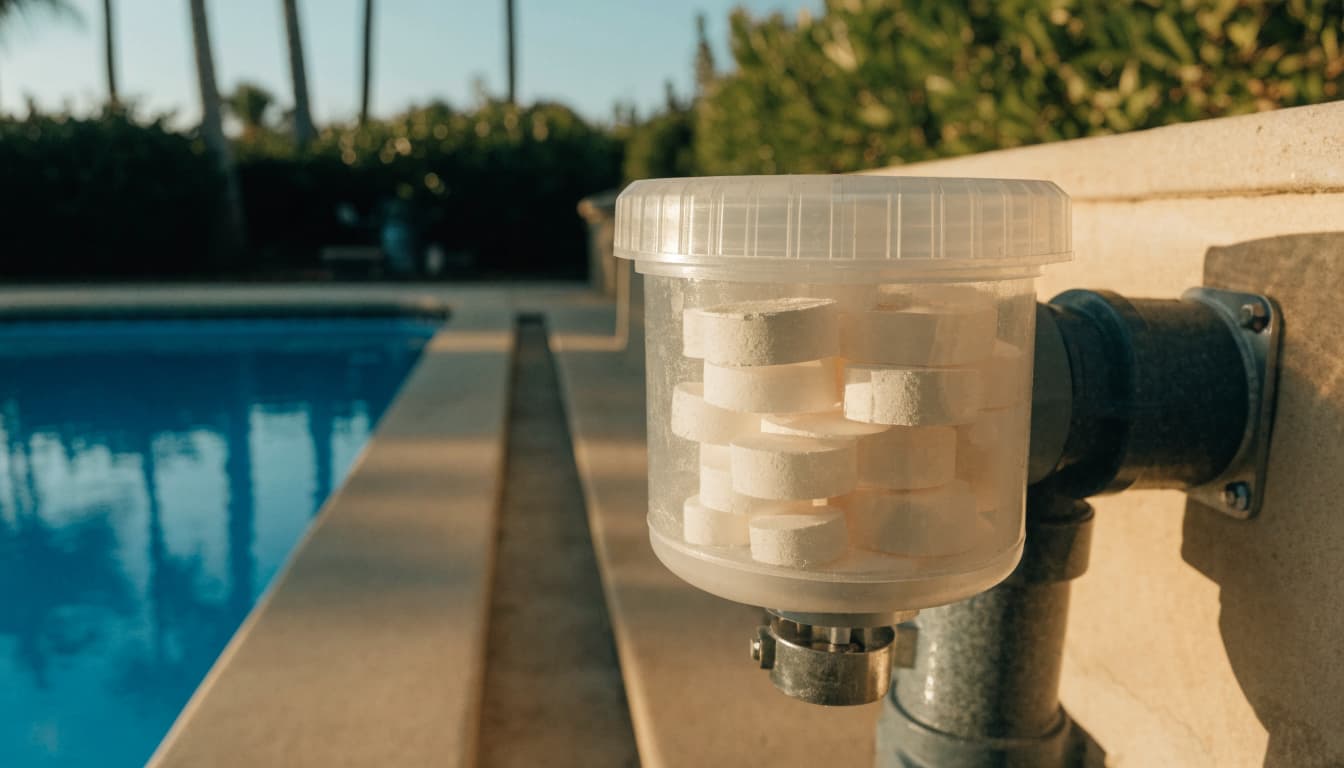
A tablet feeder provides a way to introduce chlorine into pool water as the tablets dissolve. If the tablets appear unchanged, that observation is useful to share with a technician. It doesn't, by itself, identify a failed component.
Tablet appearance and water quality
The amount of tablet left in the feeder isn't a substitute for a chlorine reading. Your pool can need attention even when you can see sanitizer in the equipment.
Use a fresh water sample to measure free chlorine and pH. If you have a kit that measures cyanuric acid, also called stabilizer, record that result. Stabilizer affects the chlorine level your pool needs.
A change in the equipment's behavior
A feeder that seems different deserves attention alongside any other change at the equipment pad. Weak return flow, an unfamiliar pump noise, or water leaking near the plumbing are useful observations.
Write down when you first noticed the change and what else was happening. Those details give a technician a starting point without requiring you to take the feeder apart.
Put Chemical Safety First
Pool chemicals can react dangerously when mixed. Keep products in their original containers, close the lids, and store them in a dry, ventilated area away from children and pets.
Don't crush tablets, mix different pool chemicals in the feeder, or add another product to it as a shortcut. If the feeder needs to be opened, follow its instructions for shutting down the equipment and releasing pressure. Keep your face away from the opening and avoid breathing any fumes.
Wear eye protection and chemical-resistant gloves when handling pool chemicals. If you notice strong fumes, damaged equipment, or signs of a chemical reaction, move away and keep others out of the area. Contact emergency services if there's an immediate danger.
Also, don't move the tablets into the skimmer basket as a substitute. Keep them out of the skimmer unless both the sanitizer label and equipment instructions expressly allow that use.
Test the Water Before Adding Chlorine
A reliable water test tells you whether the pool has enough sanitizer. It also gives you a baseline before you make an adjustment or call for help.
Take a representative sample
Collect water away from the skimmer and return jets, rather than directly beside the feeder. Use a clean sample container and follow the directions for your test kit. A liquid test kit, fresh test strips, or a professional water test can provide useful readings.
Record free chlorine, pH, and stabilizer when your test method includes them. Total alkalinity and calcium hardness are also useful for understanding overall water balance, especially when you have an ongoing concern with the pool surface.
Respond to the reading, not a guess
If free chlorine is low, use an appropriate sanitizer according to its label or get help from a pool professional. The amount depends on the pool's volume, the starting reading, and the product.
Add chemicals separately and allow the water to circulate as directed before testing again. Keep swimmers out for the product's stated treatment period and until the water meets safe testing conditions.
Avoid adding several chemicals at once. When you make one adjustment and retest, it's easier to see what changed and whether the pool needs further treatment.
Look at the Pool's Circulation
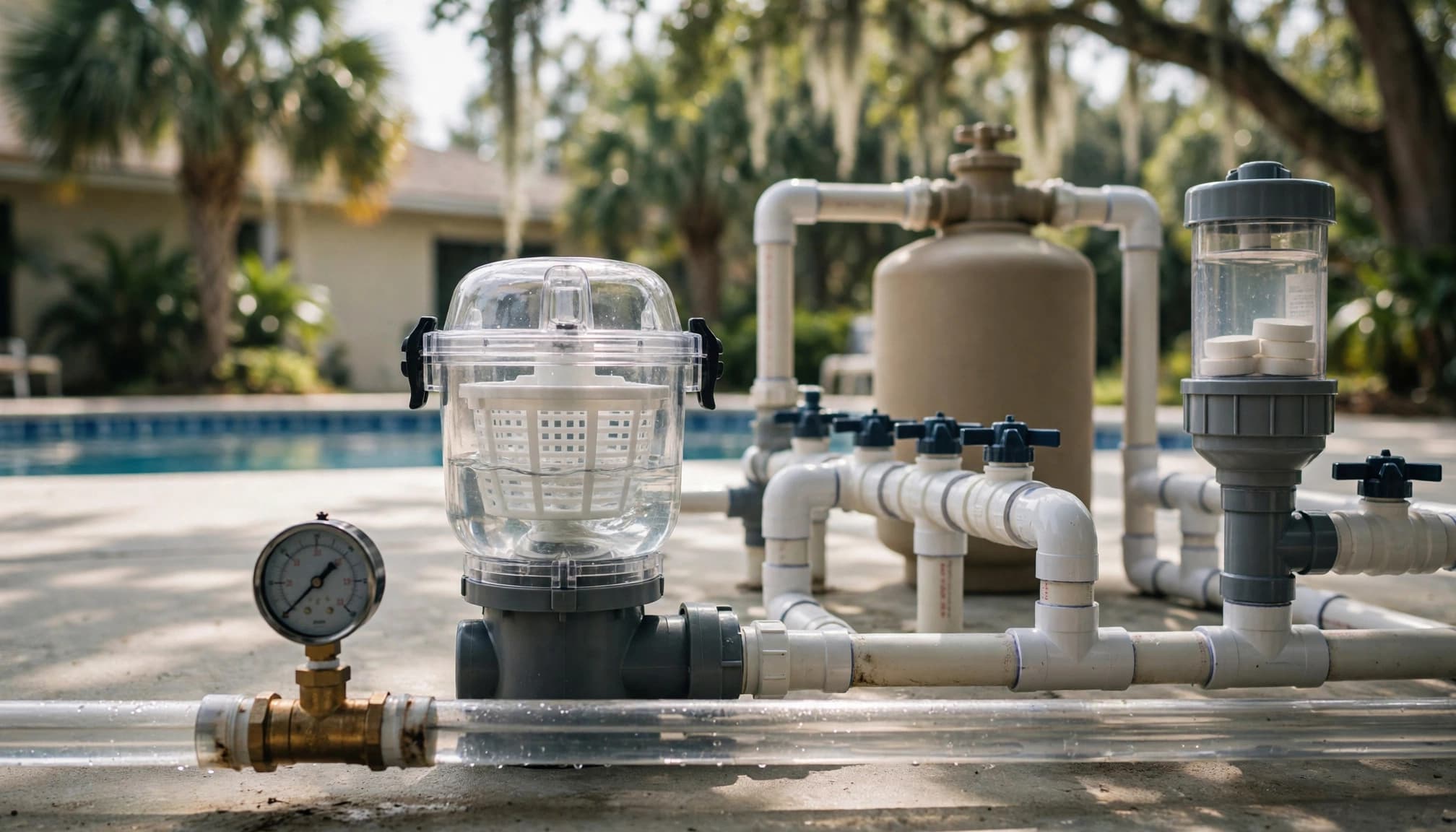
The pump and filter move water through the pool's circulation system. If that system isn't working normally, the pool may not circulate or filter water as intended, regardless of which sanitizer you use.
Start with the water level and pump
Look at the water level and the return jets while the pump is running. The level should support normal skimmer operation, and the returns should have their usual flow.
A pump that draws air, makes an unusual noise, or repeatedly loses prime needs attention. If the pump is off, don't restart it while the system is empty or the pool water is too low. Follow the pump's priming instructions or call a professional.
Our guide to pool pump priming problems covers common pump-related concerns in more detail.
Check accessible baskets safely
Leaves and other debris can collect in the skimmer and pump baskets. Turn off power to the pump before opening an accessible basket, and follow the equipment instructions for depressurizing and reopening the system.
Empty the baskets and replace them correctly before restarting. If a basket is damaged, a lid won't seal, or the pump continues to draw air, stop there and arrange for service.
Don't adjust unfamiliar valves in an attempt to improve circulation. Incorrect valve positions can create another equipment problem or make the original one harder to identify.
Read the Filter Pressure in Context
Your filter's pressure gauge is most useful when you know its clean starting pressure. Compare the present reading with that baseline rather than relying on a universal pressure number.
A higher reading can mean the filter needs cleaning. Cartridge filters, sand filters, and diatomaceous earth filters require different care, so follow the instructions for your equipment. Cartridge filters shouldn't be backwashed.
A lower-than-usual reading can accompany a circulation problem, although the gauge itself may also be inaccurate. Note the reading along with any change in return flow or pump behavior.
If pressure stays unusual after routine care, a pool professional can inspect the equipment. Don't open a pressurized filter or loosen fittings while the system is running.
Account for Florida Weather and Pool Use
A pool's chlorine needs can change even when its equipment appears to be operating normally. Cape Coral homeowners may notice changes after heavy rain, a busy swim day, or a large addition of fresh water.
Sun, swimmers, and debris
Sunlight breaks down chlorine, while swimmers introduce sunscreen, body oils, and other material that adds to the pool's sanitation needs. Leaves and windblown debris also make regular cleaning important.
A screen enclosure can reduce some debris, but it doesn't replace brushing, filtration, or water testing. After a storm, remove debris, inspect the water level, and test the water before changing your treatment routine.
Keep a short water-care record
Write down your test results, pump schedule, water additions, and any sanitizer you add. Include the date and the amount of each product, following the label.
A record helps distinguish a single unusual reading from a recurring problem. It also gives a professional useful context if chlorine remains low after the pool has circulated and you've retested.
When to Call a Pool Professional
Get help when the feeder concern continues, the water won't hold an appropriate chlorine level, or the circulation system shows signs of trouble. A hands-on inspection is more useful than replacing parts based on the tablets' appearance alone.
Signs that need attention
Arrange an inspection if you see a cracked housing, a leak near equipment, persistent loss of pump prime, or a pressure reading that remains abnormal after routine filter care. Electrical faults, damaged cords, and breakers that trip also need professional attention.
Keep children and pets away from damaged electrical equipment or standing water near electrical connections. Don't keep resetting a breaker that trips.
Repair or replacement
A technician can assess the equipment and explain whether a repair is practical. Age, safety, the condition of surrounding components, and the cost of repeated repairs all matter.
Our guide to pool equipment repair or replacement offers more context for that decision.
If equipment concerns are part of a larger pool renovation, we can discuss them during an on-site consultation. Cape Coral homeowners can Get a Free Estimate for their project.
Frequently Asked Questions
Can I swim if the tablets aren't dissolving?
Test the water before swimming. If free chlorine is below the appropriate level, address it first and follow any treatment product's waiting instructions. Clear-looking water alone doesn't establish that the pool is ready to use.
Does low chlorine mean the feeder has failed?
No. A low reading tells you that the water needs attention, but it doesn't identify the reason. Sunlight, pool use, and other water conditions can affect chlorine demand. Record the reading and any equipment symptoms so a professional can assess the pool.
Should I switch to a salt system?
A salt chlorine generator is a different type of sanitizer system. It produces chlorine from saltwater and still needs circulation, water testing, and maintenance. A feeder concern alone doesn't establish that switching systems is necessary.
Keep the Pool Safe While You Find the Cause
Tablets remaining in a feeder are a reason to pay attention, but they don't identify the problem on their own. Test the water , observe the circulation system, and avoid improvised chemical fixes.
If the concern continues, an on-site equipment assessment can help identify the next step while you keep the pool's sanitation routine on track.